


Use hanging containers
Grow this epiphyte in a hanging basket or high shelf so the long, flattened stems can trail freely without kinking or breaking against pot rims or furniture edges.

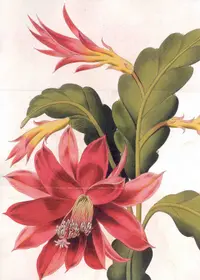
Disocactus ackermannii, often called the orchid cactus, is an epiphytic cactus with long, flattened, segmented stems that arch or trail elegantly from pots or hanging baskets. In spring, it produces large, funnel-shaped red flowers along the stem edges, creating a striking display.
This species comes from humid forest regions of Mexico, where it grows on trees or rocks rather than in desert conditions. It is generally considered moderate in difficulty, as it needs bright but not harsh light, consistent but not heavy moisture, and a loose, fast-draining mix. Understanding how to care for Disocactus ackermannii becomes easier once its forest cactus origin is kept in mind.

Care Difficulty
Moderate Care

Light Preference
Bright Indirect Light

Water Requirements
Moderate Water

Temperature Preference
Tropical / Frost Sensitive

Hardiness Zone
10–11

Soil Texture
Sandy, Loamy, Organic-rich

Soil pH
Acidic (5.5–6.5), Slightly acidic (6.5–7.0)

Soil Drainage
Well-drained

Fertilization
Light (every 4–6 weeks)
Scan your plant to receive care tips personalized for your specific plant
Available on iOS and Android
This epiphytic cactus prefers bright, indirect light that mimics bright forest edges or canopy gaps.
This plant prefers evenly moist but never saturated conditions, especially during active growth and flowering.
This species prefers mild, frost-free conditions with only moderate heat.
This epiphytic cactus prefers moderate humidity but adapts to typical indoor levels.
Disocactus ackermannii needs a very free-draining, airy mix that still holds some moisture.
This species is very suitable for container growing, especially in hanging baskets.
During active growth, light feeding supports healthy, flower-ready stems in Disocactus ackermannii.
Pruning helps maintain a tidy shape and strong flowering on Disocactus ackermannii.
Repotting keeps this epiphytic cactus healthy and prevents root congestion.
New plants are most often raised from stem cuttings rather than seed.
Cool, dry winter conditions help set buds but cold extremes harm this tropical cactus.

Plant Health Check
Not sure what's wrong with your plant? Check your plant's health inside the app.
In the wild, this species usually grows as an epiphyte or lithophyte on rocks and tree trunks in humid canyons of eastern Mexico, rather than in open desert, so it experiences filtered light and cooler, moist conditions at the root zone.
Its apparent leaves are actually strongly flattened stems called cladodes, an adaptation that increases surface area for photosynthesis while storing water like a typical cactus stem.
Unlike many night-blooming cacti, it produces large, vivid red, funnel-shaped flowers that open in daylight and are adapted to attract diurnal pollinators such as hummingbirds in its native habitat.

This species was one of the earliest epiphytic cacti cultivated in Europe in the 19th century, and historical mislabeling and hybridization with related species contributed to long-lasting confusion in horticulture about which plants represented the true wild form.
Flowering is reduced by insufficient light, lack of a cool, slightly drier winter rest, or heavy, high‑nitrogen feeding. Short day length and a mild temperature drop trigger buds. Avoid moving or repotting the plant just before bud formation.
Keep your plants happy and healthy with plant identification, disease detection, and easy care guidance.

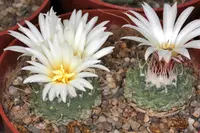
Cactus
Strombocactus disciformis
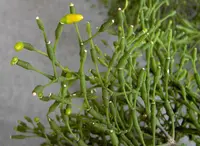
Dancing bones cactus
Hatiora salicornioides
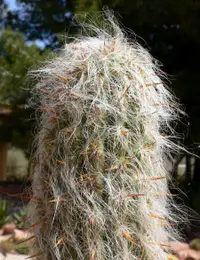
Old Man of the Andes
Oreocereus celsianus
 POPULAR
Rice cactus
Rhipsalis cereuscula

Cereus fernambucensis
Cereus fernambucensis
Coleocephalocereus fluminensis
Coleocephalocereus fluminensis
Ariocarpus retusus
Ariocarpus retusus
Easter Cactus
Rhipsalidopsis gaertneri