miniature barrel cactus Care (Thelocactus setispinus)

miniature barrel cactus

About miniature barrel cactus

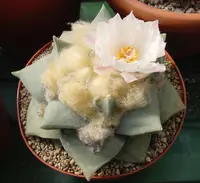
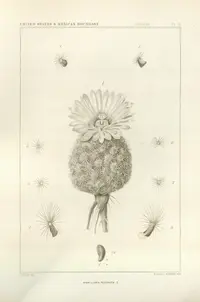
The miniature barrel cactus, Thelocactus setispinus, is a small, globular cactus valued for its bright spines and showy star-shaped flowers. It usually forms a single rounded stem that can slowly become slightly elongated with age.

This species is native to arid regions of northeastern Mexico and southern Texas, where it grows in rocky, well-drained soils with strong sun. Its compact size and tolerance of dry indoor air make it suitable for windowsills and small spaces.

Spines provide good protection against damage but also mean it should be handled carefully. Understanding how to care for miniature barrel cactus mainly involves giving strong light, very fast-draining soil, and infrequent watering.

Main Plant Requirements

Care Difficulty

Easy Care

Light Preference

Full Sun

Water Requirements

Low Water

Temperature Preference

Tropical / Frost Sensitive

Hardiness Zone

9–11

Soil Texture

Sandy, Loamy, Rocky

Soil pH

Slightly acidic (6.5–7.0), Neutral (7.0)

Soil Drainage

Well-drained

Fertilization

Minimal (feed rarely)

Get Personalized Care Plan

Scan your plant to receive care tips personalized for your specific plant

Available on iOS and Android

How to Care for the miniature barrel cactus

This cactus prefers strong, direct sun but needs gradual acclimation to avoid scorch.

  • Provide 6–8 hours of direct sun daily, ideally with gentle morning sun and some light afternoon shade in very hot climates.
  • Outdoors, place in an open, unshaded spot; indoors, use a south- or west-facing window and rotate the pot to prevent miniature barrel cactus leaning.
  • Pale, elongated growth signals insufficient light, while bleached yellow patches or brown scars indicate sunburn from excessive, sudden exposure.

Thelocactus setispinus needs infrequent, deep watering and fast-drying soil.

  • Water only when the top 3–5 cm of soil are completely dry; in hot growing seasons this may mean every 7–21 days depending on heat and airflow.
  • Use a very gritty, fast-draining cactus mix and always let excess water drain away to limit root rot risk from prolonged saturation.
  • In winter or cool spells, reduce watering sharply, watching for slight wrinkling as a sign to water, and mushy, translucent tissue as overwatering damage.

This desert cactus prefers warm conditions but is sensitive to frost and extreme, stagnant heat.

  • Aim for 70–90°F (21–32°C) during active growth, with good air movement to prevent overheating and fungal problems.
  • It tolerates brief heat up to 100–105°F (38–41°C) if shaded slightly in the afternoon and kept in very well-drained, dry soil.
  • Protect from temperatures below 40°F (4°C); avoid frost, and overwinter around 45–55°F (7–13°C) in drier soil to keep the plant dormant and compact.

This cactus prefers dry air and usually stays healthy in typical indoor humidity levels.

  • Aim for 20–40% humidity; avoid placing it in humid rooms like bathrooms or unventilated kitchens.
  • Tolerates very dry air, but persistent humidity above 60% raises the risk of rot and fungal spots.
  • Signs of excess humidity include soft, pale tissue at the base and slow drying soil; improve airflow and reduce misting around the miniature barrel cactus.

Use a very fast-draining, mineral-heavy mix that keeps roots dry between waterings.

  • Combine roughly 30% cactus potting mix with 70% mineral components such as coarse sand, pumice, and small gravel for Thelocactus setispinus.
  • Target a slightly acidic to neutral pH around 6.0–7.0, which supports nutrient uptake without encouraging rot pathogens.
  • Increase aeration by using large-grain particles (3–6 mm) and avoiding fine peat that compacts and holds water too long.
  • Avoid dense, clayey, or peat-heavy mixes that stay wet, as these quickly lead to root and stem rot in this desert species.

This species is very suitable for container growing in dry, bright locations.

  • Choose a heavy clay or terracotta pot to reduce tipping risk and allow faster evaporation from the root zone.
  • Select a shallow but wide container that matches the modest root system while leaving 1–2 cm of space around the plant body.
  • Elevate the pot slightly on feet or mesh so drainage holes stay clear and excess water leaves the container immediately.

Thelocactus setispinus benefits from light feeding during its warm, active growth period to support flowering without forcing weak, soft tissue.

  • Use a diluted balanced liquid cactus fertilizer (for example 5-5-5 or 10-10-10 at 1/4–1/2 strength) in well-watered soil.
  • Feed every 4–6 weeks in spring and summer while growth and flowering are steady.
  • Stop fertilizing in fall and winter when growth slows and the plant rests.
  • For miniature barrel cactus indoor care, avoid rich compost and high-nitrogen products that can cause swollen, rot-prone stems.

Thelocactus setispinus requires minimal pruning, mainly for health and safety rather than shaping.

  • Best time for any work is late spring to early summer when growth is active and wounds dry quickly.
  • Remove only dead, diseased, or rotting tissue using clean, sharp scissors or a small knife.
  • Trim spent flowers gently at the base if seeds are not needed, taking care not to damage areoles.
  • Minor cleanup helps maintain an open shape and reduces fungal problems without disturbing natural symmetry.

This cactus prefers to stay slightly root-bound and only needs infrequent repotting when clearly outgrowing its pot.

  • Check for roots circling the pot, pushing through drainage holes, or for slowed growth as signs it needs a larger container.
  • Repot every 3–5 years in late spring, using a pot only 1–2 in wider with fresh, gritty cactus mix.
  • Water lightly a few days before repotting, then let roots dry for 1–3 days afterward to limit transplant shock.
  • Handle the plant with tongs or folded newspaper, keep roots intact, and resume modest watering once it shows new growth.

Thelocactus setispinus is most often propagated from seed, as mature plants rarely produce offsets.

  • Sow fresh seeds in late spring or early summer in a sterile, very well-draining cactus mix.
  • Press seeds onto the surface, barely cover with fine grit, then keep evenly moist but not wet.
  • Maintain warm conditions around 70–80°F with bright, indirect light for steady germination.
  • Once seedlings develop several spines and firm bodies, gradually increase light and reduce humidity before potting individually.

Winter care focuses on keeping this cactus cool, dry, and frost-free to prevent rot and tissue damage.

  • Keep indoor or greenhouse temperatures around 45–55°F in winter, avoiding exposure below 32°F.
  • Provide the brightest possible light indoors, such as a sunny south- or west-facing window.
  • Stop watering or give only very light sips every 4–6 weeks so the root zone stays almost dry.
  • For outdoor containers, move pots under cover or indoors before hard frost to protect stems and roots.

Care Tips

Summer rain protection

If kept outdoors, move the pot under a covered area during extended summer storms so the plant avoids prolonged saturation that can cause the stem base to rot.

Winter light boost

In winter, place the cactus as close as safely possible to a bright south-facing window or use a small LED grow light on a 10–12 hour timer to prevent etiolated, stretched growth.

Rotate for symmetry

Rotate the pot by 90° every 2–3 weeks during the growing season so the stem and spine clusters develop evenly and the plant keeps a compact, balanced shape.

Top-dress with grit

Add a 0.5–1 in layer of clean mineral grit or small gravel on the soil surface to keep the neck of the plant dry, reduce fungus gnat issues, and visually monitor if the crown stays above the soil line.

Controlled offset removal

When offsets are at least 1–1.5 in wide, remove them with a sterile knife, let the wound callus for 5–7 days, then root them in dry, gritty mix to manage clump size and propagate new plants while caring for miniature barrel cactus.

Common Pests and Diseases

Mealybugs

This pest feeds on sap, often hiding in the cactus ribs, woolly areoles, and around flower bases, leaving white cottony clusters. Symptoms include stunted growth, yellowing tissue, and sticky honeydew that can attract sooty mold.

Solution

Isolate the plant, then remove visible insects with a cotton swab dipped in 70% isopropyl alcohol and repeat weekly until no new pests appear. Improve airflow, avoid overfertilizing soft new growth, and use a targeted systemic insecticide labeled for cacti if the infestation is heavy.

Red spider mites

These insects are tiny arachnids that thrive on sun-exposed, dry plants and cause a fine speckling or bronzing of the epidermis, especially on the upper parts of the stem. Symptoms include dull, roughened skin and, in strong infestations, fine webbing between spines.

Solution

Increase local humidity slightly with occasional misting around, not on, the stem and rinse the plant gently with lukewarm water to dislodge mites. Follow up with repeated applications of a horticultural oil or miticide labeled for ornamental cacti, treating every 7–10 days until new growth appears clean.

Scale insects

This pest appears as small, hard, dome-shaped bumps on ribs and at the base of spines, often matching the cactus color and easily overlooked. Symptoms include patchy yellowing, slow growth, and sticky honeydew around the plant base.

Solution

Manually pry off individual scales with a fingernail or soft brush, wiping the area with 70% isopropyl alcohol to dissolve remaining wax. For larger infestations, use a systemic insecticide drench suited to succulent plants and repeat after 3–4 weeks to catch newly emerged nymphs as part of broader Thelocactus setispinus plant care.

Corky scab lesions

This disease is a physiological disorder where the epidermis forms dry, brown, corky patches, often on the side facing intense sun or after mechanical injury. Symptoms include rough, scar-like areas that do not spread quickly but can disfigure the stem surface.

Solution

Adjust light exposure so the plant receives bright light with a short acclimation period before full sun, especially outdoors in summer. Remove only severely damaged sections if they compromise the plant and maintain stable watering patterns to limit additional stress on the epidermis.

Fungal stem rot

This disease often begins in micro-wounds near the plant base or around spent flower scars and causes soft, dark, sometimes sunken tissue that can spread internally. Symptoms include a foul odor, tissue collapse, and rapid yellowing above the affected area, especially after prolonged cool, wet conditions.

Solution

At the first signs, cut away all affected tissue with a sterile, sharp blade back to firm, healthy flesh, then dust the wound heavily with sulfur or a copper-based fungicide and allow it to dry in bright, dry conditions. Review watering and substrate, using a very well-draining, gritty cactus mix and watering only when the potting medium is completely dry to reduce future infections.

Interesting Facts

Spineless fruit trait

This species often develops bright red, spineless fruits that stand out clearly against the spiny stem, making seed dispersal by birds more likely because the fruits are highly visible and easy to access.

Extra-long flowering season

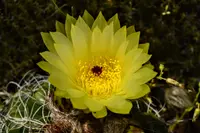
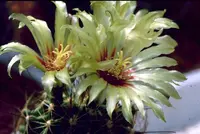
In favorable warm and bright conditions, this cactus can produce its yellow, red-centered flowers repeatedly from late spring through fall, a longer blooming period than many desert cacti that flower only briefly each year.

Coastal plain native

In the wild it is naturally restricted to low-elevation coastal plains of northeastern Mexico and southern Texas, where it grows on limestone-rich, often salty soils that many other cacti cannot tolerate.

Botan icon

Did you know?

This species has been widely traded in cultivation under several older or incorrect names, such as Hamatocactus setispinus and Ferocactus setispinus, which led to long-lasting taxonomic confusion before modern botanical studies clarified its placement in the genus Thelocactus.

FAQs about miniature barrel cactus

Lack of flowering usually comes from insufficient light, a pot that is too large, or the plant being too young. It also benefits from a cool, dry winter rest period to set buds for the next season.

Grow Healthy Plants with Botan Care

Keep your plants happy and healthy with plant identification, disease detection, and easy care guidance.

Botan plant care app — identify plants on mobile

Explore More Plants