Support young stems
Install a sturdy stake or low trellis when the plant is still young so the segmented, heavy stems can lean safely without snapping at the joints as they thicken.

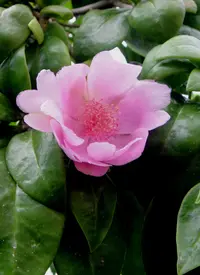
Bayahibe rose, Leuenbergeria quisqueyana, is a columnar, shrubby cactus native to the dry coastal forests of the Dominican Republic. It is a slow-growing species that can form a woody trunk with sparse branching over time.
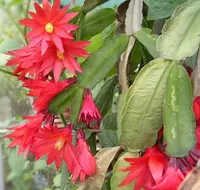
The plant bears small, rounded pads with prominent spines and soft pink, rose-like flowers along the stems. Its growth habit reflects adaptation to arid, rocky habitats with high light and minimal rainfall.
This species prefers strong light, very well-drained, mineral-rich soil, and careful watering that allows the roots to dry between soakings. These drought adaptations make it relatively low-maintenance once established, as long as you understand how to care for Bayahibe rose in dry, bright conditions.

Care Difficulty
Moderate Care

Light Preference
Full Sun

Water Requirements
Low Water

Temperature Preference
Tropical / Frost Sensitive

Hardiness Zone
11–12

Soil Texture
Sandy, Loamy, Rocky

Soil pH
Slightly acidic (6.5–7.0), Neutral (7.0)

Soil Drainage
Well-drained

Fertilization
Minimal (feed rarely)
Scan your plant to receive care tips personalized for your specific plant
Available on iOS and Android
Leuenbergeria quisqueyana needs strong light similar to its native dry coastal habitat.
This dry-forest cactus prefers thorough but infrequent watering with time to dry between soakings.
This species thrives in warm, frost-free conditions typical of tropical dry forests.
This cactus-like shrub handles typical indoor humidity well and rarely needs special humidity management.
This species prefers a sharply drained, mineral-rich mix that mimics a rocky, arid habitat.
This species is well suited to container growing due to its slow, shrubby, semi-succulent habit.
Leuenbergeria quisqueyana, the Bayahibe rose, grows well in lean soil but responds to light feeding in containers or poor ground.
Pruning Leuenbergeria quisqueyana is mainly for safety, structure, and flower display rather than strict size control.
This species is usually grown in the ground, so focus on careful transplanting rather than frequent repotting.
Leuenbergeria quisqueyana is propagated mainly by semi-hardwood cuttings and seeds, which need warmth and patience.
Leuenbergeria quisqueyana is frost-sensitive and needs protection in climates with cold winters.

Plant Health Check
Not sure what's wrong with your plant? Check your plant's health inside the app.
This cactus is officially recognized as the national flower of the Dominican Republic, reflecting its strong cultural and conservation importance in the country where it is naturally found.
It is naturally known only from a very small coastal area near Bayahibe in the Dominican Republic, where it grows on limestone substrates close to the sea, making its wild populations highly vulnerable to habitat disturbance.
The species was originally described in the genus Pereskia, but molecular studies showed that this group was distinct enough to be separated, so it is now placed in the genus Leuenbergeria, highlighting how DNA evidence can reshape cactus classification.

This species is one of the very few cacti that retains large, persistent leaves on woody stems, a trait considered evolutionarily important because it resembles early cactus ancestors and helps scientists understand how typical leafless, stem-succulent cacti evolved.
Lack of flowering is usually linked to insufficient light, overly rich or consistently wet soil, or pruning at the wrong time. This cactus-like shrub blooms best when slightly stressed, kept on the dry side, and not overfertilized.
Keep your plants happy and healthy with plant identification, disease detection, and easy care guidance.