Protective siting
Plant away from high-traffic areas, paths, and play spaces so the stiff, sharp leaves do not pose a hazard and mechanical damage to the rosettes is minimized.

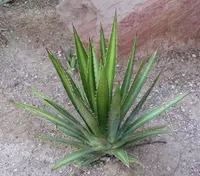
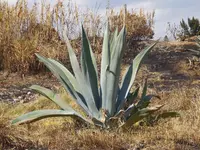
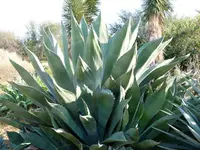
Agave lechuguilla, commonly called lechuguilla, is a small, clustering agave native to the Chihuahuan Desert of northern Mexico and the southwestern United States. It forms tight rosettes of stiff, narrow leaves with very sharp terminal spines and hooked teeth along the margins.
This species dominates many rocky desert slopes and limestone hills, where it survives intense sun, heat, and long dry periods. Its slow growth and strong drought tolerance make it hardy but less forgiving of excess water or poor drainage.
In cultivation, it prefers very bright light, minimal moisture, and a fast-draining, gritty substrate. Gardeners who understand arid-climate plants generally find it straightforward to care for lechuguilla.

Care Difficulty
Easy Care

Light Preference
Full Sun

Water Requirements
Low Water

Temperature Preference
Warm Climate

Hardiness Zone
7–10

Soil Texture
Sandy, Rocky, Loamy

Soil pH
Slightly acidic (6.5–7.0), Slightly alkaline (7.0–7.5)

Soil Drainage
Well-drained

Fertilization
Minimal (feed rarely)
Scan your plant to receive care tips personalized for your specific plant
Available on iOS and Android
This desert species thrives in strong light and handles intense sun once established.
This species is highly drought-adapted and needs very infrequent, deep watering.
This plant is adapted to hot, dry regions but has notable cold tolerance when mature and dry.
This desert agave tolerates very low humidity and rarely needs special humidity management.
This species needs very fast-draining, mineral-based soil to prevent root and crown rot.
This species can be grown in containers if the pot and substrate are managed to mimic desert-like drainage.
This desert agave grows well in lean soil and usually needs minimal feeding.
Pruning for Agave lechuguilla is limited to hygiene and safety rather than shaping.
This species is usually grown in-ground, with container repotting done infrequently.
New plants are most reliably produced from offsets rather than seeds.
Mature plants are quite cold tolerant but still benefit from simple winter precautions in colder regions.

Plant Health Check
Not sure what's wrong with your plant? Check your plant's health inside the app.
This species dominates large areas of the Chihuahuan Desert, forming dense shrublands that structure the habitat and strongly influence soil stability and water infiltration patterns.
Its milky sap contains steroidal saponins that can poison livestock such as sheep and goats, causing the condition locally known as lechuguilla poisoning when animals graze the young leaves.
It develops both shallow, fibrous roots to capture brief desert rains near the surface and deeper roots that tap moisture from lower soil layers, allowing survival on rocky, nutrient-poor slopes.

Lechuguilla leaves yield strong, narrow fibers that local communities have traditionally extracted and twisted into ropes, mats, and brushes, making the plant an important regional fiber source despite its toxicity to livestock.
This species usually needs several decades to reach flowering maturity. It blooms only once, then the main rosette dies. Lack of size, age, or harsh enough desert-like conditions usually explains why flowering has not occurred yet.
Keep your plants happy and healthy with plant identification, disease detection, and easy care guidance.