Safe handling practices
Always wear nitrile gloves and avoid touching your face or eyes when cutting or repotting this plant, since the milky latex sap is irritating and tools should be washed with soap and water afterward.

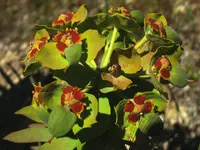
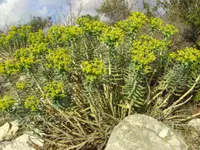
Euphorbia oxyphylla is a succulent shrub-like euphorbia, valued for its upright, often sparsely branched stems and small, narrow leaves. It tends to form loose clumps with a somewhat architectural look that suits dry gardens and specialized collections.
This species is native to arid regions, where it experiences strong light, high temperatures, and limited rainfall. As a result, it is relatively drought-tolerant but sensitive to prolonged cold and excess moisture.
Because of its specific climate and drainage needs, it is better suited to experienced growers or to controlled conditions such as a greenhouse. Understanding how to care for Euphorbia oxyphylla starts with providing bright light, very free-draining soil, and careful, infrequent watering.

Care Difficulty
Moderate Care

Light Preference
Partial Sun

Water Requirements
Moderate Water

Temperature Preference
Warm Climate

Hardiness Zone
Unknown

Soil Texture
Sandy, Loamy, Rocky

Soil pH
Slightly acidic (6.5–7.0)

Soil Drainage
Well-drained

Fertilization
Minimal (feed rarely)
Scan your plant to receive care tips personalized for your specific plant
Available on iOS and Android
This drought-tolerant species prefers bright, open conditions with protection from harsh extremes.
Watering should mimic dry, seasonal habitats with thorough but infrequent soaking.
This species prefers warm, dry conditions with good tolerance to heat but low tolerance to cold.
This species handles dry indoor air well, so humidity is rarely a concern.
This plant needs a very free-draining, mineral-rich mix that dries quickly between waterings.
This species is well suited to container growing when drainage and stability are controlled carefully.
This species grows in low‑nutrient soils and usually needs only light feeding in cultivation.
Pruning Euphorbia oxyphylla is mainly corrective and for safety rather than shaping.
This species is usually grown in the ground, but container plants may need transplanting when root-bound.
Propagation is practical through seeds or carefully handled stem cuttings.
Outdoor plants in suitable climates are fairly tolerant of cool conditions but dislike hard, prolonged freezes.

Plant Health Check
Not sure what's wrong with your plant? Check your plant's health inside the app.
This species is naturally restricted to parts of the Arabian Peninsula, occurring in arid, rocky habitats rather than being widely distributed like many other Euphorbia species.
The species name oxyphylla refers to its sharply pointed leaves, a morphological trait that likely helps reduce leaf surface damage and water loss under intense desert sunlight.
Like many spurges, it produces a milky latex that deters most herbivores; in this species the latex appears particularly copious, quickly sealing wounds when stems or leaves are damaged.
This species generally performs better outdoors in bright, dry conditions with good air movement. Indoors it often grows more slowly and may stretch. Euphorbia oxyphylla indoor care requires very strong light and careful watering to avoid rot.
Keep your plants happy and healthy with plant identification, disease detection, and easy care guidance.