Wind-firm training
In the first 3–5 years, remove or shorten competing leaders and favor one strong central stem so the young tree develops a stable, wind-firm structure on exposed mountain or hillside sites.

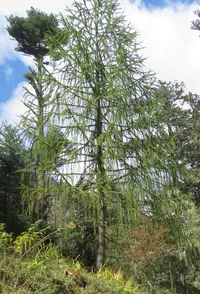
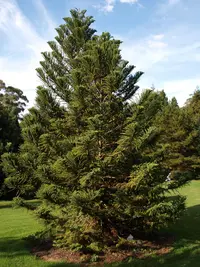
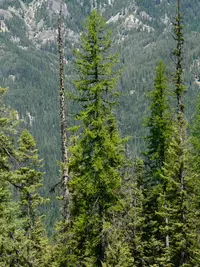
Sikkim larch, Larix griffithii, is a deciduous conifer from the eastern Himalayas, forming a tall, narrow tree with soft, bright green needles. The needles turn golden yellow before dropping in autumn, leaving a clean, architectural branch structure in winter.
In nature it grows in cool, high-altitude forests with cold winters and mild summers. It prefers full sun, consistent moisture, and well-drained, slightly acidic soil.
This species suits spacious gardens in cool or mountainous climates but is challenging in hot, dry, or very compact urban sites. Understanding how to care for Sikkim Larch starts with matching its need for cold winters and steady soil moisture.

Care Difficulty
Moderate Care

Light Preference
Full Sun

Water Requirements
Regular Water

Temperature Preference
Cold Hardy

Hardiness Zone
5–7

Soil Texture
Loamy, Sandy, Rocky

Soil pH
Strongly acidic (4.5–5.5), Acidic (5.5–6.5)

Soil Drainage
Moist but well-drained

Fertilization
Minimal (feed rarely)
Scan your plant to receive care tips personalized for your specific plant
Available on iOS and Android
Larix griffithii needs strong, direct light to form dense, healthy foliage.
Larix griffithii prefers consistently moist but not waterlogged soil, especially while establishing.
This hardy deciduous conifer thrives in cool to cold climates with distinct seasons.
Larix griffithii prefers cool, moderately humid air but usually adapts to typical outdoor humidity in temperate regions.
Larix griffithii grows best in cool, moist, well-aerated mineral soils with reliable drainage.
This species can be grown in containers for a time, mainly as a young tree or bonsai-style specimen, but long-term growth is better in the ground.
This mountain conifer grows well in lean soils, so Sikkim Larch needs only light, targeted fertilization in cultivation.
Pruning Larix griffithii is minimal and focuses on safety, structure, and tree health rather than shaping.
This species is usually grown in the ground, so management focuses on careful transplanting of young trees rather than frequent repotting.
Sexual propagation from seed is most practical for this conifer, while vegetative methods are used mainly in specialist settings.
This hardy deciduous conifer tolerates substantial frost and typically needs little special winter care once established in the landscape.

Plant Health Check
Not sure what's wrong with your plant? Check your plant's health inside the app.
This species is native to high-altitude eastern Himalayan slopes, where it forms open, misty forests between roughly 2,400–3,600 m, often mixed with rhododendrons and other cool-temperate trees.
Unlike most conifers, it drops its soft, light green needles every autumn after they turn yellow to golden-brown, an adaptation to cold, snowy mountain winters.
Its fine, spreading root system stabilizes steep slopes, while its slowly decomposing needles contribute to the acidic, humus-rich soils typical of subalpine Himalayan habitats.

This larch is important to the endangered red panda in parts of its range, as it helps structure the cool, mixed conifer–broadleaf forests that provide the dense cover and foraging habitat these mammals rely on.
This species is a deciduous conifer, so it naturally drops its needles each autumn. Needles turn golden-yellow before falling, leaving bare branches in winter. Fresh soft green needles emerge again in spring as part of its normal cycle.
Keep your plants happy and healthy with plant identification, disease detection, and easy care guidance.