Japanese Big Leaf Magnolia Care (Magnolia obovata)

Also known as: Japanese Whitebark Magnolia, Whiteleaf Japanese Magnolia, Japanese Cucumber Tree
Japanese Big Leaf Magnolia

About Japanese Big Leaf Magnolia

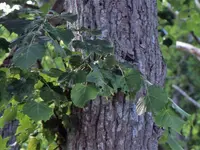
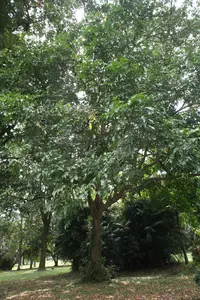
Japanese bigleaf magnolia, Magnolia obovata, is a deciduous tree valued for its huge leaves and fragrant, creamy white flowers. It develops a strong central trunk with a broad, rounded crown as it matures.

This species is native to mountain forests of Japan and nearby regions, where it grows in cool, moist, well-drained soils. In gardens, it is often used as a specimen tree because of its striking foliage and bold structure.

The plant can be moderately challenging, as it dislikes drought, waterlogging, and very exposed, windy sites. Those who want to learn how to care for Japanese Big Leaf Magnolia should note its preference for consistent moisture, rich soil, and light shade in hotter climates.

Main Plant Requirements

Care Difficulty

Moderate Care

Light Preference

Partial Shade

Water Requirements

Regular Water

Temperature Preference

Cold Hardy

Hardiness Zone

4–8

Soil Texture

Loamy, Clay, Organic-rich

Soil pH

Acidic (5.5–6.5), Slightly acidic (6.5–7.0)

Soil Drainage

Moist but well-drained

Fertilization

Minimal (feed rarely)

Get Personalized Care Plan

Scan your plant to receive care tips personalized for your specific plant

Available on iOS and Android

How to Care for the Japanese Big Leaf Magnolia

Magnolia obovata develops best structure and foliage color in stable, bright outdoor light conditions.

  • Provide 4–6 hours of direct morning sun with light afternoon shade; in hotter regions, give dappled shade after 1–2 pm to prevent leaf scorch.
  • Japanese Big Leaf Magnolia tolerates partial shade, but flowering and growth slow if it receives under 3–4 hours of sun per day.
  • In summer, protect young trees from intense reflected heat; in winter, ensure the site still receives open sky light rather than deep shade.

Magnolia obovata prefers evenly moist, cool soil that never stays waterlogged.

  • Water when the top 3–5 cm of soil feel dry, applying a deep soak that moistens the whole root zone rather than frequent light splashes.
  • Use soil with good drainage and mulch 5–8 cm deep to slow evaporation and keep roots cool, but keep mulch a few cm away from the trunk.
  • Watch for underwatering signs like drooping, browning leaf edges, and for overwatering signs such as yellowing leaves and soft, sour-smelling soil.

This species is a hardy, temperate-climate tree that handles cold winters and mild to warm summers.

  • Active growth is strongest around 60–77°F (16–25°C), typical of late spring and early summer in many temperate regions.
  • Established trees tolerate winter lows to about -4°F (-20°C), but young plants benefit from protection from drying winds and severe frost.
  • In hot spells above 86°F (30°C), provide soil moisture and mulch to keep roots cool and reduce heat stress, especially on newly planted specimens.

Magnolia obovata handles a wide humidity range but benefits from moderately moist air.

  • Aim for 40–60% humidity to support healthy foliage on Japanese Big Leaf Magnolia.
  • Tolerates typical heated or air-conditioned indoor air, but very dry air can cause browning leaf edges and tip dieback.
  • Increase humidity with grouped plants, a pebble tray under outdoor pots, or wind protection that reduces excessive leaf moisture loss.

Magnolia obovata prefers deep, moist, well-aerated soil that drains freely.

  • Use a loamy structure with roughly equal parts garden loam, compost, and pine bark fines to hold moisture yet stay airy.
  • Ensure drainage is free; avoid spots with standing water, heavy unamended clay, or compacted subsoil that suffocates roots.
  • Keep pH slightly acidic to neutral (pH 5.5–7.0); add composted leaf mold or pine bark to acidify gently if needed.
  • Improve aeration and drainage by incorporating coarse sand or fine gravel into dense soil rather than planting directly into sticky clay.

This species can be grown in containers for some years but remains better suited to in-ground planting long term.

  • Select a very heavy, wide-based container to counter the tall, top-heavy canopy and reduce tipping in wind.
  • Choose a pot deep enough to allow a spreading, woody root system rather than a shallow, bowl-shaped container.
  • Use a fast-draining, bark-based mix and elevate the pot slightly so water exits the drainage holes without pooling underneath.

Magnolia obovata benefits from modest, targeted feeding in nutrient-poor soils but often performs well in fertile garden ground without heavy inputs.

  • Use a balanced slow-release granular fertilizer (around 8-8-8 to 10-10-10) or well-rotted compost once in early spring.
  • Apply fertilizer only during the active growing season, avoiding midsummer and late-season applications that may stimulate tender growth.
  • Use about half the label rate for trees, keeping granules off the trunk and watering in thoroughly after application.
  • Do not feed during winter dormancy; for established Japanese Big Leaf Magnolia, rely mainly on organic mulch to maintain soil fertility.

Magnolia obovata needs only light, selective pruning to maintain structure and remove problem wood.

  • Time any structural pruning for late winter to very early spring, before buds swell, to limit stress and sap bleeding.
  • Use clean, sharp bypass pruners or a pruning saw to remove dead, diseased, crossing, or storm-damaged branches back to healthy wood.
  • Thin crowded interior shoots sparingly to improve airflow and light penetration while preserving the natural, open crown shape.
  • Avoid heavy cutting or frequent reshaping, as strong pruning can reduce flowering and lead to coarse, upright regrowth.

This magnolia is usually grown in the ground, with transplanting young trees far more common than long-term container repotting.

  • Plan transplanting for late winter or very early spring while the tree is dormant and soil is workable.
  • Move plants when roots begin circling in a nursery pot or when growth appears stunted despite good care.
  • Dig a wide planting hole, disturbing the root ball as little as possible and setting the tree at the same soil level as before.
  • Water deeply after planting, apply 5–8 cm of organic mulch, and keep the root zone evenly moist for the first 1–2 growing seasons to reduce stress.

Magnolia obovata is typically propagated by seed or semi-ripe cuttings, both of which require patience and controlled conditions.

  • Collect ripe seeds in late summer to early fall, clean off the fleshy coating, and stratify in moist medium at 35–40°F for 2–3 months.
  • Sow stratified seeds in a free-draining mix, keep evenly moist, and provide bright, indirect light; germination may be slow and irregular.
  • Take semi-ripe cuttings in midsummer, use a rooting hormone, and place in a warm (70–75°F), humid environment with bottom heat if possible.
  • Maintain high humidity around cuttings with a propagator or clear cover, ventilating regularly to reduce fungal problems.

This species is cold hardy in much of its suitable range and usually needs only modest winter care once established.

  • In USDA zones around 5–7, mature trees tolerate typical winter frosts without special wrapping or covers.
  • Apply 5–8 cm of organic mulch over the root zone in late fall, keeping it a few cm away from the trunk to limit rot.
  • For young or container-grown plants, shelter from harsh drying winds and move pots into an unheated but frost-free or slightly protected spot if possible.

Care Tips

Windbreak planning

Site young trees where existing buildings or larger trees provide some wind protection, or install a temporary windbreak fence for the first 3–5 years to reduce leaf shredding and branch breakage on this large-leaved species.

Early structural training

During the first 5–7 years, select 1 strong central leader and 3–5 well-spaced scaffold branches, lightly removing competing leaders and steep crotches in late winter to build a stable framework that can carry the heavy foliage as the tree matures.

Mulch for root cooling

Maintain a 5–8 cm deep ring of organic mulch out to at least the drip line, keeping it 5–8 cm away from the trunk, to keep the shallow root system cool and moist and to buffer the tree against summer heat spikes.

Root zone protection

Avoid regular foot traffic, digging, or vehicle parking under the canopy, and instead dedicate this area as a no-disturbance root zone so the fine feeder roots remain intact and the tree maintains steady vigor.

Leaf drop management

Rake and remove fallen leaves and old flower parts in autumn, especially in humid climates, to limit overwintering fungal spores and pests while maintaining a clean area for easier monitoring when caring for Japanese Big Leaf Magnolia.

Common Pests and Diseases

Magnolia scale

This pest is a sap-sucking insect that appears as rounded brown or grayish bumps along young stems, leading to leaf yellowing, stunting, and sticky honeydew that can attract sooty mold. Symptoms include reduced vigor and dieback on heavily infested branches.

Solution

Prune out and dispose of heavily infested twigs, then wash remaining stems with a strong spray of water to remove as many scales as possible. For persistent infestations, use a horticultural oil spray during the crawler stage and in late winter, and keep the tree well watered and mulched to reduce stress.

Leaf spot

This disease causes small brown, purple, or black spots on leaves that may merge into larger blotches, sometimes leading to premature leaf drop in warm, wet weather. Symptoms include more severe spotting on crowded, shaded trees with limited air movement.

Solution

Rake and discard fallen leaves to reduce fungal spores, and improve air circulation by thinning crowded branches around the canopy. If outbreaks are severe for several seasons, a preventive fungicide labeled for ornamental magnolias can be applied in early spring while maintaining even soil moisture and avoiding overhead irrigation.

Powdery mildew

This disease produces a white, powdery coating on leaf surfaces, especially on shaded or slow-drying foliage, and can cause curling or distortion of new leaves. Symptoms include reduced aesthetic quality and, in severe cases, reduced vigor in young trees.

Solution

Increase light and airflow by selective pruning of nearby vegetation and inner branches, and avoid wetting foliage in the evening. In persistent or high-humidity situations, apply a sulfur or potassium bicarbonate fungicide labeled for ornamental trees at the first sign of infection and continue to remove badly affected leaves.

Magnolia borer

This pest involves larvae that tunnel into stems and trunks, causing internal damage, oozing sap, frass (sawdust-like material), and sometimes branch dieback. Symptoms include weakened wood and increased risk of breakage or secondary infections.

Solution

Cut out and destroy visibly infested twigs and small branches, and remove any loose bark harboring larvae. Maintain strong plant health with proper watering and mulching, wrap young trunks with a breathable guard if borers are common in the area, and consider timing a targeted insecticidal treatment to adult flight periods based on local extension advice.

Sooty mold

This disease is a superficial black fungal growth that develops on leaves and stems where honeydew from sap-feeding insects such as scale or aphids has accumulated. Symptoms include a dark, sooty coating that can reduce photosynthesis and make foliage look dirty or dull.

Solution

Address the underlying honeydew-producing pests first, especially scale, through pruning, washing, and appropriate insect management. Once pest pressure is reduced, gently wash affected leaves with water to remove the mold, and improve canopy airflow to help surfaces dry more quickly and discourage regrowth.

Interesting Facts

Giant paddle leaves

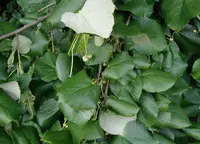
This species develops very large, obovate leaves that commonly reach 30–50 cm in length, creating a distinctive layered, paddle-like canopy in mature trees.

Night-fragrant flowers

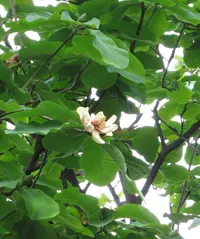
The creamy white flowers open fully in late spring to early summer and release a strong, sweet fragrance that is especially noticeable in the evening and at night, attracting nocturnal pollinators.

Striking cone-like fruit

After flowering, it forms elongated, cone-like fruiting structures that turn reddish and split open to reveal bright red seeds that hang briefly by thin threads, aiding visual attraction for birds.

Botan icon

Did you know?

In parts of Japan, the large, tough leaves of Magnolia obovata have been traditionally used as natural plates and for grilling or roasting foods, a practice known as hoba-yaki, because the leaves resist burning and impart a subtle aroma.

FAQs about Japanese Big Leaf Magnolia

Lack of flowers often comes from deep shade, young age, or heavy pruning of flowering wood. Late frosts, drought stress, or excessive nitrogen fertilizer can also reduce bud formation and cause poor or absent blooming.

Grow Healthy Plants with Botan Care

Keep your plants happy and healthy with plant identification, disease detection, and easy care guidance.

Botan plant care app — identify plants on mobile

Explore More Plants