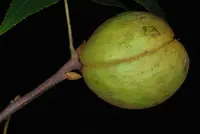
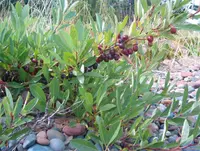
finger root Care (Uvaria chamae)

Also known as: bush banana
finger root

About finger root

Finger root, Uvaria chamae, is a tropical shrub or small climber valued mainly for its aromatic, ginger-like rhizomes. It typically forms a bushy clump with woody stems and simple green leaves. In its native range of West and Central Africa, it grows in woodland edges, farm borders, and disturbed sites with warm temperatures and seasonal rains.

The plant is moderately easy to cultivate where frost is absent, as it tolerates some drought once established but prefers regular moisture and well-drained soil. It generally appreciates bright light with some protection from harsh, direct sun. Gardeners who learn how to care for finger root usually focus on providing warmth, drainage, and enough space for its rhizomes to expand.

Main Plant Requirements

Care Difficulty

Moderate Care

Light Preference

Partial Sun

Water Requirements

Moderate Water

Temperature Preference

Tropical / Frost Sensitive

Hardiness Zone

10–12

Soil Texture

Sandy, Loamy, Organic-rich

Soil pH

Acidic (5.5–6.5), Slightly acidic (6.5–7.0)

Soil Drainage

Moist but well-drained

Fertilization

Minimal (feed rarely)

Get Personalized Care Plan

Scan your plant to receive care tips personalized for your specific plant

Available on iOS and Android

How to Care for the finger root

Uvaria chamae prefers bright, warm conditions similar to an open woodland edge.

  • Provide 4–6 hours of gentle morning sun with light shade or filtered light in the hot afternoon to protect leaves from scorch.
  • Tolerates partial shade (around 2–4 hours of direct sun) but flowering and fruiting of finger root decline in deeper shade.
  • In hot summers, use taller plants or light shade cloth to diffuse intense midday sun; in cooler seasons, allow more direct sun to maintain active growth.

Uvaria chamae benefits from consistently moist but not saturated soil.

  • Water when the top 3–5 cm of soil feels dry, aiming for moist, crumbly soil rather than soggy conditions.
  • In the warm growing season, increase watering frequency, but in cooler months reduce it so the surface dries slightly between waterings.
  • Yellowing, soft leaves and a sour smell suggest overwatering or poor drainage, while dull, curling leaves and dry, hard soil indicate underwatering; improve drainage with coarse organic matter.

This species thrives in warm, frost-free conditions typical of tropical to subtropical climates.

  • Ideal growth occurs at 70–86°F (21–30°C), where roots and foliage stay active and new shoots develop steadily.
  • Plants are damaged near 40°F (4°C) and can be killed by frost; protect from cold snaps with mulching and, if possible, temporary covers.
  • Tolerates short periods up to about 95°F (35°C) if soil moisture is maintained and roots are mulched, but prolonged extreme heat with dry soil slows growth and stresses the plant.

This species prefers moderately humid air but adapts to many home environments.

  • Aim for 50–70% humidity to support steady foliage and stem growth.
  • It tolerates short dry spells indoors, but very dry air may slow growth and crisp leaf edges.
  • Humidity stress shows as browning tips, rolling leaves, and stalled new shoots.
  • Increase humidity with a nearby tray of moist pebbles, grouped plants, or a room humidifier rather than frequent misting.

Uvaria chamae grows best in loose, moisture-retentive but free-draining soil.

  • Use a loamy mix with 40–50% organic matter, such as compost plus leaf mold, to mimic forest-floor conditions.
  • Improve drainage and aeration by adding coarse sand and 10–20% perlite, especially in heavier native soils.
  • Target a slightly acidic to neutral pH of 6.0–7.0 to support balanced nutrient uptake.
  • Avoid compacted clay, waterlogged sites, or pure sand, which cause root suffocation or rapid drying and nutrient loss.

This species can be grown in containers if the pot supports its woody, spreading root system.

  • Choose a deep, heavy pot that resists tipping once stems lignify and become more top-heavy.
  • Select a container with multiple drainage holes so water leaves quickly and the lower root zone never stays saturated.
  • Use a slightly wider-than-deep pot to give lateral roots room to expand without forcing dense circling at the base.

Uvaria chamae benefits from modest feeding to support healthy growth and fruiting when cultivated, though wild plants often manage in poor soils.

  • Use a balanced NPK fertilizer (such as 10-10-10) or well-rotted compost as the main nutrient source.
  • Feed lightly every 4–6 weeks during the warm growing season, especially for container or intensively managed plants.
  • Dilute liquid fertilizer to 1/2 strength to avoid root burn and salt buildup in the soil.
  • Reduce or stop feeding in cooler months when growth slows, as caring for finger root during dormancy mainly focuses on moisture control.

Pruning Uvaria chamae is useful for managing size, encouraging branching, and maintaining plant health in cultivation.

  • Carry out structural pruning at the end of the dry season or just before active growth begins.
  • Remove dead, diseased, or damaged wood first, then thin out crowded interior shoots to improve light and air flow.
  • Shorten overly long or crossing branches to maintain a balanced framework and manageable height.
  • Use sharp, clean bypass pruners or loppers, making angled cuts just above outward-facing buds or side branches.

This species is more often field-grown than container-grown, so management usually focuses on thoughtful transplanting rather than frequent repotting.

  • Transplant young plants at the start of the rainy or main growing season to reduce water stress and support establishment.
  • Look for roots circling the pot, slow growth, or quick drying soil as signs a container plant needs a larger space.
  • Move up only 1–2 pot sizes or into a well-prepared ground site with loose, draining soil and added organic matter.
  • Water thoroughly before and after moving, keep the root ball intact, and shade the plant lightly for 3–7 days to limit transplant shock.

Uvaria chamae is typically propagated by seed and semi-ripe cuttings, mainly in warm climates or controlled nursery conditions.

  • Collect ripe seeds, clean them, and sow in a free-draining mix kept at 75–85°F with consistent, light moisture.
  • Scarify or lightly nick hard seed coats if present to improve and speed up germination.
  • Take semi-ripe stem cuttings in early warm season, using 8–12 cm pieces with several nodes.
  • Insert cuttings in a sterile, moist, well-draining medium under high humidity and bright, indirect light until roots form.

This tropical species does not tolerate frost and needs protection in regions with cool or freezing winters.

  • In USDA zones below 10, grow in containers or sheltered sites so plants can be safeguarded from freezing temperatures.
  • Before first frost, move container plants indoors or into a heated greenhouse with temperatures above 55°F.
  • In mild climates, apply a 5–8 cm organic mulch layer over the root zone to buffer short cool spells and conserve soil warmth.

Care Tips

Provide climbing support

Install a sturdy trellis or horizontal wires early and gently tie young stems with soft ties so the vine can climb and produce stronger flowering wood rather than sprawling on the ground.

Mulch the root zone

Apply a 5–8 cm layer of coarse organic mulch around, but not touching, the stems to stabilize soil moisture, protect shallow roots from heat, and reduce weed competition.

Encourage lateral shoots

After the main stems are established, lightly tip back vigorous leaders at the start of the wet growing season to stimulate side shoots, which often bear more flowers and fruit.

Plan for suckering

Monitor the surrounding soil area for new shoots arising from the root system and either remove them to keep a single clump or transplant the strongest ones if you want to slowly expand the planting.

Time harvest carefully

For medicinal or culinary use, harvest fruits only when fully colored and slightly soft to the touch, and collect in the cool part of the day to reduce post-harvest spoilage when growing finger root outdoors in warm climates.

Common Pests and Diseases

Leaf spot

This disease causes brown to dark purple spots on older leaves, often with a yellow halo and occasional shot holes where dead tissue falls out. Symptoms include gradual thinning of foliage and reduced vigor in humid, shaded sites.

Solution

Prune and destroy affected leaves, then thin dense branches to improve light and airflow around the plant. Avoid overhead watering, irrigate at soil level, and if the problem recurs in wet seasons, apply a copper-based fungicide according to label directions at the first sign of new spotting.

Anthracnose

This disease produces irregular tan to dark lesions along leaf veins and on young stems, which may lead to leaf distortion and premature drop. Symptoms include more severe damage during prolonged warm, wet weather and in densely planted stands.

Solution

Remove and dispose of infected leaves and twigs, and keep the area under the shrub free of fallen debris to reduce fungal spores. Improve spacing and airflow, avoid wetting foliage late in the day, and use a registered systemic fungicide labeled for anthracnose on woody plants if new growth continues to show fresh lesions.

Scale insects

These insects appear as small, fixed bumps on stems and leaf midribs, sometimes producing sticky honeydew that attracts ants and sooty mold. This pest weakens plants by sucking sap, leading to yellowing leaves and slow growth.

Solution

Scrape off localized infestations with a soft brush or cloth and prune heavily infested twigs. For larger problems, apply horticultural oil thoroughly to stems and leaf undersides during mild weather, repeating as needed to target young crawler stages, and manage ants to prevent them from protecting the scales.

Mealybugs

These insects form white, cottony clusters in leaf axils, on young shoots, and along roots in container plants, causing leaf yellowing and distorted new growth. This pest excretes honeydew, which can lead to black sooty mold on leaves and fruit.

Solution

Wipe visible colonies with a cotton swab dipped in 70% isopropyl alcohol and remove heavily infested shoots. For broader infestations, use repeated applications of insecticidal soap or horticultural oil, ensuring full coverage of hidden crevices, and isolate potted plants until no new mealybugs appear.

Termite stem boring

These insects sometimes tunnel into woody stems and lower branches in field or hedgerow plantings, causing internal galleries, dieback, and branch breakage. Symptoms include small entry holes, frass (powdery droppings), and hollow, weakened wood near the base.

Solution

Cut out and destroy affected stems as soon as damage is noticed and keep the base of the shrub free of stacked wood or debris that attracts termites. In high-pressure areas, use physical barriers around planting sites, maintain plant vigor with proper watering and soil care, and consult local extension services for suitable soil or trunk treatments if structural damage is recurring.

Interesting Facts

Distinctive yellow fruits

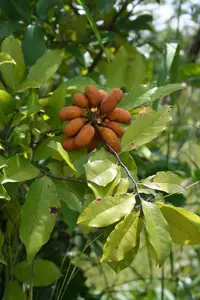
This species produces small, yellow, finger-like clustered fruits that are edible and have a sweet, aromatic pulp, which has led to common names like finger root and bush banana in parts of West Africa.

Forest edge specialist

It naturally occurs along forest edges, secondary forests, and fallows in the West African rainforest zone, where it grows as a woody climber or shrub that can scramble over other vegetation.

Traditional food and spice

In several West African countries, the fruits and sometimes the roots are used as a traditional food and flavoring, and are sold in local markets, giving the plant local economic importance.

Botan icon

Did you know?

Chemical studies of Uvaria chamae have identified a number of annonaceous acetogenins and other bioactive compounds in its tissues, which are being investigated in laboratory settings for various biological activities, although this research is still largely at an experimental stage.

FAQs about finger root

The rhizomes are edible and widely used as a spice and medicinal ingredient in West African cuisine. They are usually cooked or processed, not eaten raw. Ensure correct identification, as some similar-looking forest plants are not safe.

Grow Healthy Plants with Botan Care

Keep your plants happy and healthy with plant identification, disease detection, and easy care guidance.

Botan plant care app — identify plants on mobile

Explore More Plants