Snow load management
In regions with heavy, wet snow, gently brush accumulated snow off the layered branches with a soft broom to prevent breakage, especially on young framework limbs.

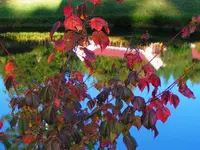
Wongka maple (Acer pectinatum) is a deciduous tree valued for its finely divided leaves and elegant, layered branching. It typically forms a small to medium-sized tree with a light, airy canopy. Native to mountainous regions of Asia, it is adapted to cooler climates with distinct seasons. Its foliage often shows subtle color shifts through the year, adding interest without the intense maintenance needs of more delicate maples. With suitable siting and soil, it is considered moderately easy to grow. Gardeners who learn how to care for Wongka Maple usually focus on providing steady moisture, good drainage, and protection from harsh, drying conditions.

Care Difficulty
Moderate Care

Light Preference
Partial Shade

Water Requirements
Moderate Water

Temperature Preference
Cold Hardy

Hardiness Zone
6–8

Soil Texture
Loamy, Silty, Organic-rich

Soil pH
Acidic (5.5–6.5), Slightly acidic (6.5–7.0)

Soil Drainage
Moist but well-drained

Fertilization
Minimal (feed rarely)
Scan your plant to receive care tips personalized for your specific plant
Available on iOS and Android
This maple prefers bright, gentle light that avoids harsh afternoon sun, especially in warmer climates.
Acer pectinatum grows best in evenly moist, well-drained soil that never stays saturated.
This species prefers cool to mild conditions and tolerates winter cold once established.
This maple prefers moderate humidity and reacts if air stays very dry for long periods.
Acer pectinatum grows best in deep, moisture-retentive yet free-draining soil.
This species can be grown in containers for many years if the pot is chosen and managed carefully.
This maple benefits from light, consistent feeding rather than heavy applications.
Acer pectinatum responds well to light, targeted pruning that maintains structure and health.
This maple is usually grown in the ground, so focus on careful transplanting rather than frequent repotting.
Acer pectinatum is usually propagated by seed or grafting and is considered moderately challenging for home growers.
This maple is generally cold hardy but benefits from some winter root-zone protection in colder regions.

Plant Health Check
Not sure what's wrong with your plant? Check your plant's health inside the app.
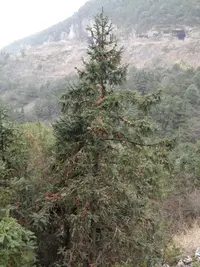
This maple naturally occurs on steep mountain slopes in southwestern China, commonly between roughly 2,000–3,500 m elevation, where it tolerates cool summers and cold, snowy winters.
Mature trees develop gray to yellowish-brown bark with a fine, pebbled or minutely rough texture, which contrasts with the smoother bark of many related maples and provides additional surface for lichens and mosses to colonize.
The leaves are palmately lobed with very narrow, elongated lobes and often finely serrated margins, giving the crown a delicate, lace-like appearance unlike the broader lobes of more familiar Japanese maples.

Acer pectinatum was formally described in the late 19th century from material collected in China, and several geographically and morphologically distinct varieties are now recognized within the species, reflecting how this maple has diversified across different mountain ranges.
Brown, crispy leaf edges usually result from drought stress, hot drying winds, or excess fertilizer salts. Improve watering consistency, apply an organic mulch, and avoid heavy fertilization, especially during hot periods, to reduce further leaf scorch.
Keep your plants happy and healthy with plant identification, disease detection, and easy care guidance.