Root flare check
At planting and every few years, gently clear soil away from the trunk base to expose the root flare so the first major roots sit just at or slightly above soil level, which reduces risk of rot and girdling roots.

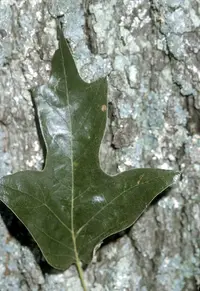
Southern red oak, Quercus falcata, is a large, deciduous tree native to the southeastern United States. It is commonly found in upland forests, dry ridges, and well-drained slopes.
The tree develops a tall, broad crown with deeply lobed leaves that turn russet to dull red in fall and produce acorns that feed wildlife. Its deep root system and tolerance of poor, dry soils make it relatively resilient once established but slower to adapt when transplanted.
Those who want to care for Southern Red Oak should provide full sun, moderately dry to mesic soil, and enough space for its mature size, as it is not suitable for small gardens or indoor use.

Care Difficulty
Moderate Care

Light Preference
Full Sun

Water Requirements
Moderate Water

Temperature Preference
Cold Hardy

Hardiness Zone
6–9

Soil Texture
Sandy, Loamy, Clay

Soil pH
Strongly acidic (4.5–5.5), Acidic (5.5–6.5)

Soil Drainage
Well-drained

Fertilization
Minimal (feed rarely)
Scan your plant to receive care tips personalized for your specific plant
Available on iOS and Android
This oak species performs best in open, bright conditions with substantial direct sun.
This species prefers deep, infrequent watering once established, with soil allowed to dry between soakings.
This oak is adapted to temperate climates with cold winters and warm to hot summers.
Humidity is rarely a limiting factor for Quercus falcata in typical outdoor conditions.
Quercus falcata prefers deep, well-drained, moderately fertile mineral soils.
This species is generally unsuited to long-term container culture and is best grown in the ground.
Quercus falcata usually grows well in average soil and needs only modest supplemental feeding in managed landscapes.
Quercus falcata benefits from light structural pruning to maintain a strong, safe canopy.
Southern Red Oak is typically field-grown, so management focuses on careful transplanting of young trees rather than frequent repotting.
Quercus falcata is usually propagated from seed rather than vegetative methods.
Mature Quercus falcata is cold hardy in its native range and needs minimal winter care once established.

Plant Health Check
Not sure what's wrong with your plant? Check your plant's health inside the app.
Southern red oak often carries two different leaf shapes on the same tree: typical deeply lobed leaves with a long, falcate central lobe and more shallowly lobed or nearly unlobed leaves, especially on lower or shaded branches.
This oak is characteristic of dry, sandy, or rocky upland sites in the southeastern US, where its deep root system and relatively small, glossy leaves help it tolerate periodic drought better than many other oaks.
Its acorns, though relatively small, are produced in large numbers and are a key food source for wild turkey, white-tailed deer, gray and fox squirrels, and many songbirds across its native range.

In the southeastern US, Southern red oak has been widely used as a timber species under the trade category of "red oak," contributing to flooring, furniture, and construction lumber, even though the wood is typically somewhat lighter and less dense than that of northern red oak and a few related species.
This species is considered moderately fast-growing, often adding 30–60 cm of height per year in suitable conditions. Growth is quicker in deep, well-drained, slightly acidic soils and slower in compacted, dry, or nutrient-poor sites.
Keep your plants happy and healthy with plant identification, disease detection, and easy care guidance.