blue oak Care (Quercus douglasii)

Also known as: Iron Oak, Mountain Oak
blue oak

About blue oak

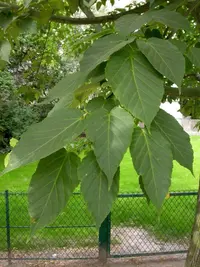
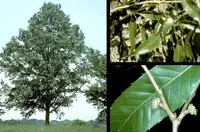
Blue oak, Quercus douglasii, is a slow-growing deciduous tree native to the foothills and lower mountains of California. It forms an open, rounded crown with crooked, bluish-gray leaves that give the tree its name.

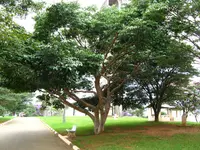
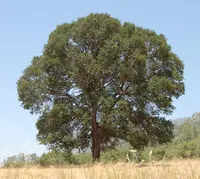
Mature trees often appear rugged, with thick, furrowed bark and irregular branching, adapted to hot, dry summer conditions. It naturally occurs in woodlands and savannas on rocky, shallow soils.

This species is drought-tolerant once established and prefers full sun and well-drained soil. These traits make it relatively low-maintenance in suitable climates, but long-term space and patience are needed to care for blue oak.

Main Plant Requirements

Care Difficulty

Moderate Care

Light Preference

Full Sun

Water Requirements

Low Water

Temperature Preference

Cold Hardy

Hardiness Zone

7–10

Soil Texture

Sandy, Loamy, Clay

Soil pH

Slightly acidic (6.5–7.0), Slightly alkaline (7.0–7.5)

Soil Drainage

Well-drained

Fertilization

Minimal (feed rarely)

Get Personalized Care Plan

Scan your plant to receive care tips personalized for your specific plant

Available on iOS and Android

How to Care for the blue oak

This slow-growing oak thrives in open, bright sites that mimic its native California foothill conditions.

  • Aim for full sun with 6–10 hours of direct light daily; partial shade (4–5 hours sun) is tolerated but slows growth.
  • Provide morning sun and some relief from intense late-afternoon summer sun in very hot, low-rainfall regions to limit leaf scorch.
  • Young blue oak trees benefit from temporary light shade cloth or nearby nurse plants for the first 2–3 summers, then can handle full exposure year-round.

This deep-rooted California oak is adapted to dry summers and should be watered sparingly once established.

  • In the first 2–3 years, water only when the top 5–8 cm of soil is completely dry, then soak deeply so moisture reaches 30–60 cm down.
  • Ensure fast-draining soil; symptoms of overwatering include yellowing leaves, dieback of small twigs, and sour or swampy soil smell.
  • Mature Quercus douglasii in the ground generally needs no summer irrigation; watch for premature leaf drop or curled, crispy leaves as signs of severe drought stress.

This species is well adapted to Mediterranean climates with mild, wet winters and hot, dry summers.

  • Optimal growth occurs around 65–85°F (18–29°C), with young trees most responsive to these moderate temperatures in spring and early summer.
  • Established trees tolerate winter lows near 15–20°F (-9 to -6°C), but young saplings benefit from protection during hard frosts.
  • Heat tolerance is high up to about 100–105°F (38–41°C) if roots are mulched; extended extremes above this can cause leaf scorch and early leaf drop.

Humidity is rarely a concern for Quercus douglasii, which is adapted to very dry air.

  • Target 30–60% humidity; blue oak tolerates lower levels typical of heated or air‑conditioned spaces.
  • Humidity stress appears as marginal leaf browning combined with drought stress, not from air moisture alone.
  • Use a light mulch over the root zone to reduce evaporation rather than trying to raise ambient humidity.

Quercus douglasii prefers dry, mineral soils that drain quickly yet still anchor its deep root system.

  • Use a sandy or gravelly loam with low to moderate organic matter to mimic its native foothill sites.
  • Aim for slightly acidic to slightly alkaline conditions, around pH 6.0–7.5, avoiding strongly acidic mixes.
  • Blend roughly 50–60% coarse sand or small gravel with 30–40% loam and only 10–20% compost for structure.
  • Avoid compacted, clay‑heavy, or waterlogged sites; improve aeration by incorporating coarse mineral grit through the top 20–30 cm.

This species can be grown in containers only as a temporary, short-term measure for young plants.

  • Choose a deep, heavy pot that resists tipping as the seedling develops a strong taproot and increasing top weight.
  • Use a very fast-draining, gritty mix so water moves rapidly away from the root collar and does not linger after irrigation.
  • Elevate the container on feet or blocks so drainage holes remain clear and runoff exits quickly during heavy rain or deep watering.

This species is adapted to low-nutrient soils, so fertilizing blue oak is usually unnecessary for established landscape trees.

  • For young container or nursery trees, use a balanced slow-release fertilizer (for example 10-10-10) in early spring only if growth is weak.
  • Apply at 1/2 strength of label rate and water in thoroughly to reduce root burn risk.
  • Use a thin layer of compost over the root zone instead of repeated granular feeding to support soil life.
  • Avoid fertilizing in late summer or fall to prevent tender growth before winter dormancy.

Pruning Quercus douglasii focuses on safety, structure, and long-term canopy health rather than cosmetic shaping.

  • Carry out structural pruning in late winter while the tree is dormant and disease pressure is lower.
  • Remove dead, damaged, rubbing, or crossing branches to improve airflow and reduce breakage risk.
  • Maintain a strong central leader in young trees and balance scaffold branches for stable structure.
  • Use clean, sharp bypass pruners or a pruning saw, making small, precise cuts just outside the branch collar.

This oak is rarely kept long-term in containers, so care centers on moving young trees into the ground with minimal root disturbance.

  • Transplant in late fall or early winter when the tree is dormant and soil is moist but not waterlogged.
  • Look for circling roots, deformed taproots, or stalled growth as signs a container seedling needs a larger space.
  • Shift container plants only once or twice before field planting, using a pot just 1–2 in wider to limit root spiraling.
  • Handle the root ball gently, keep roots shaded and moist, and water deeply after planting to settle soil and reduce transplant shock.

New Quercus douglasii plants are almost always raised from acorns rather than vegetative methods, so home propagation is limited.

  • Collect ripe, brown acorns in fall and discard any floating in water, as these are usually non-viable.
  • Sow promptly outdoors or cold-stratify at 34–41°F for 1–3 months to mimic winter conditions.
  • Plant acorns in deep containers to accommodate the long taproot, using a well-drained, sandy mix.
  • Keep the medium just slightly moist and provide full sun once seedlings emerge to encourage sturdy growth.

Mature Quercus douglasii is cold hardy in its suitable climate range and usually needs minimal intentional winter care.

  • Young or newly transplanted trees benefit from 5–8 cm of mulch over the root zone, kept away from the trunk.
  • In areas with unusual cold snaps below the typical local minimum, wrap small trunks with breathable tree wrap.
  • Container-grown seedlings should be overwintered in a sheltered, unheated space to avoid root freezing.

Care Tips

Deep root establishment

During the first 2–3 years, irrigate less often but for long durations so water penetrates 45–60 cm deep, encouraging a drought-resilient taproot rather than shallow, surface-feeding roots.

Minimal mulch ring

Use only a thin 2–5 cm ring of coarse wood chips kept 10–15 cm away from the trunk to suppress weeds and protect the root zone while avoiding excess moisture against the bark.

Trunk and branch protection

Install a breathable tree guard and use smooth, low-tension staking on young trees in windy or high-traffic areas to prevent bark damage, mower injury, and unstable leaning while the root system anchors.

Careful site underplanting

If planting beneath the canopy, choose drought-adapted, shallow-rooted natives and avoid frequent watering under the drip line so competition and extra moisture do not stress the oak.

Acorn and seedling management

Collect acorns and remove volunteer seedlings annually if you do not want natural regeneration, or mark and protect selected seedlings with small guards if growing blue oak from site-collected seed.

Common Pests and Diseases

Oak leaf blister

This disease causes raised, blister-like, pale green to yellow patches on leaves that later turn brown and distorted. Symptoms include premature leaf drop in seasons with prolonged cool, wet weather.

Solution

Remove and dispose of heavily affected fallen leaves to limit the fungal inoculum, and avoid overhead irrigation on foliage in spring where possible. Healthy, unstressed trees usually outgrow the damage, so focus on proper Quercus douglasii plant care such as deep, infrequent watering in drought and avoiding soil compaction around the root zone.

Oak anthracnose

This disease leads to irregular brown blotches and dead areas along leaf veins, sometimes causing leaf curling and twig dieback, especially after a wet spring. Symptoms include sparse canopies and small dead twigs in the lower and inner crown.

Solution

Prune and dispose of infected twigs and severely damaged branches during dry weather, disinfecting tools between cuts. Improve air circulation by thinning crowded branches and maintain tree vigor through appropriate watering and mulching rather than relying on chemical treatments for established trees.

Oak twig girdler

These insects cause twigs and small branches to die back and break off, often leaving smooth, girdled cuts where the female beetle chewed around the twig to lay eggs. Symptoms include scattered dead twig tips and fallen, partially green twigs beneath the canopy in late summer to fall.

Solution

Collect and destroy fallen twigs during fall and winter to remove developing larvae and reduce next year’s population. For high-value landscape trees, combine sanitation with regular monitoring and, if infestations are heavy, consult an arborist for timing of targeted trunk or canopy treatments that spare beneficial insects.

Oak pit scale

This pest appears as small, dark, sunken pits along twigs and branches, often accompanied by twig dieback and reduced vigor. This pest feeds on sap, weakening shoots and predisposing branches to secondary infections.

Solution

Prune out and dispose of heavily infested small branches and increase sunlight and airflow by removing dense interior growth. Horticultural oil applied during the dormant season can suppress populations by smothering overwintering stages, while conserving natural predators that help keep numbers in check.

Oak mistletoe

This parasitic plant forms green clumps in the canopy and draws water and nutrients from branches, leading to gradual decline, sparse foliage, and branch dieback under heavy infestation. Symptoms include swollen branch attachment points and visible evergreen tufts that remain when the tree is leafless.

Solution

Prune out infected branches at least 30–45 cm below the mistletoe attachment point during the tree’s dormant season, making clean cuts just outside the branch collar. Where complete removal is not possible on large branches, cutting back mistletoe flush with the bark and repeating as it resprouts can slow weakening of the tree, combined with general growing blue oak practices like minimizing drought stress.

Interesting Facts

Blue foliage coloration

The pale blue-green color of the leaves comes from a thick, waxy cuticle and light-reflecting surface that reduce water loss in the hot, dry climates where this oak naturally occurs.

California endemic oak

This species is native only to California, where it dominates many foothill woodlands on dry, rocky slopes and helps define the appearance and ecology of interior oak savannas.

Deep drought adaptation

Its roots can penetrate deeply into fractured bedrock, allowing the tree to access stored soil moisture and remain green through long Mediterranean-type summer droughts with very little rainfall.

Botan icon

Did you know?

Pollen records from lake sediments show that this oak has been a distinct component of California’s interior foothill flora for thousands of years, indicating long-term persistence through major climate shifts since the last ice age.

FAQs about blue oak

This species grows slowly, typically 15–30 cm per year once established. Growth is especially slow in the first few years while roots develop deeply, then gradually increases if moisture, space, and light conditions are suitable.

Grow Healthy Plants with Botan Care

Keep your plants happy and healthy with plant identification, disease detection, and easy care guidance.

Botan plant care app — identify plants on mobile

Explore More Plants