Early leader training
In the first 3–5 years, select a single strong central leader and remove competing upright stems in late winter to build a stable main trunk that will better resist storm damage later.

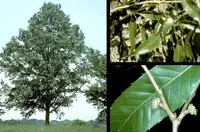
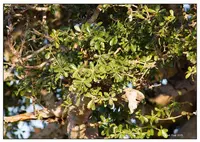
Sawtooth oak, Quercus acutissima, is a fast-growing deciduous tree valued for its broad crown and deeply serrated, glossy green leaves that turn yellow to golden-brown in fall. It typically develops a strong central trunk with wide-spreading branches, forming a sturdy shade tree in landscapes and larger gardens.
This species is native to East Asia but is widely planted in parts of North America for wildlife habitat and ornamental use. It adapts to a range of soils and moderate urban conditions, which makes it relatively straightforward to care for sawtooth oak once established. The tree prefers full sun, reasonably well-drained soil, and consistent but not excessive moisture when young.

Care Difficulty
Moderate Care

Light Preference
Full Sun

Water Requirements
Moderate Water

Temperature Preference
Cold Hardy

Hardiness Zone
5–9

Soil Texture
Sandy, Loamy, Clay

Soil pH
Acidic (5.5–6.5), Slightly acidic (6.5–7.0)

Soil Drainage
Well-drained

Fertilization
Minimal (feed rarely)
Scan your plant to receive care tips personalized for your specific plant
Available on iOS and Android
Quercus acutissima grows best in full sun but tolerates some light shade, especially when young.
This oak prefers evenly moist, well-drained soil, especially during establishment.
This species is a hardy, temperate-climate tree that tolerates a wide range of outdoor temperatures once established.
Quercus acutissima handles a wide humidity range outdoors, so humidity control is usually unnecessary.
Quercus acutissima prefers deep, well-structured, well-drained mineral soil that still holds some moisture.
This species can be grown in containers only short term, mainly as a juvenile tree.
Quercus acutissima grown in average garden soil needs only modest, well-timed feeding to support steady growth.
Quercus acutissima benefits from light, structured pruning to maintain a strong framework and safe canopy.
Sawtooth oak is usually field-grown and transplanted while young, as mature trees resent major root disturbance.
Quercus acutissima is most often propagated from seed, as vegetative methods are slow and unreliable.
Quercus acutissima is a cold-hardy deciduous oak that usually requires minimal winter care once established in the landscape.

Plant Health Check
Not sure what's wrong with your plant? Check your plant's health inside the app.
This species is named for its sharply serrated leaf margins, whose coarse, bristle-tipped teeth remain prominent even on mature leaves, making it easy to distinguish from many other oaks with smoother edges.
It is known as a very prolific acorn bearer, often producing abundant crops at a relatively young age compared with many native oaks, which has led to its use in some regions as a wildlife food source.
Native to East Asia, this tree has been widely planted in parts of the US and Europe for timber, shelterbelts, and wildlife plantings, and in some areas it has naturalized and is monitored for potential invasive behavior.

In its native range, this species has historically been managed as coppice, meaning trees were repeatedly cut back to the base to encourage multiple stems, providing a sustainable source of small-diameter timber and fuelwood over many harvest cycles.
This species is considered relatively fast-growing for an oak, often adding 30–60 cm of height per year once established. Growth is quicker in deep, well-drained soils with consistent moisture and full outdoor exposure.
Keep your plants happy and healthy with plant identification, disease detection, and easy care guidance.