Mulch With Grit
Apply a 2–3 cm layer of sharp sand or fine gravel around the plants to keep the root zone cool, suppress weeds, and prevent heavy soils from staying waterlogged.

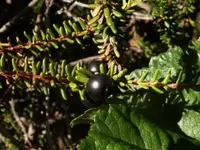
Black crowberry, Empetrum nigrum, is a low, mat-forming evergreen shrub from cool, northern and coastal regions, including Arctic tundra, moorland, and boreal forests. It forms dense carpets of fine, needle-like foliage dotted with small, dark purple-black berries.
This species is adapted to poor, acidic, often sandy or peaty soils and harsh climates, which makes it resilient but particular about site conditions. It prefers open, sunny to lightly shaded positions and consistently cool, moist environments.
Because it is slow-growing and dislikes disturbance, it is best suited to rock gardens, heath gardens, and naturalistic plantings. Understanding how to care for black crowberry starts with providing a low-nutrient, acidic substrate and avoiding hot, dry conditions.

Care Difficulty
Moderate Care

Light Preference
Full Sun

Water Requirements
Regular Water

Temperature Preference
Cold Hardy

Hardiness Zone
2–6

Soil Texture
Sandy, Peaty, Organic-rich

Soil pH
Strongly acidic (4.5–5.5)

Soil Drainage
Moist but well-drained

Fertilization
Minimal (feed rarely)
Scan your plant to receive care tips personalized for your specific plant
Available on iOS and Android
This low, mat-forming shrub prefers cool, bright conditions with consistent light exposure.
This species prefers evenly moist, cool soil but does not tolerate standing water.
This boreal shrub is adapted to cool climates and tolerates significant cold once established.
This species is adapted to cool, breezy habitats, so indoor humidity control is rarely critical.
Empetrum nigrum prefers lean, acidic, sharply drained soil that mimics coastal or heathland conditions.
This shrub can be grown in containers if the pot is set up to drain rapidly and stay cool.
This heath-like shrub needs only minimal feeding, especially in poor, acidic soils where it naturally thrives.
Pruning Empetrum nigrum is mainly light maintenance to keep the mat dense and healthy.
This low, mat-forming shrub is best grown in the ground, so care focuses on careful transplanting rather than frequent repotting.
Empetrum nigrum is most reliably propagated by semi-hardwood cuttings or natural layering, with seeds used mainly for specialist projects.
This species is naturally cold hardy and usually needs little special winter care in the ground.

Plant Health Check
Not sure what's wrong with your plant? Check your plant's health inside the app.
In cold northern climates, the black crowberry often flowers and sets fruit late enough that its berries finish ripening under autumn snow cover and can stay on the plant into the next spring.
This species forms dense, low evergreen mats with very small, needle-like leaves that help reduce water loss and protect the plant from freezing winds on exposed coasts and tundra.
Its berries are an important seasonal food source for animals such as ptarmigan, grouse, foxes, and bears in subarctic and Arctic ecosystems, especially when other fruits are scarce.

Black crowberry can dominate large areas of nutrient-poor, acidic soils in northern heathlands and coastal dunes, where its leaf litter and root chemistry can slow decomposition and subtly change soil conditions, influencing which other plant species can establish there.
This species is a low, woody evergreen shrub. It holds its tiny needle-like leaves year-round, providing consistent cover and structure even in cold climates, though foliage may bronze or darken in winter in exposed or nutrient-poor sites.
Keep your plants happy and healthy with plant identification, disease detection, and easy care guidance.