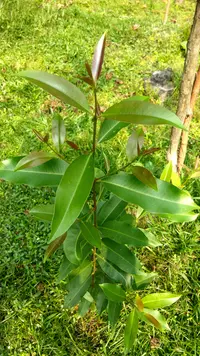
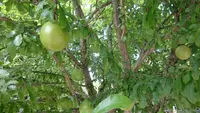
stinkingtoe Care (Hymenaea courbaril)

Also known as: West Indian Locust
stinkingtoe

About stinkingtoe

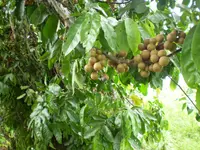
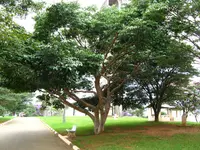
Stinkingtoe, Hymenaea courbaril, is a large, long-lived tropical tree from the Caribbean and Central and South America. It is grown mainly outdoors in warm climates. The tree has a strong central trunk, a broad rounded canopy, and hard seed pods containing edible, floury pulp with a strong smell.

It is usually used as a landscape, shade, or timber tree rather than a houseplant. Slow to moderate growth and deep roots make it sturdy but not suitable for small spaces. Understanding how to care for stinkingtoe is helpful because young trees dislike waterlogged soil, need sun, and perform best in warm, frost-free conditions.

Overall, it is a resilient species once established but can be challenging in cooler or confined urban sites.

Main Plant Requirements

Care Difficulty

Moderate Care

Light Preference

Full Sun

Water Requirements

Moderate Water

Temperature Preference

Tropical / Frost Sensitive

Hardiness Zone

10–12

Soil Texture

Sandy, Loamy, Organic-rich

Soil pH

Acidic (5.5–6.5), Slightly acidic (6.5–7.0)

Soil Drainage

Well-drained

Fertilization

Minimal (feed rarely)

Get Personalized Care Plan

Scan your plant to receive care tips personalized for your specific plant

Available on iOS and Android

How to Care for the stinkingtoe

Hymenaea courbaril is a sun-loving tropical tree that grows best with strong, consistent light.

  • Provide 6–8 hours of direct sun daily; full sun is ideal once established, especially for young stinkingtoe trees grown in open sites.
  • Allow light partial shade during the hottest afternoon hours in very hot climates to reduce leaf scorch and moisture stress.
  • Ensure seedlings get bright, filtered light if grown under taller trees, then gradually move them into more open sun over 1–2 years.

Hymenaea courbaril prefers deep, infrequent watering that encourages a strong taproot.

  • Water when the top 5–8 cm of soil feels dry, applying a slow, deep soak that moistens the root zone rather than frequent shallow splashes.
  • During the first 2–3 growing seasons, monitor for wilting, dull leaves, or leaf edge crisping as signs of underwatering, and yellowing or soft new growth as signs of excess water.
  • Plant in well-drained sandy or loamy soil; avoid spots where water stands for more than 12–24 hours to reduce root rot risk.

This tropical tree thrives in warm climates and is sensitive to cold and frost.

  • Aim for 70–90°F (21–32°C) during active growth; consistent warmth supports faster root and canopy development.
  • Protect from temperatures below 45°F (7°C); young trees can suffer damage around 40°F (4°C) and are usually killed by frost at 32°F (0°C) or lower.
  • In hot regions with summer highs above 95°F (35°C), provide mulch and occasional extra water to prevent heat stress and bark or leaf scorch.

Hymenaea courbaril handles a wide humidity range but grows best with moderate ambient moisture.

  • Target 40–60% humidity, similar to many subtropical outdoor conditions.
  • It tolerates short dry-air spells, but prolonged humidity below 30% can slow growth and dry leaf edges.
  • Humidity stress shows as browning tips and marginal leaf scorch rather than wilting.
  • Outdoors, group plants and use mulch to stabilize moisture; indoors, simple measures like a nearby tray of water can slightly raise local humidity for stinkingtoe.

This species prefers deep, well-structured mineral soil that drains freely yet retains some moisture.

  • Use a sandy or loamy mix with moderate organic matter, such as native soil blended with compost and coarse sand.
  • Ensure fast drainage; aim for a structure that does not stay waterlogged longer than 24 hours after thorough watering.
  • A slightly acidic to neutral pH around 6.0–7.0 suits Hymenaea courbaril and supports balanced nutrient availability.
  • Improve aeration by incorporating 20–30% coarse material such as sand, fine gravel, or pine bark, and avoid compacted or heavy clay substrates.

This tree can be grown in containers for its juvenile stages, but long-term container culture is challenging due to size and root vigor.

  • Choose a deep, heavy container that resists tipping as the trunk thickens and the canopy becomes top-heavy.
  • Select a potting mix that is slightly heavier than typical houseplant mixes to balance drainage with stability for the tall woody stem.
  • Elevate the container on pot feet so large drainage holes stay clear, allowing rapid outflow of excess water after deep irrigation.

Hymenaea courbaril is a slow-growing tropical tree that benefits from modest, balanced nutrition in cultivation.

  • Use a balanced slow-release fertilizer (around 10-10-10) or well-rotted compost once in early spring for young or container-grown stinkingtoe.
  • In warm climates, a second light application in mid-summer supports steady growth without forcing soft, weak shoots.
  • Reduce or stop feeding in late fall and winter when growth slows or the tree is semi-dormant.
  • For liquid feeds on young container plants, use at 1/2 strength, applying only to moist soil to avoid root burn.

Pruning Hymenaea courbaril is mainly done to maintain a strong framework and safe structure.

  • Carry out pruning in late winter or very early spring, before vigorous new growth begins.
  • Remove dead, diseased, crossing, or storm-damaged branches first to reduce pest and decay risks.
  • Thin crowded interior branches selectively to improve light penetration and airflow, not to heavily reduce canopy size.
  • Use clean, sharp bypass pruners or a pruning saw, making smooth cuts just outside the branch collar to support proper healing.

This large tree is rarely kept long term in containers, so focus on careful transplanting of young Hymenaea courbaril outdoors.

  • Transplant when roots circle the pot or growth slows, ideally in late spring or early summer once soil is warm.
  • Plan to step young trees into larger containers only every 2–3 years before final planting in the ground.
  • Choose a deep, well-drained site; plant at the same soil level as in the container and water thoroughly after planting.
  • Reduce root stress by handling the root ball gently, shading the tree for the first 1–2 weeks, and keeping soil evenly moist, not waterlogged.

Propagation of Hymenaea courbaril is typically done from seeds rather than vegetative methods.

  • Collect fully mature pods, remove seeds, and scarify the hard seed coat lightly with sandpaper to improve water uptake.
  • Sow seeds in warm conditions (75–85°F) in a free-draining mix, such as coarse sand blended with compost or potting soil.
  • Keep the medium evenly moist but not saturated, providing bright light and good air movement to limit fungal problems.
  • Seed propagation is most successful in late spring to early summer, when light levels and temperatures support strong seedling growth.

This tropical to subtropical tree has low frost tolerance and needs protection in cooler climates.

  • In ground, it suits frost-free or very mild regions; sustained temperatures below 32°F can damage young growth.
  • Apply a 5–8 cm mulch layer over the root zone in late fall, keeping it slightly away from the trunk base.
  • Move container-grown plants indoors or into a heated greenhouse before the first frost, ensuring bright light and reduced watering.

Care Tips

Deep root training

During the first 2–3 years, water less often but very deeply to encourage a strong taproot, which improves drought tolerance and long-term stability when growing stinkingtoe outdoors.

Wind-firm young trees

In exposed sites, use low, loose staking on the windward side only and remove all supports after 1–2 years to allow the trunk to flex and develop natural strength.

Trunk flare protection

Keep mulch and soil pulled back 5–8 cm from the trunk base to expose the root flare, reducing risks of rot, girdling roots, and pest entry at the collar.

Canopy structure shaping

In the first 3–5 years, selectively retain 1 strong central leader and evenly spaced scaffold branches, making small, clean cuts to build a stable canopy that can carry heavy pods later.

Pod and litter management

Place the tree where falling pods will not damage structures, and plan seasonal ground cleanup or grazing use under the canopy to manage heavy fruit and leaf drop safely.

Common Pests and Diseases

leaf-cutting ants

These insects remove semicircular pieces from young leaves and carry them away to feed underground fungus gardens, which can defoliate seedlings and saplings quickly.

Solution

Use physical barriers such as sticky bands or fine mesh around young trunks, destroy nearby ant nests when possible, and apply targeted ant baits away from the root zone to suppress colonies while monitoring new flushes of growth closely.

seed beetles

These insects bore into the large pods and seeds, reducing seed viability and sometimes causing premature fruit drop in stinkingtoe trees.

Solution

Collect and destroy infested or fallen pods, store harvested seeds in sealed containers and inspect them regularly, and use fine mesh bags on developing pods in small-scale plantings to prevent adult beetles from laying eggs.

wood-boring beetles

This pest attacks older or stressed wood, creating galleries in trunks and branches that weaken the structure and can lead to limb dieback.

Solution

Prune and destroy badly infested limbs, avoid mechanical injuries and drought stress that attract borers, and maintain good tree vigor through appropriate watering and mulching so the tree can compartmentalize damaged tissue effectively.

sooty mold

This disease appears as a black, soot-like coating on leaves and stems, growing on the sugary honeydew excreted by sap-sucking insects such as scale or aphids.

Solution

First control the honeydew-producing insects by washing foliage with water and a mild insecticidal soap, then improve airflow within the canopy; lightly wipe or rinse affected leaves so they can photosynthesize normally again.

leaf spot

This disease causes small to medium brown or dark spots on leaf blades, sometimes with yellow halos, which can lead to partial defoliation in humid conditions.

Solution

Remove and discard heavily spotted or fallen leaves, avoid overhead watering to keep foliage dry, and increase spacing and airflow; in high-value trees, a targeted fungicide labeled for broadleaf tree leaf spots may be used according to local guidelines as part of broader Hymenaea courbaril care.

Interesting Facts

Amber-forming resin

This species produces a hard resin that can fossilize over millions of years into amber, especially in tropical America, preserving insects, pollen, and other small organisms inside.

Nitrogen-fixing partnership

Its roots host symbiotic bacteria in nodules that convert atmospheric nitrogen into usable forms, helping enrich poor tropical soils and supporting surrounding plant communities.

Massive hardwood canopy

Mature trees often develop thick, heavy hardwood trunks and broad crowns that can dominate the upper forest canopy, providing shade and structural habitat for epiphytes, birds, and arboreal mammals.

Botan icon

Did you know?

This species is one of the main fossil resin producers responsible for much of the Neotropical amber record, which has allowed scientists to reconstruct ancient rainforest ecosystems and insect diversity from tens of millions of years ago.

FAQs about stinkingtoe

The large pods are edible and traditionally used as food. The dry, floury pulp around the seeds is eaten fresh or in drinks and desserts. Only the pulp is consumed; seeds and shell are discarded.

Grow Healthy Plants with Botan Care

Keep your plants happy and healthy with plant identification, disease detection, and easy care guidance.

Botan plant care app — identify plants on mobile

Explore More Plants