Wind-firm training
In the first 2–3 years, lightly stake young trunks and gradually loosen ties every 6–12 months so the tree builds taper and anchoring roots suited to windy tropical or subtropical sites.

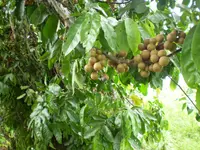
American muskwood (Guarea guidonia) is a tropical evergreen tree native to Central America, the Caribbean, and northern South America. It is mainly found in lowland and moist forests. The tree develops a straight trunk with a rounded crown and dense, glossy foliage, giving it a tidy, structured appearance in suitable climates. Its small flowers and inconspicuous fruits are less ornamental than its overall form and shade value. Growth is fastest in consistently warm, humid conditions with well-drained, fertile soil. For those who want to care for American muskwood, its need for stable warmth and space makes it more suitable for outdoor cultivation in frost-free regions than for compact indoor settings.

Care Difficulty
Moderate Care

Light Preference
Partial Sun

Water Requirements
Moderate Water

Temperature Preference
Tropical / Frost Sensitive

Hardiness Zone
10–12

Soil Texture
Loamy, Sandy, Organic-rich

Soil pH
Acidic (5.5–6.5), Slightly acidic (6.5–7.0)

Soil Drainage
Moist but well-drained

Fertilization
Minimal (feed rarely)
Scan your plant to receive care tips personalized for your specific plant
Available on iOS and Android
Guarea guidonia grows best as a tropical canopy or midstory tree with bright but softened light.
Watering should support steady growth while avoiding prolonged saturated soil around the roots.
This tropical tree prefers warm, stable temperatures and does poorly in cold or frosty conditions.
This tropical tree prefers moderately humid air but usually tolerates typical indoor humidity.
This species does best in deep, loose, well-drained, organic-rich soil that retains some moisture without staying waterlogged.
This tree can be grown in large containers during juvenile stages, mainly in mild or warm climates.
Guarea guidonia benefits from light, balanced feeding when grown in managed landscapes or containers, but mature trees in fertile soil often need no extra fertilizer.
Guarea guidonia responds well to light structural pruning that keeps the canopy healthy and safe.
This species is usually grown as a landscape tree, so transplanting young plants correctly matters more than long-term container repotting.
Guarea guidonia is typically propagated by seeds, with vegetative methods used less often in home settings.
This tropical tree has low frost tolerance and needs protection in regions with cool or freezing winters.

Plant Health Check
Not sure what's wrong with your plant? Check your plant's health inside the app.
This species naturally occurs as a tall evergreen tree in lowland Neotropical forests from southern Mexico through Central America and the Caribbean to northern South America, often forming part of the upper canopy layer.
Its extrafloral nectaries, small nectar‑secreting structures outside the flowers, attract ants that in turn help defend young leaves and shoots from herbivorous insects.
The wood is moderately light, workable, and has been used regionally for furniture, interior construction, and carpentry, although it is not a major commercial timber compared with other Meliaceae relatives.

Guarea guidonia plays an important structural role in some Puerto Rican secondary forests, where its relatively rapid growth and tolerance of disturbed sites help re‑establish a multi‑layered canopy during forest regeneration after past land clearing.
Growth is moderate. In warm, moist climates it often adds 30–60 cm per year once established. Under good conditions it may reach a small shade‑giving size in roughly 8–12 years.
Keep your plants happy and healthy with plant identification, disease detection, and easy care guidance.