Support long leaves
Install a low, broad support such as a horizontal bar or mesh behind the pot so the heavy, strap-like leaves can rest and hang without kinking at the base.

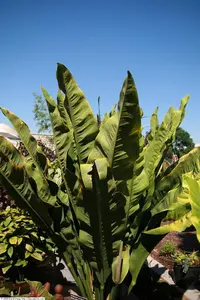
Anthurium coriaceum is a tropical aroid grown mainly for its long, narrow, leathery leaves that arch or hang in a graceful, architectural way. It is usually grown as a foliage specimen rather than for flowers, which are smaller and less showy than in many other Anthurium species.
This species is native to tropical regions of Brazil, where it grows as an epiphyte or lithophyte, anchored on trees or rocks in warm, humid forests. It is considered moderately challenging, as it needs stable warmth, high humidity, and very airy, fast-draining substrate to thrive.
With consistent conditions and careful watering, it can adapt well to indoor collections. Understanding how to care for Anthurium coriaceum helps prevent problems such as root rot and leaf damage.

Care Difficulty
Moderate Care

Light Preference
Bright Indirect Light

Water Requirements
Moderate Water

Temperature Preference
Tropical / Frost Sensitive

Hardiness Zone
11–12

Soil Texture
Loamy, Peaty, Organic-rich

Soil pH
Acidic (5.5–6.5), Slightly acidic (6.5–7.0)

Soil Drainage
Moist but well-drained

Fertilization
Light (every 4–6 weeks)
Scan your plant to receive care tips personalized for your specific plant
Available on iOS and Android
This species prefers bright, filtered light that mimics dappled forest conditions.
Watering should keep the root zone evenly moist but never saturated.
Stable, warm temperatures support healthy foliage and root function.
This species prefers sustained higher humidity to keep foliage healthy and resilient.
Anthurium coriaceum grows best in a loose, highly aerated, organic-rich mix that drains quickly.
This species is well suited to container growing when the pot supports its spreading root system and foliage weight.
This aroid benefits from light, consistent nutrition in active growth but is sensitive to excess salts.
This species needs only light pruning to maintain health and a clean, architectural look.
Container-grown plants benefit from infrequent but careful repotting to refresh the chunky medium.
This plant is commonly propagated by division of the clump or stem sections rather than by seed at home.
This tropical aroid is not frost tolerant and needs mild, protected conditions in winter.

Plant Health Check
Not sure what's wrong with your plant? Check your plant's health inside the app.
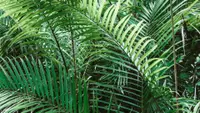
This species develops long, narrow, leathery leaves that can become quite stiff with age, an adaptation that helps them resist tearing in exposed canopy conditions in its native Brazilian habitats.
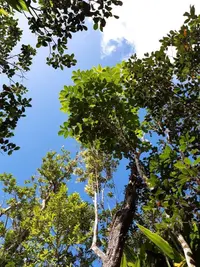
It typically grows as an epiphyte, anchoring its roots on tree trunks or in leaf litter caught in branch crotches rather than in soil, which allows it to access light above the forest floor.
The inflorescence bears a relatively narrow green spathe that does not show the bright colors of some cultivated Anthurium relatives, reflecting its adaptation to pollinators that rely more on scent and structure than on visual attraction.
This species performs best in a warm, humid, frost-free environment with bright shade. In most US climates, it is more reliable in containers indoors or in sheltered patios, where light, humidity, and temperature can be controlled more consistently.
Keep your plants happy and healthy with plant identification, disease detection, and easy care guidance.