California bulrush Care (Schoenoplectus californicus)

Also known as: southern bulrush, California bulsedge, California Club-rush
California bulrush

About California bulrush

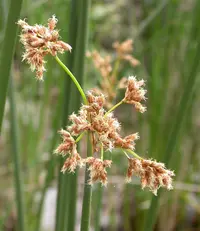
California bulrush, Schoenoplectus californicus, is a tall, clump-forming aquatic sedge commonly found along pond edges, marshes, and slow-moving waterways. It produces upright, cylindrical green stems with brownish flower clusters near the tips, creating dense stands that provide habitat for wildlife and help stabilize shorelines.

This species prefers consistently wet or shallowly flooded conditions and thrives in full sun, though it tolerates light shade. It usually handles a range of water and soil conditions, which makes it relatively forgiving once established.

Gardeners who learn how to care for California bulrush will find it useful for naturalistic ponds, rain gardens, and restoration projects where a strong, structural wetland plant is needed.

Main Plant Requirements

Care Difficulty

Moderate Care

Light Preference

Full Sun

Water Requirements

Aquatic

Temperature Preference

Warm Climate

Hardiness Zone

7–11

Soil Texture

Loamy, Silty, Organic-rich

Soil pH

Slightly acidic (6.5–7.0), Neutral (7.0)

Soil Drainage

Waterlogged tolerant

Fertilization

Minimal (feed rarely)

Get Personalized Care Plan

Scan your plant to receive care tips personalized for your specific plant

Available on iOS and Android

How to Care for the California bulrush

This wetland species thrives with abundant direct light but can adapt to some shade in hot regions.

  • Provide 6–8 hours of direct sun daily; full sun supports strongest, tallest growth in ponds, marsh edges, and ditches.
  • In very hot climates, allow morning sun with light afternoon shade to prevent leaf scorching and drying of exposed, non-flooded soil for California bulrush.
  • Plants in partial shade (3–5 hours direct sun plus bright reflected light) grow acceptably but may become looser and less upright.

This emergent wetland plant is adapted to saturated conditions rather than intermittently dry soil.

  • For in-ground ponds or marshy sites, keep the root zone constantly saturated or submerged by 5–30 cm; never allow the soil surface to dry and crack.
  • In containers or lined bogs, ensure no drainage holes or maintain a standing water layer; the soil should feel muddy, not just moist, when probed.
  • Underwatering shows as browning, crisp tips and shrinking clumps; true overwatering is rare for Schoenoplectus californicus unless roots lack oxygen in compact, stagnant, foul-smelling media.

This species is adapted to mild, frost-free to light-frost climates with warm growing seasons.

  • Active growth is strongest at 68–86°F (20–30°C), common around shallow, sun-warmed water bodies in spring and summer.
  • The plant tolerates brief dips to about 25–28°F (-4 to -2°C), with top growth often burned by frost while rhizomes survive if submerged or insulated by water.
  • Heat tolerance is high up to 95–100°F (35–38°C) if roots stay submerged; in hot, shallow pools, prevent complete water evaporation to avoid lethal overheating and desiccation.

This wetland species prefers very high humidity and constant moisture around the roots.

  • Target 70–100% humidity, ideally by placing the pot in a water-filled outer container that keeps the crown just above water level.
  • It tolerates short spells of drier air if the root zone stays saturated, but prolonged dry air and dry soil stunt new shoot growth.
  • Low humidity or drying soil causes browning leaf tips, curling, and slow stem emergence; use water trays or shallow ponds to raise humidity around the plant.

This species thrives in saturated, heavy, organic-rich substrates rather than typical potting soils.

  • Use a dense mix such as 2 parts clay or loam garden soil to 1 part compost to mimic muddy, nutrient-rich shorelines.
  • Choose soil that holds water with almost no drainage, allowing the pot or planting area to remain constantly flooded or waterlogged.
  • A slightly acidic to neutral pH around 6.0–7.2 suits Schoenoplectus californicus, which naturally grows in nutrient-laden wetlands and ditches.
  • Avoid sandy, fast-draining, rocky, or highly aerated mixes; if water runs through quickly, add more clayey soil and compost to increase water retention.

This species is suitable for container growing when the pot is treated as a mini pond or bog.

  • Select a wide, heavy container 30–40 cm deep to anchor tall, wind-exposed stems and prevent tipping in strong gusts.
  • Use a pot without drainage holes or place it inside a watertight outer tub so the soil can stay submerged without leaking away.
  • Position the container where refilling is easy, since frequent top-ups are needed to keep the water level above the soil surface for stable growth.

This wetland species usually needs minimal feeding when grown in nutrient-rich, muddy soil.

  • In lean or container setups, use a balanced slow-release aquatic fertilizer or dilute balanced NPK at 1/2–1/4 strength.
  • Feed during active growth in spring–summer only, every 6–8 weeks for containers.
  • Avoid fertilizing in late fall and winter to prevent soft, weak growth.
  • Monitor water quality; excess fertilizer can cause algal blooms around California bulrush.

Pruning helps keep Schoenoplectus californicus stands tidy and encourages dense, healthy clump growth.

  • Best timing is late winter to early spring before strong new shoots appear.
  • Cut dead, broken, or diseased stems at the base using clean, sharp shears or a sickle.
  • Thin crowded, older stems to improve light and airflow within the clump.
  • In managed plantings, trim stems to the desired height to maintain form and visibility.

This rush-like species is more often transplanted in wetland beds than repotted, but container stands still need periodic division.

  • Transplant or divide in early spring when new growth starts and water is not extremely cold.
  • Look for congested clumps, roots circling containers, or declining vigor as signs it needs more space.
  • Lift the clump gently, rinse soil or muck from roots, then divide with a sharp knife or spade into firm sections.
  • Replant divisions at the same depth, water thoroughly, and keep consistently wet to limit transplant shock.

Schoenoplectus californicus is commonly propagated by division, with seeds used mainly for restoration projects.

  • Divide mature clumps in early spring when new shoots are 5–10 cm tall.
  • Use a sharp spade or knife to separate firm rhizome sections, each with several shoots and healthy roots.
  • Replant divisions immediately in shallow water or saturated soil and keep them consistently wet.
  • For seeds, sow on the surface of wet, fine substrate and maintain steady moisture and warmth for germination.

This species is fairly cold tolerant in much of its range and usually needs limited winter care.

  • In mild climates, allow foliage to die back naturally, then cut old stems near the base in late winter.
  • In colder zones, leave some stems standing to help trap insulating snow over the root zone.
  • For containers in regions below about 20°F, move tubs to a cold but frost-free space or sink them into the ground.

Care Tips

Secure Rhizome Barriers

In small ponds or containers, install a rigid liner or root barrier 30–45 cm deep around the planting zone to prevent the rhizomes from spreading aggressively into liners, other plantings, or pond equipment.

Staggered Clump Renewal

Every 2–3 years, remove and divide only a portion of the densest clumps, replanting the healthiest outer sections so the stand stays vigorous while still maintaining habitat structure for wildlife.

Wind And Wave Support

In exposed shorelines or windy balconies, group plants in tight clusters or use discreet stake-and-twine supports around the outer stems to reduce lodging and breakage from strong wind or boat wake.

Manage Nutrient Runoff

When using this species in biofiltration or greywater systems, design the flow so water passes slowly through the root zone, and thin stems regularly to export excess nutrients rather than letting them cycle back into the water.

Winter Stand Management

In cold regions, leave most stems standing over winter to protect the crown and provide habitat, then cut back to 5–10 cm above the waterline in late winter before new growth starts to simplify caring for California bulrush and reduce fungal carryover.

Common Pests and Diseases

Leaf spot

This disease causes brown to black water-soaked lesions on culms and leaves, often enlarging and merging under warm, humid conditions. Symptoms include thinning stands and premature dieback of affected stems.

Solution

Remove and destroy heavily spotted or dying foliage to reduce inoculum, and avoid excessive nitrogen fertilization that encourages soft, susceptible growth. In constructed ponds or wetlands, reduce overcrowding and improve water circulation; in high-value plantings, a labeled copper-based fungicide can be used preventively on new growth according to local regulations.

Rust

This disease produces orange to reddish-brown pustules on stems and leaves, which can lead to yellowing and premature drying of the foliage. Symptoms include reduced vigor and an overall dusty appearance where spores are abundant.

Solution

Cut back and remove infected stems before pustules overwinter, and avoid overhead irrigation in container or nursery settings to limit leaf wetness duration. In production or restoration nurseries, rotate plant positions for better airflow and, if needed, apply an appropriate systemic fungicide on new growth following label directions and local regulations.

Stem-boring moth larvae

This pest consists of caterpillars that tunnel inside the culms, causing wilting, collapse, or dieback of individual stems. Symptoms include small entry holes, frass (sawdust-like excrement), and hollow or weakened stems that snap easily.

Solution

Cut out and discard infested stems as soon as damage is seen to physically remove larvae and reduce future generations. For nursery or managed wetland settings, encourage natural predators such as birds and beneficial insects, and consider targeted use of a biological larvicide containing Bacillus thuringiensis (Bt) applied when adult moths are active and eggs are hatching.

Aphids

These insects feed on sap from young shoots and inflorescences, causing distortion, yellowing, and sticky honeydew that can lead to sooty mold on stems. This pest tends to flare in nutrient-rich, slow-moving water or on container-grown plants with high fertilizer levels.

Solution

Rinse colonies off stems and flower stalks with a strong stream of water, and remove heavily infested shoots if practical. In nurseries or landscape water features, encourage lady beetles and lacewings, and if needed use an insecticidal soap or horticultural oil, applied thoroughly to the stems and undersides of new growth according to label directions for Schoenoplectus californicus care instructions.

Interesting Facts

Ancient Andean crop

Indigenous peoples along Lake Titicaca have long cultivated this bulrush as a construction and weaving material, growing it deliberately in managed reed beds rather than only for wild harvest.

Key marsh architect

This species forms dense clonal stands with thick rhizomes that stabilize muddy shorelines, trap suspended sediments, and help build up wetland soils in freshwater and slightly brackish habitats.

Habitat for wildlife

Stands of this bulrush create sheltered nesting and resting areas for waterbirds, and its submerged stem bases provide habitat and refuge for fish fry and aquatic invertebrates.

Botan icon

Did you know?

On Lake Titicaca, the Uros people traditionally use this bulrush, known locally as totora, to build floating islands, boats, and housing structures, relying on continuous planting and harvesting cycles to keep their reed constructions buoyant and stable.

FAQs about California bulrush

This species spreads steadily via rhizomes and self-seeding in shallow water or wet soil. In small ponds or rain gardens, use barriers or containers and remove unwanted shoots yearly to prevent it from dominating other plants.

Grow Healthy Plants with Botan Care

Keep your plants happy and healthy with plant identification, disease detection, and easy care guidance.


Botan plant care app — identify plants on mobile

Explore More Plants