



Longleaf Pine Identification (Pinus palustris)

Recognize Longleaf Pine by its very long needles, usually in bundles of three, often 8 to 18 inches (20 to 45 cm) long.

Also check the large, elongated cones, typically 6 to 10 inches (15 to 25 cm), and the tall, straight trunk with broad, flat bark plates.

Pinus palustris Identification

Check Your Plant with Botan

Take or upload a photo to confirm your plant ID with Botan.

Clear images work best. Avoid photos taken too close or too far away

Use a few easy structural traits to check this pine by eye.

  • Needles hang in dense tufts of three and are very long, about 8-18 inches (20-45 cm).
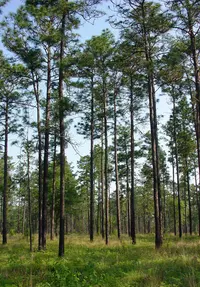
  • The crown is open and irregular, with long bare branch sections and foliage clustered near the tips.
  • Mature cones are large, narrow-oval, and about 6-10 inches (15-25 cm) long.
  • The trunk is usually straight, with thick, plated bark in broad scaly blocks.

The very long needles in bundles of three are often the quickest check.

Pinus palustris shows unusually distinct age-related forms that are useful for field identification.

  • Seedling: Early seedlings enter a grass stage: a dense tuft of long needles sits at ground level, with almost no visible stem or branching.
  • Juvenile plant: After the grass stage, a straight stem elongates quickly, carrying sparse side branches and very long needles in bundles of three, unlike the stemless seedling.
  • Mature plant: Older trees develop a tall, clean trunk often 80 to 100 feet (24 to 30 m), with an open, irregular crown and heavier limbs near the top.
  • Fruiting stage: Cone-bearing trees show large, elongated brown cones, typically 6 to 10 inches (15 to 25 cm) long, hanging from thicker upper branches.

In spring, Pinus palustris often shows large silvery-white terminal buds before new needles extend. New growth then appears as bright fresh-green candles, a noticeable contrast with older needles. By late fall into winter, the long needles may look sparser at branch tips as older inner needles shed. Mature seed cones are also easiest to notice from fall into winter, hanging brown and woody among the foliage.

A few southeastern pines are regularly confused with Longleaf Pine.

slash pine(Pinus elliottii)

Both have long needles and open crowns. Slash pine usually has needles in bundles of 2 or 3, often 8 to 12 inches (20 to 30 cm) long, while longleaf usually has 3 very long needles, often 10 to 18 inches (25 to 46 cm). Its cones are also smaller.

loblolly pine(Pinus taeda)

Young trees can seem similar at a distance. Loblolly has much shorter needles, usually 6 to 9 inches (15 to 23 cm), in bundles of 3, and a denser crown. Longleaf shows longer, more drooping needles and larger cones.

Pinus palustris is native to the southeastern United States, from eastern Texas to Florida and north into southern Virginia, mostly on the Atlantic and Gulf Coastal Plains. It is most often found in open longleaf pine savannas, flatwoods, and sandy uplands, with some populations on seasonally wet sites. Finding a pine in these low-elevation coastal plain habitats helps narrow identification, especially in large, open stands rather than closed mountain forests.

Check Your Plant ID

Use Botan to compare a photo and help confirm the plant, which is useful when the details are still unclear.

FAQ

The clearest trait is its very long needles, usually in bundles of three, often 8 to 18 inches (20 to 46 cm) long. Large, shiny brown buds with silvery fringed scales also help with Longleaf Pine identification.

More Plant Identification Guides

Identify Your Plant with Botan

Upload a photo to identify it, then get plant details, care information, and common problems for that species.

Botan app identifying a plant from a photo
How to Group Plants in Landscaping: A Practical Layout Guide

8 min read · 31 Aug 2026

How to Group Plants in Landscaping: A Practical Layout Guide

Good plant grouping can mean the difference between a well-planned garden and one that looks sloppy. This guide explores layers, spacing, cluster shapes, and the plants that thrive when you group them.

Plant Care
How to Group Plants in Landscaping: A Practical Layout Guide
How to Repot a Plant: A Step-by-Step Guide

7 min read · 28 May 2026

How to Repot a Plant: A Step-by-Step Guide

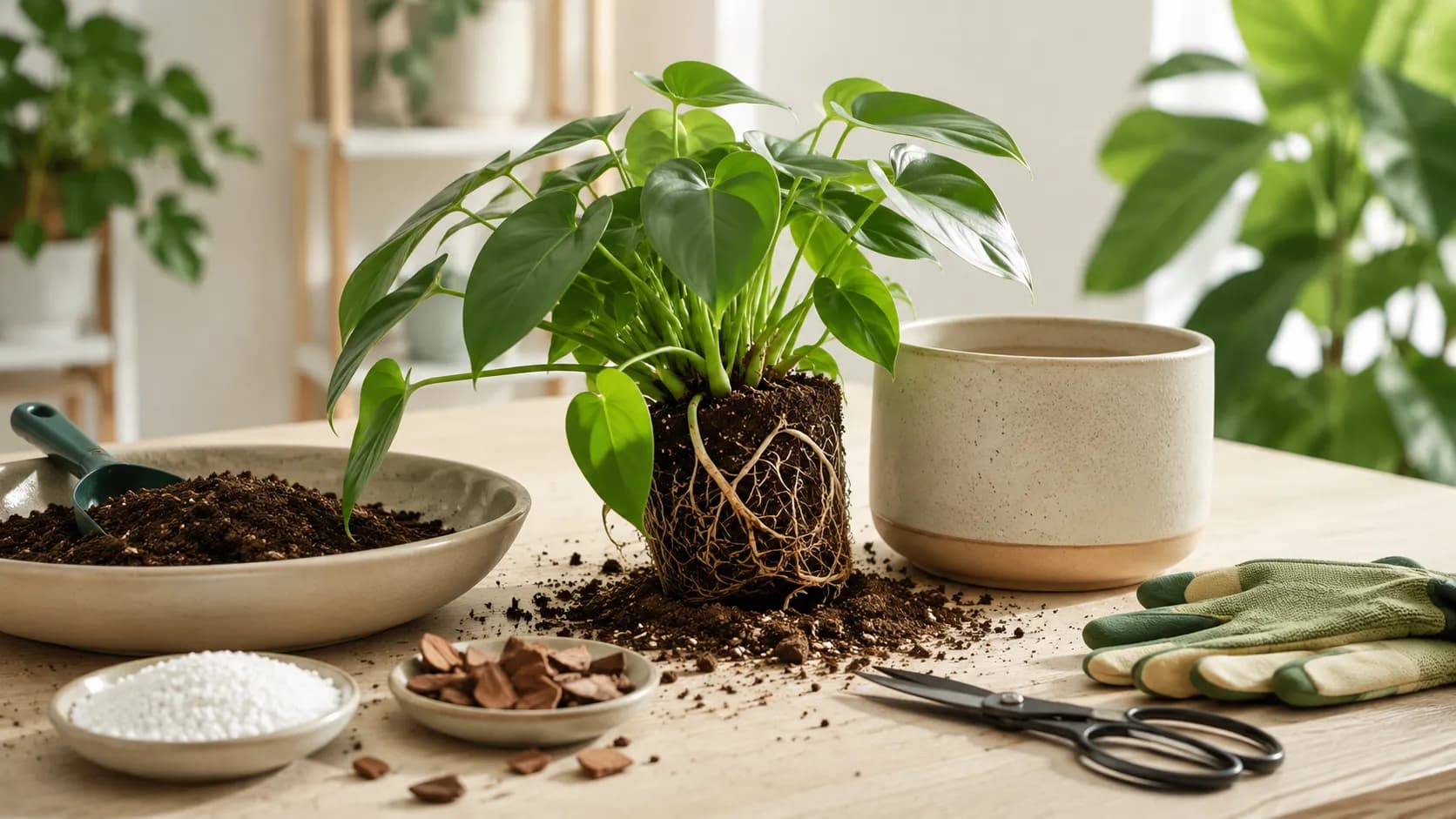
In spring, many plants need repotting—an essential part of care. To avoid stress, consider the plant’s type and size. This article offers a step-by-step guide for repotting indoors or outdoors and shows how to check plant health and get care tips using the Botan app.

Plant Care
How to Repot a Plant: A Step-by-Step Guide
How to Winterize Your Garden in 6 Steps

5 min read · 28 Sept 2026

How to Winterize Your Garden in 6 Steps

Learn how to prepare your garden for winter with a practical six-step checklist covering cleanup, tender plant care, watering, mulching, winter protection, and winterizing equipment and containers.

Plant Care
How to Winterize Your Garden in 6 Steps