


staghorn sumac Identification (Rhus typhina)

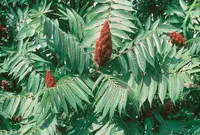
To recognize staghorn sumac, look for long pinnate leaves with many narrow leaflets set in opposite pairs along a central stem, plus thick twigs densely covered in velvety hairs.

It often forms a small tree or large shrub with upright, branching stems and dense, cone-shaped flower clusters held at the branch tips.

Rhus typhina Identification

Check Your Plant with Botan

Not sure about your plant ID? Upload a photo and check it with Botan.

Clear images work best. Avoid photos taken too close or too far away

Check the overall shape and the fuzzy young twigs of Rhus typhina first.

  • Large compound leaves are alternate, usually 1-2 feet (30-60 cm) long, with many narrow leaflets.
  • Twigs and leaf stalks are densely velvety, giving a soft, antler-like look.
  • Stems often branch low and form broad clumps or colonies rather than a single neat trunk.
  • Fruit forms dense, upright, cone-shaped clusters covered in fine hairs at branch tips.

Use several traits together, especially the fuzzy twigs and upright fruit clusters.

Rhus typhina shows clear visual shifts from upright shoots to clustered flowering and fruiting crowns.

  • Young plant: Young plants are often single-stemmed or lightly branched, with stout fuzzy shoots and very large pinnate leaves that make the plant look sparse but bold.
  • Mature plant: Mature plants form broad colonies by suckering, with multiple trunks and umbrella-like branch tips; leaves commonly reach 1-2 feet (30-60 cm) long.
  • Flowering stage: At flowering, branch ends carry dense upright cone-shaped clusters of many small greenish-yellow flowers, adding a distinct terminal structure absent on nonflowering shoots.
  • Fruiting stage: After flowering, the terminal clusters become tight, velvety red fruiting heads that stay upright and make the crown look thicker and more top-heavy.

Several named forms of staghorn sumac are distinct enough to recognize at a glance.

  • Rhus typhina 'Dissecta': Leaves are deeply cut into narrow leaflets, giving the whole plant a fine, fernlike texture instead of the broad, typical leaf look.
  • Rhus typhina 'Laciniata': Leaflets are strongly lobed or toothed along the edges, creating a more jagged outline than the standard form.
  • Rhus typhina 'Tiger Eyes': New foliage opens bright chartreuse to golden yellow and stays much lighter than the usual green leaves through the growing season.

In spring, Rhus typhina leafs out with large, feathery compound leaves. By early summer, upright greenish flower clusters become visible at branch tips. By late summer into fall, dense cone-like clusters of fuzzy red fruit stand out and often persist after leaf drop. Fall foliage turns bright orange, red, and scarlet. In winter, the bare, thick twigs remain densely velvety, a useful clue.

Several sumacs and one common tree can be mistaken for staghorn sumac.

smooth sumac(Rhus glabra)

Often confused because both have long pinnate leaves and upright red fruit clusters. Smooth sumac lacks the dense fuzzy twigs of Rhus typhina; its stems are smooth and often glaucous, meaning bluish with a waxy bloom.

tree-of-heaven(Ailanthus altissima)

Seen as similar from a distance because it also has very large compound leaves. Its leaflets are mostly smooth-edged except for 1-2 coarse teeth near the base, and the fruits are flat tan samaras, not dense red cones.

Rhus typhina is native to eastern and central North America, from southern Canada into the eastern United States. That range helps separate it from similar sumacs seen mainly farther south or west. It is most often found in open woods, woodland edges, roadsides, old fields, and rocky slopes. Seeing it in sunny, disturbed sites is a useful identification clue.

Does Your Plant Match?

Use Botan to compare a photo and help verify the identification before labeling, buying, or planting.

FAQ

The clearest feature is the dense, velvety fuzz on young twigs and leaf stalks, paired with long compound leaves and upright, cone-shaped clusters of red fruit that often persist into winter.

More Plant Identification Guides

Know What Plant You Have

Identify it from a photo with Botan, then review plant details, care information, and common problems for that species.

Botan app identifying a plant from a photo
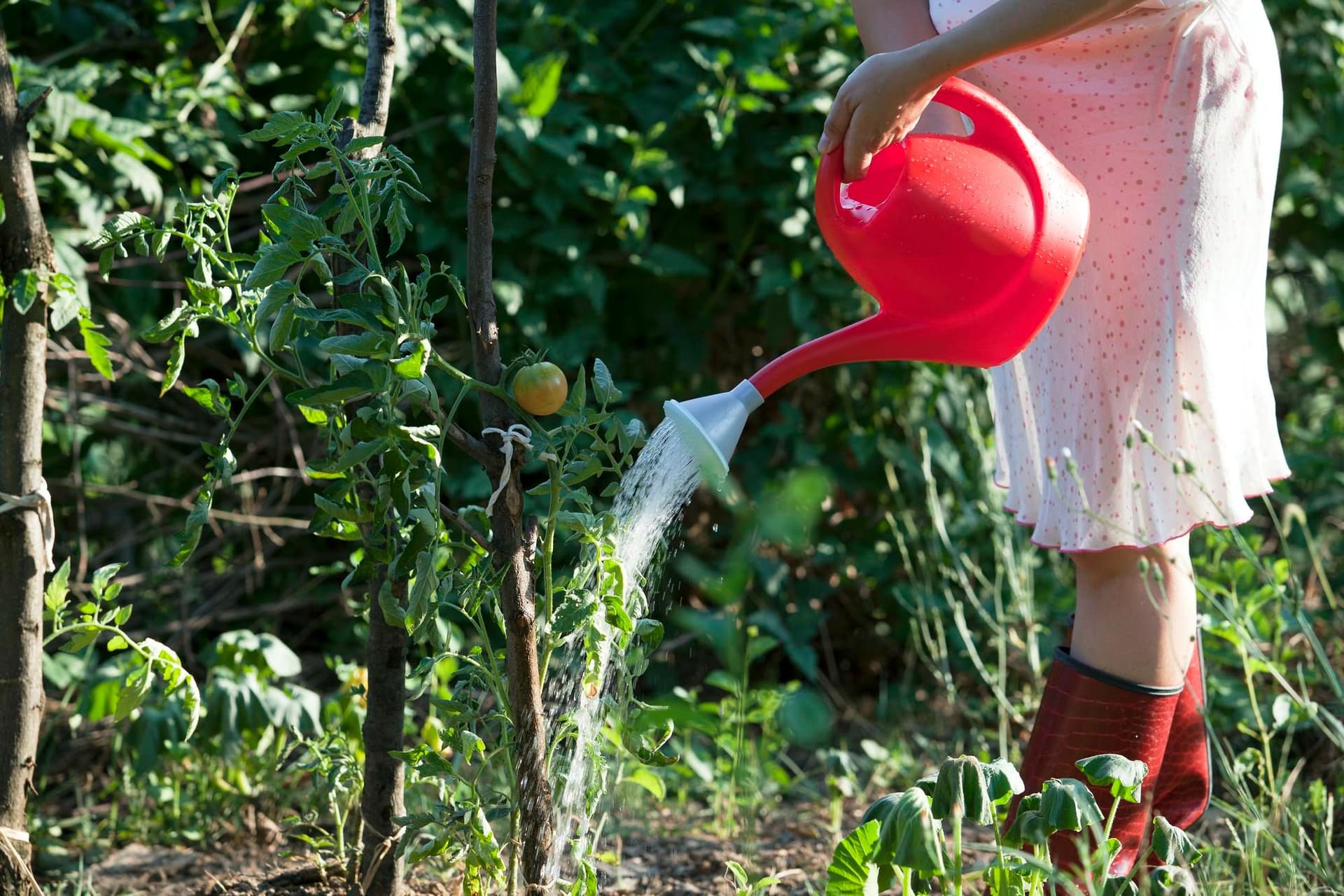
How Often to Water Fruit Trees

7 min read · 11 Aug 2026

How Often to Water Fruit Trees

Irrigation needs change as roots establish and weather shifts. This guide gives practical starting intervals, explains how soil and tree type change them, and shows how to recognize both excess moisture and drought stress.

Plant Care
How Often to Water Fruit Trees
Planting Grass Seed in Summer – What Works and What Fails

7 min read · 6 Aug 2026

Planting Grass Seed in Summer – What Works and What Fails

Summer seeding succeeds when the grass type suits the season, and the soil stays moist. Find out how to prepare the seedbed and choose a safe window for planting.

Plant Care
Planting Grass Seed in Summer – What Works and What Fails
Frozen vs Fresh Vegetable Nutrients: Which Option Is Healthier?

6 min read · 8 Sept 2026

Frozen vs Fresh Vegetable Nutrients: Which Option Is Healthier?

Frozen and fresh vegetables are nutritionally comparable: frozen produce often retains vitamins just as well as fresh and may sometimes contain more. Here’s how blanching and storage affect nutrients—and when to choose each.

Plant Recommendations
Frozen vs Fresh Vegetable Nutrients: Which Option Is Healthier?