Brazilian Prickly Pear Care (Brasiliopuntia brasiliensis)

Brazilian Prickly Pear

About Brazilian Prickly Pear

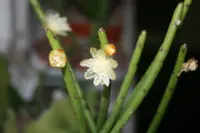
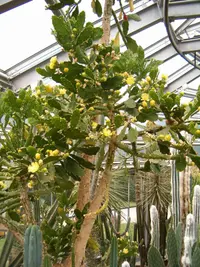
Brazilian prickly pear, Brasiliopuntia brasiliensis, is a tree-form cactus known for its tall, branching pads and later cylindrical stems. It often develops a woody trunk and can look almost like a small tree over time.

This species is native to Brazil and other parts of South America, where it grows in warm, bright, often seasonally dry habitats. Young plants have flat, spiny pads, while mature plants carry fewer pads and more rounded branches.

Its drought tolerance and ability to handle strong light make it relatively easy to grow, as long as it has very well-drained soil. Understanding how to care for Brazilian Prickly Pear mainly involves matching its need for sun, warmth, and infrequent watering.

Main Plant Requirements

Care Difficulty

Moderate Care

Light Preference

Full Sun

Water Requirements

Low Water

Temperature Preference

Tropical / Frost Sensitive

Hardiness Zone

10–12

Soil Texture

Sandy, Loamy, Rocky

Soil pH

Slightly acidic (6.5–7.0), Neutral (7.0)

Soil Drainage

Well-drained

Fertilization

Minimal (feed rarely)

Get Personalized Care Plan

Scan your plant to receive care tips personalized for your specific plant

Available on iOS and Android

How to Care for the Brazilian Prickly Pear

This cactus thrives in bright, open exposures similar to its native habitat.

  • Provide 6–10 hours of direct sun daily; full sun is ideal once the plant is acclimated.
  • Young or newly moved Brazilian Prickly Pear should receive strong morning sun with light afternoon shade for 1–2 weeks to prevent sunburn spots.
  • In very hot summers, protect from harsh late-afternoon sun to avoid yellowing pads, but avoid deep shade, which causes weak, stretched growth.

This species prefers thorough but infrequent watering that mimics desert rainfall.

  • Water only when the top 3–5 cm of soil are completely dry; in hot active growth this may be every 7–14 days, much less often in cool weather.
  • Ensure sharply draining, gritty soil so water runs through quickly; standing water around roots promotes rot, soft pads, and blackened tissue.
  • Underwatered Brasiliopuntia brasiliensis develops wrinkled, slightly shriveled pads; overwatered plants show mushy pads and may lean or collapse at the base.

This cactus prefers warm to hot conditions and does poorly in cold, damp weather.

  • Ideal growing temperatures are 70–90°F (21–32°C), with slightly cooler nights promoting steady growth.
  • Protect from temperatures below 40°F (4°C); brief dips to 32°F (0°C) may be survived if kept completely dry, but repeated frost damages pads.
  • In heat waves above 100°F (38°C), it tolerates the heat if roots are established and soil drains fast, but slight afternoon shade reduces stress and sunscald.

This cactus handles a wide humidity range and rarely needs special humidity control indoors.

  • Ideal humidity is around 30–50%, similar to most heated indoor rooms.
  • It tolerates drier air well; issues usually appear only with prolonged damp, stagnant air.
  • Humidity stress shows as soft, pale, or moldy pads; improve air movement and keep foliage dry when raising humidity for nearby plants like Brazilian Prickly Pear.

Use a sharply draining, mineral-based mix that mimics arid, sandy ground.

  • Choose a gritty, sandy or loamy cactus mix with at least 50–70% mineral material to prevent water retention.
  • Aim for slightly acidic to neutral pH around 6.0–7.0, avoiding strongly alkaline or salty mixes.
  • Combine commercial cactus mix with extra pumice, perlite, or coarse sand to increase drainage and root aeration.
  • Avoid dense garden soil, peat-heavy mixes, or containers that stay wet for more than 1–2 days, which promote root rot in Brasiliopuntia brasiliensis.

This species grows well in containers when the pot is chosen to support its tall, top-heavy form.

  • Select a wide, heavy container that resists tipping as the segmented pads gain height and weight.
  • Use a pot slightly wider than the rootball to reduce excess wet substrate and keep the mix drying evenly.
  • Terracotta or other porous materials help moisture evaporate faster, which protects roots from staying wet after deep watering.

This cactus grows well with modest feeding when actively growing, especially in containers.

  • Use a balanced cactus fertilizer or diluted balanced NPK (around 10-10-10) at 1/2–1/4 strength.
  • Feed Brazilian Prickly Pear every 4–6 weeks in spring and summer only.
  • Do not fertilize in winter or when growth is stalled, to avoid weak, stretched pads.
  • Flush the soil with plain water a few times each season to limit salt buildup.

Pruning Brasiliopuntia brasiliensis is mainly done to control size, remove damage, and keep it safe to handle.

  • Carry out light pruning in late spring or early summer when growth is active.
  • Remove dead, shriveled, storm-damaged, or rubbing pads and stems at their joints with clean, sharp pruners.
  • Thin crowded branches to improve light penetration and maintain a stable, tree-like form.
  • Wear thick gloves and collect fallen pads promptly to prevent unwanted rooting.

Container-grown plants benefit from infrequent but careful repotting or transplanting as they enlarge.

  • Repot every 3–4 years, or when roots circle the pot, drainage slows, or growth declines.
  • Plan repotting for late spring, using a heavy, well-drained cactus mix and a wider, stable container.
  • Lift the plant with thick gloves, disturb roots as little as possible, and set at the same depth.
  • Water lightly 5–7 days after repotting to let any root injuries dry and reduce transplant shock.

Propagation is commonly done from stem pads, with seed used mainly for larger-scale growing.

  • Take healthy stem pad cuttings in late spring or early summer from disease-free plants.
  • Allow cut surfaces to callus in a dry, shaded place for 7–14 days before planting.
  • Insert callused pads upright into barely moist, gritty cactus mix and keep at 70–80°F with bright light.
  • Water sparingly until firm resistance indicates new roots, then transition to normal Brasiliopuntia brasiliensis plant care.

This cactus is frost-sensitive and needs protection in regions with freezing winters.

  • Keep outdoor plants in climates with mild winters above about 30°F, or expect stem damage.
  • Move container plants indoors to a bright, cool, dry spot before first frost.
  • Reduce watering sharply in winter, allowing the mix to dry almost completely between light waterings.
  • In the ground, use a light, dry mulch around the root zone while keeping pads free from constant contact with damp material.

Care Tips

Early staking support

Install a sturdy stake or narrow trellis while the plant is still small, then loosely tie the main stem with soft ties so the tall, tree-like structure develops straight and resists breakage in wind or accidental bumps.

Segment weight management

If upper pads become very heavy, selectively remove or shorten a few outer segments with a clean, sharp knife to reduce leverage on the main stem and prevent sudden snapping at the joints.

Root space progression

Repot in gradually larger, deep containers (for example 2–4 in wider each time) rather than jumping to a very big pot, which keeps the root zone drying evenly and reduces the risk of rot in this tall, woody cactus.

Cold season handling

In climates with cool winters, shift the plant to a slightly drier, brighter, and more sheltered spot by early fall so tissues can harden off and tolerate short exposures down to near its minimum safe temperature.

Glove and tool hygiene

Always handle pads with thick gloves or folded newspaper and disinfect blades with isopropyl alcohol before and after cutting, which protects you from fine spines and lowers disease transmission risk when caring for Brazilian Prickly Pear.

Common Pests and Diseases

Cochineal scale

This pest forms white cottony clusters on pads and stems, often exuding bright red dye when crushed. Symptoms include yellowing pads, shriveling segments, and sticky residue that can attract sooty mold.

Solution

Isolate the plant, then spray pads thoroughly with a strong stream of water to dislodge insects and cottony masses, repeating weekly as needed. Follow with applications of 70% isopropyl alcohol on visible clusters or use an insecticidal soap labeled for cacti, ensuring good coverage in areoles while keeping the soil relatively dry.

Opuntia cactus moth

This pest is the larval stage of a moth that tunnels inside pads and trunk segments, causing internal rot, sunken spots, and collapsing segments. Symptoms include frass (sawdust-like debris), small entry holes, and sudden pad drop even on otherwise healthy plants.

Solution

Remove and destroy all affected pads and segments as soon as tunneling or frass is seen, cutting well into healthy tissue to remove larvae. Monitor remaining pads closely, use physical barriers or fine mesh in areas where the moth is present, and avoid moving infested plant material to prevent spread when growing Brazilian Prickly Pear outdoors in warm regions.

Spider mites

These insects are tiny arachnids that thrive in hot, dry conditions and cause fine stippling, dull pads, and sometimes fine webbing on areoles and spines. Symptoms include a dusty appearance and gradual loss of pad vigor, especially in indoor or greenhouse plants with stagnant air.

Solution

Increase humidity slightly around the plant without wetting the soil, and rinse pads under a gentle but thorough stream of water, including the undersides and areoles. If populations persist, apply insecticidal soap or a horticultural oil labeled for cacti, repeating every 7–10 days and improving airflow to reduce reinfestation.

Soft rot (bacterial)

This disease causes water-soaked, mushy areas on pads or trunk segments, often starting at small wounds or insect feeding sites. Symptoms include a foul odor, skin collapse, and rapid spread of dark, wet-looking tissue that can girdle stems.

Solution

Act quickly by cutting out all affected tissue with a sterile knife, removing several cm into firm, healthy tissue, and discarding infected material in the trash. Allow cut surfaces to dry and callus in bright, dry air, reduce watering sharply, and avoid overhead watering or wounding the plant to limit new infection sites.

Fungal stem spots

This disease produces corky, sunken, or scab-like lesions on pads, sometimes with a dark margin, especially in humid or poorly ventilated conditions. Symptoms include scattered brown or gray patches that can coalesce and distort growth if moisture remains on the plant surface for long periods.

Solution

Improve airflow and keep pads dry by watering at the soil level and spacing plants so surfaces do not touch. Remove and discard badly affected pads, then apply a sulfur-based or copper fungicide suitable for cacti according to label directions, monitoring new growth for any new lesions.

Interesting Facts

Tree‑forming cactus

In nature this species often grows as a small tree up to several meters tall, with a distinct woody trunk and a broad, branched crown, which is unusual among many flat‑stemmed opuntioid cacti.

Winged, three‑angled stems

Young growth forms triangular, wing‑like cladodes (flattened stems) that give the plant a three‑dimensional, almost architectural look instead of the typical two‑dimensional pads seen in many related prickly pears.

Specialized bat‑pollinated flowers

In its native range, the large, night‑opening yellow flowers are primarily pollinated by nectar‑feeding bats, an adaptation that influences their timing, scent, and tubular structure.

Botan icon

Did you know?

This species can switch from leafy juvenile growth to almost entirely leafless adult stems as it matures, using the flattened cladodes as the main photosynthetic organs and shedding its tiny, short‑lived true leaves within days of their formation.

FAQs about Brazilian Prickly Pear

This species is relatively fast-growing for a cactus, often adding 20–60 cm per year in suitable conditions. Over time it can develop a tree-like trunk and reach several meters, especially in warm outdoor climates.

Grow Healthy Plants with Botan Care

Keep your plants happy and healthy with plant identification, disease detection, and easy care guidance.

Botan plant care app — identify plants on mobile

Explore More Plants