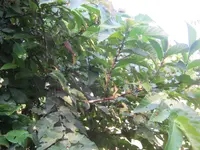
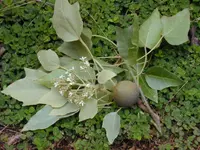
Stake Young Trunks
Install a single sturdy stake on the windward side of young trees in exposed sites and tie the trunk loosely with a soft, wide tie to keep the root ball stable during the first 2–3 years without rubbing or girdling the bark.

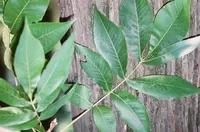
Shellbark hickory, Carya laciniosa, is a large deciduous tree native to moist lowlands and river valleys in central and eastern North America. It is primarily valued as a long-lived shade and nut tree, not as a small garden specimen.
The tree develops a tall, straight trunk with thick, shaggy bark and strong horizontal branches. Its compound leaves turn clear yellow in autumn, and mature trees produce large, hard-shelled edible nuts.
Growth is slow to moderate and the deep taproot makes transplanting difficult, which affects how easy it is to establish. To care for shellbark hickory, it helps to provide deep, well-drained, slightly moist soil and full sun in a spacious site.

Care Difficulty
Moderate Care

Light Preference
Full Sun

Water Requirements
Regular Water

Temperature Preference
Cold Hardy

Hardiness Zone
5–8

Soil Texture
Loamy, Clay, Silty

Soil pH
Acidic (5.5–6.5), Slightly acidic (6.5–7.0)

Soil Drainage
Moist but well-drained

Fertilization
Minimal (feed rarely)
Scan your plant to receive care tips personalized for your specific plant
Available on iOS and Android
This large deciduous tree thrives in open sites with ample direct sun for strong growth and nut production.
This species prefers evenly moist, deep soils but becomes moderately drought tolerant once well established outdoors.
This hardy tree is adapted to temperate climates with cold winters and warm summers.
Humidity is not a critical factor for Carya laciniosa, which is adapted to outdoor conditions with wide seasonal variation.
Carya laciniosa prefers deep, moist, well-drained mineral soils that stay evenly damp but never waterlogged.
This species is only marginally suitable for short-term container growing, mainly for young seedlings or temporary holding.
This native tree usually grows well in average soil, so fertilization for shellbark hickory is modest and targeted.
Pruning Carya laciniosa is mainly structural and corrective rather than frequent shaping.
Shellbark hickory is seldom container-grown, so care focuses on correct field transplanting of young trees.
Propagation of Carya laciniosa is typically done from seed and is considered slow but reliable with proper handling.
This hardy deciduous tree tolerates typical winters in its range and needs minimal special care once established.

Plant Health Check
Not sure what's wrong with your plant? Check your plant's health inside the app.
Shellbark hickory naturally occurs on deep, poorly drained alluvial soils along major rivers in the central and eastern United States, making it one of the most floodplain-adapted hickory species. It often grows where seasonal flooding and slow drainage exclude many other hardwood trees.
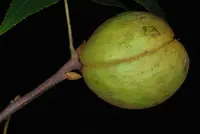
Among North American hickories, this species produces some of the largest nuts, with very thick husks enclosing a relatively small but sweet kernel. The heavy fruits are important food sources for wildlife such as squirrels, wood ducks, and wild turkeys.
Mature trees develop long, loose bark plates that peel away in strips, giving a strongly shaggy trunk appearance. This rough, peeling bark provides shelter microhabitats for insects and small invertebrates, which in turn support insectivorous birds.

Shellbark hickory is genetically close to shagbark hickory (Carya ovata) and the two species hybridize in nature, producing intermediate trees that can complicate field identification and have been studied as examples of natural hybrid zones in North American hardwood forests.
This species grows slowly, usually about 20–30 cm per year under good conditions. Growth is faster on deep, moist, well-drained soils and slows on compacted, dry, or shallow sites. Young trees establish slowly but gain height steadily.
Keep your plants happy and healthy with plant identification, disease detection, and easy care guidance.