hairy bittercress Care (Cardamine hirsuta)

Also known as: shotweed, Flickweed
hairy bittercress

About hairy bittercress

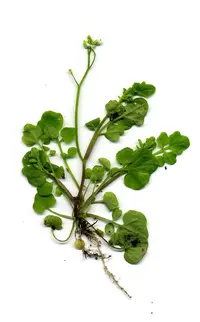
Hairy bittercress (Cardamine hirsuta) is a small, fast-growing annual herb in the mustard family. It often appears in pots, lawns, and garden beds as a self-sown volunteer. The plant forms a low rosette of rounded leaves and sends up thin stems with tiny white flowers, followed by narrow seed pods that eject seeds when touched. It is native to Europe and Asia but now common across many temperate regions, especially in disturbed or moist, well-aerated soils. Due to its rapid life cycle and heavy self-seeding, it spreads easily and is considered a weed in many gardens, though it is simple to pull and care for hairy bittercress is generally straightforward.

Main Plant Requirements

Care Difficulty

Easy Care

Light Preference

Partial Sun

Water Requirements

Moderate Water

Temperature Preference

Cold Hardy

Hardiness Zone

4–9

Soil Texture

Sandy, Loamy, Organic-rich

Soil pH

Acidic (5.5–6.5), Slightly acidic (6.5–7.0)

Soil Drainage

Moist but well-drained

Fertilization

Minimal (feed rarely)

Get Personalized Care Plan

Scan your plant to receive care tips personalized for your specific plant

Available on iOS and Android

How to Care for the hairy bittercress

This cool-season annual prefers bright, gentle light rather than intense sun.

  • Provide 3–5 hours of morning sun with light shade from midday onward; dappled or filtered light under shrubs or taller plants suits hairy bittercress well.
  • Allow partial shade, especially in summer; sites with only 1–2 hours of direct low-angle sun plus bright open shade still support steady growth and flowering.
  • Avoid strong afternoon sun, which can scorch leaves and dry soil quickly; in hot climates, shift plants to shadier exposures from late spring through summer.

This shallow-rooted plant needs consistently moist, not saturated, soil.

  • Water when the top 1–2 cm of soil feels just barely dry, aiming for evenly damp soil that never stays waterlogged, especially in heavier clay beds.
  • Use freely draining soil or amend with compost or grit so excess water runs through; Cardamine hirsuta declines in compacted, puddling sites with poor aeration.
  • Increase watering during warm, windy weather when leaves wilt between rains; reduce input in cool, wet seasons to prevent yellowing foliage and soft, rotting crowns.

This species thrives in cool to mild temperatures and fades in strong heat.

  • Aim for active growth in 45–70°F (7–21°C); seedlings establish best in consistently cool, moist conditions typical of early spring and autumn.
  • Tolerates brief light frosts down to about 25°F (-4°C), especially once hardened, but prolonged freezes below this can damage foliage and slow recovery.
  • Expect plants to struggle in sustained heat above 80–85°F (27–29°C); growth becomes spindly, flowering speeds up, and the plant often completes its life cycle quickly.

This species grows well in typical outdoor humidity and usually does not need special moisture control.

This small annual prefers consistently moist, loose soil that never stays waterlogged.

  • Use a fine-textured loam rich in organic matter, such as garden soil blended with compost for easy root penetration.
  • Provide moderate drainage by mixing in 20–30% sand or perlite so the substrate drains yet still holds some moisture.
  • Aim for slightly acidic to neutral pH around 6.0–7.0, avoiding strongly acidic or alkaline sites that limit nutrient uptake.
  • Avoid compacted, heavy clay or spots where water pools after rain, since low oxygen around roots quickly slows growth.

This species is suitable for shallow containers when moisture and drainage are managed carefully.

  • Choose a wide, shallow pot 10–15 cm deep to match its fine, fibrous roots and spreading rosette habit.
  • Use a lightweight potting mix so roots can anchor but still allow rapid drainage after overhead watering.
  • Select plastic or glazed containers in sunny, exposed spots to slow evaporation and keep the small root zone evenly moist.

This fast-growing annual generally thrives without feeding, so fertilization is optional for most garden and wild settings.

Pruning Cardamine hirsuta is mainly about limiting self-seeding and tidying plants rather than shaping them.

  • Cut back flowering stems just as seed pods start to form to reduce unwanted spread.
  • Snip off dead or damaged foliage at the base with small scissors or clean hand pruners.
  • Remove crowded clumps to maintain airflow and reduce fungal issues in dense beds.

This species is usually grown in the ground or appears as a self-sown annual, so management focuses on light transplanting rather than routine repotting.

  • Transplant small rosettes when they crowd other plants or appear in unwanted areas.
  • Move seedlings in early spring or cool, moist weather to limit transplant shock.
  • Lift plants with a hand trowel, keeping a firm soil plug around the roots.
  • Water gently after transplanting and keep soil evenly moist for 3–5 days while roots re-establish.

Cardamine hirsuta spreads primarily by seed, so propagation focuses on controlled seeding rather than vegetative methods.

  • Collect seed pods just before they burst and place them in a paper bag to catch seeds.
  • Sow fresh seeds on the soil surface in early spring or fall; light aids germination.
  • Keep the seedbed moist, not waterlogged, until seedlings establish in 1–3 weeks.
  • Thin dense patches by gently lifting extra seedlings and replanting them where desired.

This cool-season annual is cold hardy in most temperate climates and generally needs no special winter protection.

Care Tips

Taproot removal

When pulling plants by hand, remove the full taproot with a narrow weeding knife or dandelion fork so regrowth from root fragments is minimized.

Pre-flower monitoring

Check patches weekly in late winter and early spring and remove plants as soon as buds appear, before seed pods elongate, to prevent explosive seed dispersal over a wide area.

Mulch barrier use

Apply a 5–8 cm layer of fine bark or composted mulch in ornamental beds to reduce seedling emergence, and disturb the mulch surface lightly every few weeks to dislodge new sprouts.

Crack and edge control

Inspect paving cracks, wall bases, and bed edges regularly and lift seedlings with a narrow hand tool, since these tight spaces often act as long-term seed reservoirs.

Seed bank depletion

Maintain consistent control for 2–3 seasons without allowing any plant to set seed, which gradually exhausts the soil seed bank and makes caring for hairy bittercress much easier over time.

Everything About hairy bittercress

Common Pests and Diseases

Downy mildew

This disease causes yellow or pale patches on upper leaf surfaces with grey-white, fuzzy growth underneath, especially in cool, damp weather. Symptoms include distorted, stunted foliage and premature leaf drop in dense patches of plants.

Solution

Remove and discard heavily affected plants to reduce the local spore load, and thin dense patches to improve airflow and speed drying after rain. Avoid overhead watering, keep foliage as dry as possible, and if the plant is in a cultivated bed, rotate with non-brassicaceous species and clear plant debris promptly.

White rust

This disease produces small yellow spots on the upper leaf surface with raised white blister-like pustules on the underside. Symptoms include twisted, deformed leaves and reduced vigor, especially in crowded, moist conditions.

Solution

Hand-pull and dispose of infected plants before pustules burst to limit spread, and avoid composting diseased material. Reduce humidity around plants by spacing them, removing surrounding thatch or litter, and, in garden beds, avoid repeated planting of brassicas in the same area.

Flea beetles

These insects chew numerous small round holes in leaves, giving them a shot-holed or peppered appearance. This pest is especially active on young rosettes in sunny, dry sites and can slow growth or kill seedlings.

Solution

Use fine mesh or floating row covers over susceptible seedlings in beds to physically exclude the beetles, and keep surrounding soil slightly moist to discourage peak activity. Where practical, remove weedy brassicas nearby and use yellow sticky traps as a monitoring tool, intervening early by hand removal or vacuuming beetles off dense patches.

Cabbage aphids

These insects form dense, gray-green colonies on young shoots and leaf undersides, often covered with a waxy coating. Symptoms include curling, yellowing foliage and stunted growth, especially in nutrient-rich, sheltered sites.

Solution

Spray plants with a strong stream of water to dislodge colonies, repeating as needed, and remove heavily infested stems to reduce population pressure. Encourage or conserve natural predators such as lady beetles, and in garden settings use insecticidal soap or horticultural oil directed only at infested tissue, applied in the early morning or evening to limit plant stress.

Interesting Facts

Explosive seed dispersal

Hairy bittercress uses ballistic dispersal: when its seed pods dry, they suddenly spring open and catapult seeds several meters away, helping the plant colonize disturbed soil quickly.

Winter annual strategy

This species commonly behaves as a winter annual in temperate climates, germinating in autumn, overwintering as a small rosette, then flowering and setting seed very early in spring before many competitors become active.

Short life cycle specialist

Under favorable cool, moist conditions, hairy bittercress can complete its life cycle in just a few weeks, allowing multiple generations per year and rapid population build‑up in gardens and nursery containers.

Botan icon

Did you know?

Hairy bittercress is considered a classic model weed in horticulture research because its rapid seed production, explosive dispersal, and preference for disturbed, nutrient-rich substrates make it one of the most frequent spontaneous colonizers of nursery pots and greenhouse benches.

FAQs about hairy bittercress

This species needs cool weather and short days to initiate flowering. If temperatures are warm or it was sown late in spring, it may produce more leaves instead of flowers. Stress from drought or disturbance can also delay blooming.

Grow Healthy Plants with Botan Care

Keep your plants happy and healthy with plant identification, disease detection, and easy care guidance.

Botan plant care app — identify plants on mobile

Explore More Plants