Basal rosette protection
Mark and lightly mulch around first-year rosettes with a thin, gritty layer so they are easy to spot, less likely to be stepped on, and better protected from winter heaving without burying the crown.

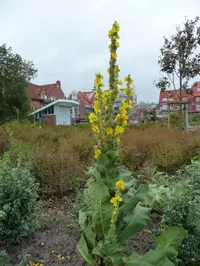
Great mullein, Verbascum thapsus, is a biennial herb that forms a low rosette in its first year and sends up a tall flower spike in the second. The soft, woolly leaves are gray-green and densely hairy, while the upright stem can carry many small yellow flowers.
This species is native to Europe and Asia but has naturalized widely in North America, especially in dry, open, and disturbed sites such as roadsides and fields. It is generally easy to grow, as it tolerates poor, rocky soils, drought, and full sun, which simplifies how to care for great mullein for most gardeners.

Care Difficulty
Easy Care

Light Preference
Full Sun

Water Requirements
Low Water

Temperature Preference
Cold Hardy

Hardiness Zone
3–9

Soil Texture
Sandy, Loamy, Rocky

Soil pH
Slightly acidic (6.5–7.0), Slightly alkaline (7.0–7.5)

Soil Drainage
Well-drained

Fertilization
Minimal (feed rarely)
Scan your plant to receive care tips personalized for your specific plant
Available on iOS and Android
This sun-loving biennial thrives in open, exposed sites with long daily light periods.
This species prefers dry, well-drained conditions and is highly drought tolerant once established.
This hardy plant tolerates a wide temperature range and is well adapted to temperate climates outdoors.
Humidity is not a significant factor for Verbascum thapsus, which thrives in dry air.
Verbascum thapsus prefers lean, well-drained mineral soils and tolerates poor, rocky sites.
This species can be grown in containers, but the pot must compensate for its tall, top-heavy growth.
This drought-tolerant biennial needs minimal feeding, especially in naturally fertile or wild sites.
Pruning is useful mainly for tidiness and seed control in Verbascum thapsus stands.
Great mullein is usually grown in open ground, so focus on careful transplanting rather than frequent repotting.
Verbascum thapsus is most commonly propagated from seed, which germinates reliably in suitable conditions.
This species is very cold hardy and generally needs no special winter care in the ground.

Plant Health Check
Not sure what's wrong with your plant? Check your plant's health inside the app.
Great mullein is a biennial that forms a low leaf rosette in its first year and then sends up a tall flowering stalk, often 1.5–2 m, in its second year before dying after seed production.
The leaves are densely covered with woolly hairs that reduce water loss, reflect intense sunlight, and trap a layer of still air, helping the plant tolerate dry, exposed habitats.
A single mature great mullein plant can produce tens of thousands of tiny seeds that may remain viable in the soil seed bank for many years, which contributes to its success in disturbed sites.
In parts of its introduced range, great mullein acts as a pioneer species on severely disturbed or bare mineral soils, helping stabilize the substrate and create slightly improved microhabitats that later allow other plant species to establish.
This species self-seeds heavily. Each plant can produce many thousands of seeds that remain viable in soil for years, so unmanaged stands expand quickly. Deadhead spent flower spikes before seed set to limit spread and avoid unwanted colonies.
Keep your plants happy and healthy with plant identification, disease detection, and easy care guidance.