weakleaf bur ragweed Care (Ambrosia confertiflora)

Also known as: slimleaf bursage
weakleaf bur ragweed

About weakleaf bur ragweed

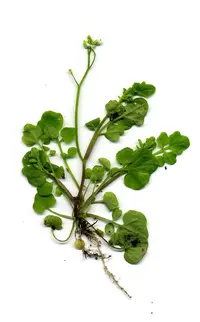
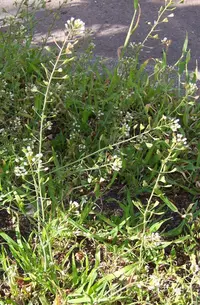
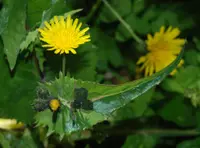
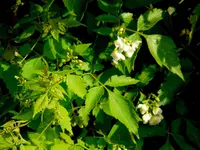
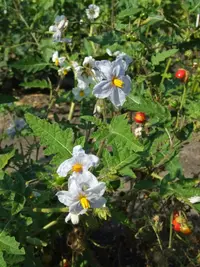
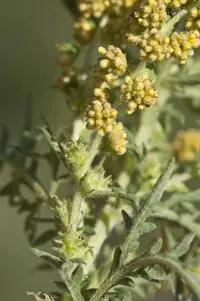
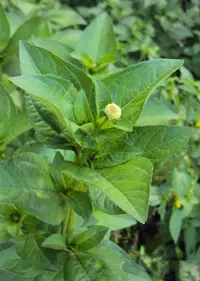
Weakleaf bur ragweed (Ambrosia confertiflora) is a perennial herbaceous plant in the aster family, known for its aggressive, weedy growth. It typically forms dense stands with many branched, slender stems and finely divided, soft green leaves that give a somewhat feathery look. Small, inconspicuous greenish flower clusters appear at stem tips and produce numerous burs with hooked spines that cling to animals, clothing, and equipment. This species is native to the southwestern United States and northern Mexico but has spread in disturbed sites, rangeland, and roadsides. It tolerates poor, dry soils and full sun, which makes it persistent and difficult to control when trying to care for weakleaf bur ragweed in managed landscapes.

Main Plant Requirements

Care Difficulty

Easy Care

Light Preference

Full Sun

Water Requirements

Low Water

Temperature Preference

Warm Climate

Hardiness Zone

7–11

Soil Texture

Sandy, Loamy, Clay

Soil pH

Slightly acidic (6.5–7.0), Slightly alkaline (7.0–7.5)

Soil Drainage

Well-drained

Fertilization

Minimal (feed rarely)

Get Personalized Care Plan

Scan your plant to receive care tips personalized for your specific plant

Available on iOS and Android

How to Care for the weakleaf bur ragweed

Ambrosia confertiflora thrives in open, bright sites with strong sun exposure.

  • Provide 6–10 hours of direct sun daily; full sun promotes dense growth and abundant flowering in weakleaf bur ragweed.
  • Plant in positions with morning to mid-afternoon sun; light afternoon shade is tolerated in very hot, dry climates to reduce leaf scorch.
  • In partial shade (3–4 hours sun), expect taller, more spindly stems and fewer flowers; avoid deep shade, which leads to weak growth and lodging.

Ambrosia confertiflora is drought-tolerant and prefers infrequent, deeper watering once established.

  • Allow the top 5–8 cm of soil to dry before watering; in the ground, rely mostly on rainfall except during extended droughts.
  • Use well-drained, sandy or loamy soil; pooling water or sticky, saturated soil for more than 24 hours increases root rot risk.
  • Signs of underwatering include limp, drooping foliage and slow growth; overwatering shows as yellowing lower leaves and soft stems near the soil line.

This species tolerates a wide temperature range but responds best to warm, frost-free conditions.

  • Optimal growth occurs around 70–90°F (21–32°C), typical of warm spring and summer conditions in many US regions.
  • Plants usually survive down to about 20–25°F (-7 to -4°C) once mature, but young seedlings are more sensitive and may be damaged by late frosts.
  • Extended extremes above 100°F (38°C) can slow growth unless soil moisture is adequate; light mulch helps buffer roots from heat and winter cold.

This species tolerates low atmospheric moisture, so humidity management is rarely important for weakleaf bur ragweed.

This species thrives in lean, well-drained mineral soils and adapts to disturbed sites.

  • Use a sandy or sandy-loam mix with minimal organic matter to mimic its native, open habitats.
  • Ensure very sharp drainage by blending coarse sand or fine gravel with a standard loam-based mix.
  • Aim for slightly acidic to slightly alkaline conditions, roughly pH 6.0–8.0, as the plant is broadly tolerant.
  • Avoid compacted, water-retentive, peat-heavy substrates that stay wet for long periods, which can promote root decline.

This species can be grown in containers but is not an ideal long-term container plant.

  • Choose a heavy, wide container to prevent tipping as the tall, branching stems create a high center of gravity.
  • Select a pot slightly deeper than wide to accommodate its relatively extensive root system without constriction.
  • Use a gritty, fast-draining substrate and elevate the pot on feet or bricks so drainage holes never sit in standing water.

Ambrosia confertiflora generally thrives in poor soils and rarely needs supplemental feeding.

Pruning helps keep Ambrosia confertiflora contained and maintains a manageable structure.

  • Cut back stems in late winter or very early spring before vigorous growth begins.
  • Remove dead, damaged, or crossing stems at the base using clean, sharp pruners.
  • Thin dense clumps to reduce self-seeding spread and improve air flow.
  • Shear back spent flowering stems if needed to limit seed production and maintain shape.

This species is usually grown in open ground, so management focuses on careful transplanting rather than container repotting.

  • Transplant in early spring or fall when temperatures are mild and soil is workable.
  • Move plants that show poor performance due to crowding or unsuitable soil, typically every few years if managed.
  • Dig widely around the root zone, keeping a firm soil ball attached to minimize root injury.
  • Replant at the same depth, water thoroughly, and shade temporarily to reduce transplant shock.

Ambrosia confertiflora spreads mainly by seed and creeping roots, making propagation straightforward but sometimes invasive.

  • Collect ripe seeds in late summer to early fall and sow shallowly in well-drained soil.
  • Allow natural winter chilling outdoors; cold stratification improves germination.
  • Divide established clumps in early spring, lifting and separating rooted sections by hand or with a knife.
  • Replant divisions promptly, keep soil evenly moist, and monitor spread in managed landscapes.

This perennial is generally cold hardy in its adapted regions and usually needs minimal winter care.

  • In colder climates, apply a light 5–8 cm mulch over the root zone after the ground cools but before deep freezes.
  • For container plants, move pots into a sheltered, unheated space to reduce freeze–thaw stress.
  • Avoid heavy winter watering; keep soil only slightly moist to prevent root rot in dormant plants.

Care Tips

Establish buffer zone

Install a 30–60 cm mowed or mulched strip around patches to slow stolon spread and make seedling detection and removal faster when caring for weakleaf bur ragweed.

Manage seed heads

Before burs mature, cut and bag flower and seed heads, then dispose of them with household trash rather than compost to reduce long‑term soil seed banks.

Use competitive cover

Overseed or plant dense, competitive grasses or groundcovers around infestations so that established vegetation shades seedlings and limits new establishment.

Targeted root removal

When hand-pulling, loosen soil first with a narrow trowel or weeding knife and remove as much of the creeping root system as possible to reduce resprouting from fragments.

Monitor downwind areas

Check regularly 5–10 m downwind of known patches during late summer and fall, since wind-dispersed pollen and animal-moved burs often lead to satellite infestations there first.

Common Pests and Diseases

Rust fungi

This disease causes yellow to orange pustules on leaves and sometimes stems, often leading to early leaf drop in dense roadside or field populations.

Solution

Remove and destroy heavily infected plants to reduce spore load, avoid overhead irrigation where the species is being monitored or contained, and improve spacing and airflow around stands to limit humidity that favors infection.

Powdery mildew

This disease produces a white, powdery coating on leaves and young stems, which can reduce vigor in shaded or overcrowded stands.

Solution

Thin dense patches to improve light and airflow, avoid wetting foliage late in the day, and where control is needed on monitored plants use a targeted fungicide labeled for powdery mildew, applying only to affected material.

Stem-boring moth larvae

These insects tunnel inside stems, causing wilting, breakage, and reduced seed production, especially in unmanaged or monoculture patches.

Solution

Cut and dispose of infested stems before larvae complete development, encourage natural predators and parasitoids by maintaining plant diversity nearby, and in managed plots monitor stems regularly so damaged shoots are removed early.

Leaf beetles

These insects feed on foliage, creating shot-holes and sometimes skeletonized leaves, which can stress young or otherwise weakened plants.

Solution

Hand-pick beetles where feasible, encourage natural enemies such as birds and predatory insects, and if population pressure is high use a narrow-spectrum insecticide targeted to chewing beetles while avoiding drift to non-target plants.

Interesting Facts

Highly allergenic pollen

This ragweed species produces abundant wind-dispersed pollen that is a documented trigger of seasonal allergic rhinitis in sensitive people, especially in regions where the plant has become invasive.

Aggressive clonal spread

It spreads not only by seed but also through creeping root systems that form dense clonal patches, which helps the species rapidly dominate disturbed soils and rangeland in its introduced range.

Invasive in multiple continents

Originally native to parts of North America, it is now established as an invasive weed in areas of South America, Europe, and Asia, where it disrupts native plant communities and can reduce pasture quality.

Botan icon

Did you know?

Genetic and morphological studies show that weakleaf bur ragweed often hybridizes with closely related Ambrosia species, which may contribute to its adaptability and invasion success in new environments.

FAQs about weakleaf bur ragweed

This species spreads aggressively by seed and creeping roots, often forming dense stands that displace other vegetation. In gardens or fields it behaves as a noxious weed and usually requires active management and containment measures.

Grow Healthy Plants with Botan Care

Keep your plants happy and healthy with plant identification, disease detection, and easy care guidance.

Botan plant care app — identify plants on mobile

Explore More Plants