Manage Root Suckers
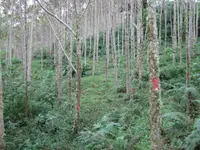
Inspect the base and surrounding soil a few times per year and promptly cut off root suckers at soil level to prevent unwanted thickets and keep the tree in a controlled footprint.

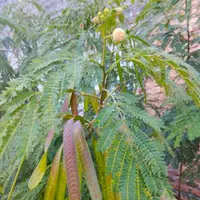
White leadtree, Leucaena leucocephala, is a fast-growing, evergreen shrub or small tree from tropical and subtropical regions of Central America. It is now widely naturalized in many warm climates. The plant has fine, feathery leaves and small, creamy-white, puffball flowers followed by flat seed pods, giving it a light, airy appearance. It often forms dense thickets where conditions are favorable. This species is valued in agroforestry for its rapid growth, nitrogen-fixing roots, and ability to tolerate pruning, but it can become invasive in suitable climates. It prefers full sun, warmth, and well-drained soil. Understanding how to care for white leadtree starts with recognizing its vigorous growth and potential to spread by seed.

Care Difficulty
Easy Care

Light Preference
Full Sun

Water Requirements
Low Water

Temperature Preference
Tropical / Frost Sensitive

Hardiness Zone
9–11

Soil Texture
Sandy, Loamy, Clay

Soil pH
Slightly acidic (6.5–7.0), Slightly alkaline (7.0–7.5)

Soil Drainage
Well-drained

Fertilization
Minimal (feed rarely)
Scan your plant to receive care tips personalized for your specific plant
Available on iOS and Android
This fast-growing tropical tree needs strong sun to maintain dense foliage and vigorous growth.
This drought-tolerant species prefers deep, infrequent watering once established.
This subtropical tree thrives in warm conditions and reacts poorly to frost.
This species tolerates a wide humidity range and does not require special humidity management in typical outdoor conditions.
Leucaena leucocephala prefers light, well-drained soil that does not stay waterlogged after rain or irrigation.
This species can be grown in containers for short to medium terms, mainly to control size and spread.
This nitrogen-fixing tree needs only light feeding in poor soils, especially when young white leadtree plants are establishing.
Leucaena leucocephala responds well to thoughtful pruning to control size and promote a strong framework.
This fast-growing species is usually transplanted to the ground while young, as it quickly outgrows containers.
This species is most commonly raised from seed, which allows rapid establishment of many plants.
In frost-free or very mild climates this tree needs little winter attention, but it is sensitive to freezing temperatures.

Plant Health Check
Not sure what's wrong with your plant? Check your plant's health inside the app.
This tree forms nodules on its roots with rhizobia bacteria that convert atmospheric nitrogen into plant-available forms, allowing it to colonize and improve very poor soils. It is widely used in tropical agroforestry to enrich farmland and support crops or pasture grasses.
Its foliage and pods are highly nutritious and often used as fodder for cattle, goats, and other livestock in the tropics. However, the plant contains the amino acid analogue mimosine, so rations must be managed carefully to avoid toxicity problems in animals not adapted to it.
The long, flat pods contain many hard seeds that survive passage through animal digestive systems. Livestock disperses these seeds over large areas, which helps the tree spread aggressively outside its native range and become invasive in many warm regions.

White leadtree has one of the fastest growth rates among tropical trees, often reaching small-tree size within just a few years, which is why it has been planted worldwide for firewood, windbreaks, green manure, and erosion control despite its invasive potential.
This species spreads readily by seed and root suckers, forming dense thickets in warm climates. In many regions it is classed as invasive, so careful seed pod removal and regular cutting of unwanted shoots are important for control.
Keep your plants happy and healthy with plant identification, disease detection, and easy care guidance.