


Sturdy flower support
Install low, discreet ring supports or short bamboo canes before stems elongate in spring so the tall flower spikes stay upright and do not snap in wind or heavy rain.

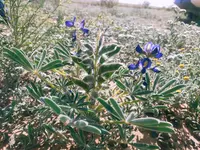
Lupinus digitatus is an herbaceous perennial in the pea family, valued mainly for its divided, finger-like leaves and upright, airy habit. It forms clumps rather than woody stems, giving a soft, textured look in mixed borders or naturalistic plantings.
This species is believed to occur in specific, often drier habitats, where soils are usually well drained and often low in nutrients. Like many lupines, it can fix nitrogen in the soil, which can help it adapt to poorer ground but also makes it sensitive to overfertilization.
In cultivation, it generally prefers full sun, moderately moist but free-draining soil, and protection from waterlogging. Understanding these basic needs makes it easier to care for Lupinus digitatus without constant intervention.

Care Difficulty
Moderate Care

Light Preference
Full Sun

Water Requirements
Moderate Water

Temperature Preference
Cool Climate

Hardiness Zone
Unknown

Soil Texture
Sandy, Loamy

Soil pH
Acidic (5.5–6.5), Slightly acidic (6.5–7.0)

Soil Drainage
Well-drained

Fertilization
Minimal (feed rarely)
Scan your plant to receive care tips personalized for your specific plant
Available on iOS and Android
This species performs best in open sites with strong but not extreme sun exposure.
Watering should support deep root development while avoiding prolonged soil saturation.
Stable cool to mild conditions support strong growth and flowering for this lupine species.
This species is adapted to dry, open habitats, so humidity is rarely a concern in typical homes.
This species prefers loose, fast-draining soil that mimics open, sandy habitats.
This species can be grown in containers but needs careful attention to root space and drainage.
This lupine is adapted to lean soils and usually needs minimal feeding to perform well.
Pruning focuses on maintaining flowering performance and a tidy clump rather than shaping Lupinus digitatus heavily.
This species develops a deep taproot, so it is usually grown in the ground rather than kept long term in containers.
Propagation is most reliable from seed, with timing and soil conditions strongly influencing success.
Mature plants are generally cold hardy and often need little specific winter care in most temperate climates.

Plant Health Check
Not sure what's wrong with your plant? Check your plant's health inside the app.
This annual lupine is native to coastal regions of California and is typically found on sandy or gravelly soils close to the Pacific coast, where drainage is rapid and nutrients are relatively low.
Its leaves are divided into narrow, finger-like leaflets arranged in a palmate pattern, a trait that inspired the species name digitatus, meaning fingered.
Lack of flowers usually comes from insufficient light, soil that is too rich in nitrogen, or overcrowding. Deadhead spent spikes, avoid high-nitrogen fertilizer, and ensure plants are not shaded or competing heavily with nearby vegetation.
Keep your plants happy and healthy with plant identification, disease detection, and easy care guidance.

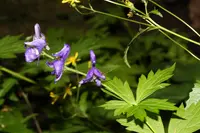
Columbian monkshood
Aconitum columbianum
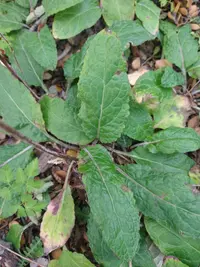
Adenocaulon chilense
Adenocaulon chilense
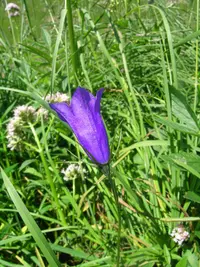
Scheuchzer's bellflower
Campanula scheuchzeri
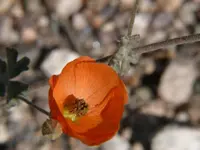
desert globemallow
Sphaeralcea ambigua
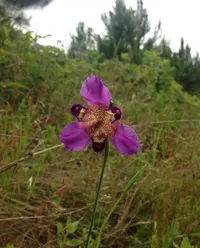
propeller flower
Alophia drummondii
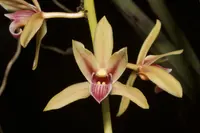
Two-colored Cymbidium
Cymbidium bicolor
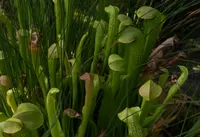
hooded pitcherplant
Sarracenia minor
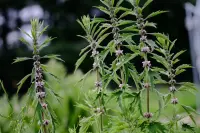
common motherwort
Leonurus cardiaca