


Sturdy stem support
Install slender stakes or a low wire grid early in the season and loosely tie stems with soft garden ties to prevent wind damage and lodging as the tall flower spikes develop.

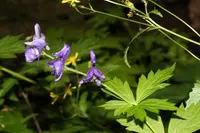
Columbian monkshood, Aconitum columbianum, is a hardy perennial wildflower known for its tall stems topped with hooded blue to violet blooms. It forms upright clumps from fleshy roots and often grows along cool mountain streams and moist meadows in western North America. This species prefers consistently moist, rich soils and cool conditions, which makes it better suited to temperate gardens than hot, dry sites. It offers strong vertical interest in shaded borders but can be demanding in warmer climates. Gardeners who want to care for Columbian monkshood should pay attention to moisture, summer heat, and safe handling due to its toxic sap.

Care Difficulty
Moderate Care

Light Preference
Partial Shade

Water Requirements
Keep Soil Moist

Temperature Preference
Cold Hardy

Hardiness Zone
4–8

Soil Texture
Loamy, Silty, Organic-rich

Soil pH
Acidic (5.5–6.5), Slightly acidic (6.5–7.0)

Soil Drainage
Moist but well-drained

Fertilization
Minimal (feed rarely)
Scan your plant to receive care tips personalized for your specific plant
Available on iOS and Android
This woodland perennial prefers bright, cool conditions with protection from intense midday sun.
This species favors evenly moist, cool soil and does not tolerate drought or waterlogging well.
This hardy perennial is adapted to cool to mild climates with cold winters and moderate summers.
This species prefers moderately moist air but usually adapts to typical outdoor humidity in temperate regions.
This perennial requires consistently moist, cool, well‑structured soil to support safe and healthy growth.
This species can be grown in containers, but only where large, cool, stable pots are practical outdoors.
This native perennial usually needs only modest feeding in decent garden soil.
Pruning Aconitum columbianum is minimal and mainly aimed at tidiness and safety.
This species is better suited to permanent spots in the ground than frequent container repotting.
Propagation is possible but somewhat slow, so it is done on a modest scale for this species.
This is a cold-hardy perennial that usually needs little special winter care in temperate climates.

Plant Health Check
Not sure what's wrong with your plant? Check your plant's health inside the app.
This species naturally occurs along cold, fast-flowing mountain streams and seeps in western North America, often in subalpine meadows where soils stay moist from snowmelt through summer.
Its hooded blue-violet flowers are shaped so that mainly strong bumblebees can force their way inside, brushing against hidden anthers and stigma and acting as the primary pollinators.
Populations show notable variation in flower tone, ranging from deep violet-blue to paler bluish or occasionally nearly white forms, which has contributed to taxonomic confusion with related monkshood species.

Like other monkshoods, this species is highly poisonous, but field botanists use its distinctive helmet-shaped flower and preference for cold, wet mountain habitats as reliable traits to separate it from less toxic look-alike wildflowers in the same regions.
Lack of flowering usually comes from too much shade, nutrient-poor or very dry soil, or plants that are still immature. Division or transplant shock can also delay buds for 1–2 seasons while roots re-establish.
Keep your plants happy and healthy with plant identification, disease detection, and easy care guidance.

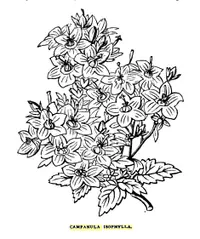
Italian bellflower
Campanula isophylla
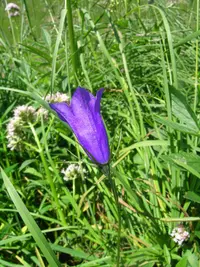
Scheuchzer's bellflower
Campanula scheuchzeri
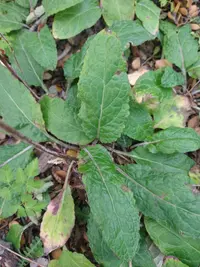
Adenocaulon chilense
Adenocaulon chilense
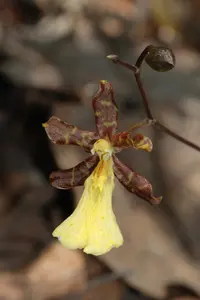
Oncidium brachyandrum
Oncidium brachyandrum
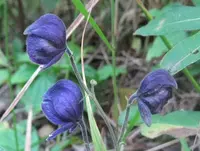
larkspurleaf monkshood
Aconitum delphiniifolium
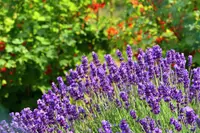
French lavender
Lavandula stoechas
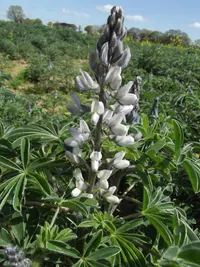
White Lupin
Lupinus albus
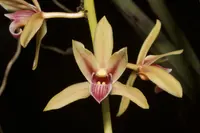
Two-colored Cymbidium
Cymbidium bicolor