Daylily Care (Hemerocallis 'Tetrina's Daughter')

About Daylily

Hemerocallis 'Tetrina's Daughter' is a hardy herbaceous perennial grown mainly for its profusion of trumpet-shaped summer flowers. It forms dense clumps of arching, strap-like green leaves with flower stems rising above the foliage. This cultivar typically produces soft yellow blooms that each last a single day, but new buds open in succession, giving a long display in the garden. It suits mixed borders, cottage-style plantings, and low-maintenance landscapes. Daylilies originate from East Asia but are now widely cultivated in temperate regions. The plant is valued for its toughness, adaptability, and low maintenance, which makes how to care for Daylily relatively straightforward for most gardeners.

Main Plant Requirements

Care Difficulty

Easy Care

Light Preference

Full Sun

Water Requirements

Moderate Water

Temperature Preference

Cold Hardy

Hardiness Zone

3–9

Soil Texture

Sandy, Loamy, Clay

Soil pH

Acidic (5.5–6.5), Slightly acidic (6.5–7.0)

Soil Drainage

Moist but well-drained

Fertilization

Minimal (feed rarely)

Get Personalized Care Plan

Scan your plant to receive care tips personalized for your specific plant

Available on iOS and Android

How to Care for the Daylily

This cultivar performs best in full sun but accepts some shade, especially in hotter regions.

  • Provide 6–8 hours of direct sun daily; in zones with intense summers, favor morning sun with light afternoon shade to reduce scorch risk.
  • In hot climates, allow dappled or filtered light after 2–3 p.m. to prevent flower fading and leaf tip burn on this Daylily.
  • If stems stretch, blooms decrease, or foliage becomes sparse, the plant is likely in too much shade; gradually move to a brighter position.

Hemerocallis 'Tetrina's Daughter' prefers evenly moist but not saturated soil, especially during active growth and flowering.

  • Water when the top 3–5 cm of soil feels dry, applying a deep soak so moisture reaches the root zone, then allow excess water to drain away.
  • Ensure soil is well-drained and never waterlogged; yellowing, soft leaves or crown rot indicate overwatering, while crisp, browning tips signal drought stress.
  • In spring and early summer, monitor moisture closely; reduce watering in late fall once foliage dies back, relying more on natural rainfall in winter.

This hardy perennial tolerates a wide temperature range but flowers best in moderate warmth.

  • Optimal growing and flowering temperatures are 65–80°F (18–27°C), with strong, consistent bloom production in this range.
  • The plant survives winter cold down to about -20°F (-29°C) when properly mulched, entering dormancy and resuming growth as soil warms in spring.
  • Mature clumps handle summer heat up to 95°F (35°C) if soil is not allowed to dry out completely; extended heat above this can reduce bloom quality and duration.

This cultivar handles typical outdoor humidity in most gardens without special care.

Hemerocallis 'Tetrina's Daughter' performs best in moderately fertile, moisture-retentive but well-drained ground.

  • Use a loamy or sandy-loam soil enriched with 20–30% compost to support steady growth and flowering.
  • Ensure excess water drains freely; raised beds or slight mounding help prevent standing water around the crown.
  • Aim for slightly acidic to neutral pH, roughly 6.0–7.0, for optimal nutrient uptake.
  • Improve heavy clay by mixing in coarse sand or fine gravel plus organic matter to increase aeration and drainage.

This daylily is suitable for container growing when the pot is chosen to match its fibrous, spreading root system.

  • Select a deep, wide container to allow the dense roots and fans to expand without circling tightly.
  • Choose a heavy, stable pot material such as ceramic when placing containers in windy or exposed sites to prevent tipping.
  • Water thoroughly until it runs from drainage holes, then allow the top 3–5 cm of mix to dry to avoid chronically wet roots.

This cultivar responds well to light, targeted feeding during the active growing season for reliable flowering.

  • Apply a balanced granular or slow-release fertilizer (around 10-10-10) in early spring as new growth emerges.
  • Top-dress with compost or well-rotted manure once a year to support soil structure and long-term nutrition for this Daylily.
  • Use about half the label rate to avoid excessive leafy growth at the expense of flowers.
  • Stop feeding in late summer to fall so plants can harden off naturally during dormancy.

Hemerocallis 'Tetrina's Daughter' benefits from simple, seasonal pruning to maintain appearance and flowering.

  • In summer, deadhead spent blooms and remove yellowing flower stalks at the base to encourage continued flowering.
  • Cut back dead or damaged leaves with clean hand pruners, leaving healthy foliage to support photosynthesis.
  • In late fall or very early spring, shear or cut back the clump to just above ground level to refresh growth.
  • Dispose of removed foliage to reduce overwintering pests and diseases around the plant crown.

This daylily is usually transplanted in garden beds rather than kept long term in containers.

  • Plan to divide and transplant clumps every 3–5 years when flowering declines or the center becomes sparse.
  • Best timing is early spring or immediately after flowering, allowing roots to re-establish in mild conditions.
  • Lift the clump carefully, shake off soil, and gently separate fans, keeping several healthy roots attached to each division.
  • Replant at the same depth, water thoroughly, and shade lightly for a few days to reduce transplant stress.

Propagation of this cultivar is most reliable by division, which preserves the exact traits of the parent plant.

  • Divide mature clumps in early spring or late summer when temperatures are moderate.
  • Lift the clump, then separate individual fans or small groups by hand or with a clean knife.
  • Trim damaged roots lightly and replant divisions into well-drained soil, spacing them to allow clump expansion.
  • Water thoroughly after planting and keep soil evenly moist until new growth shows firm establishment.

This hardy perennial usually needs minimal winter care in typical temperate climates.

  • The crown and roots tolerate freezing temperatures in-ground once established in well-drained soil.
  • After hard frost, allow foliage to die back, then cut it to ground level to reduce disease carryover.
  • Apply a 5–7 cm mulch layer over the root zone in colder regions, keeping mulch slightly away from the crown.
  • Container-grown plants in very cold zones can be moved to an unheated garage or shed to avoid root freeze-thaw cycles.

Care Tips

Fan Division Timing

Plan clump division for late summer to early fall, when flowering has finished, so the plant can re-establish roots before winter and maintain strong performance the following season.

Scape Removal Strategy

Cut spent flower scapes down at the base as soon as the last bloom on that stalk fades to redirect energy into root and fan development instead of seed production.

Mulch Management

Apply a 3–5 cm layer of organic mulch around but not touching the crowns to stabilize soil moisture and temperature, then pull mulch back slightly in late winter to let emerging shoots warm quickly.

Bloom Stalk Support

In windy or exposed sites, insert discreet, slender stakes on the windward side of taller scapes and tie loosely with soft garden ties to prevent bending or snapping of heavy flower stems.

Bud Health Monitoring

Inspect buds weekly in warm, humid weather and remove any that show shriveling, spotting, or holes, which limits spread of pests like thrips and keeps caring for Daylily more predictable and trouble-free.

Common Pests and Diseases

Daylily rust

This disease causes yellow to orange powdery spots and streaks on leaves, which can spread quickly under warm, humid conditions.

Solution

Remove and discard heavily infected leaves, avoid overhead watering, space plants for good airflow, and clean up all foliage at the end of the season; in areas where rust is persistent, apply a labeled systemic fungicide during the growing season as part of broader Hemerocallis 'Tetrina's Daughter' care.

Daylily leaf streak

This disease leads to yellow streaks that turn brown along the midrib, causing leaves to die back from the tips inward.

Solution

Remove and dispose of affected leaves, keep foliage dry by watering at soil level, maintain good spacing for airflow, and if the problem recurs yearly, use a suitable foliar fungicide early in the season when new growth appears.

Daylily gall midge

This pest causes distorted, swollen, or aborted flower buds that often fail to open and may appear wet or mushy.

Solution

Inspect developing buds and remove and destroy any misshapen or soft buds before they open, clean up all spent flowers, and avoid bringing in infested plants by checking new stock carefully before planting.

Aphids

These insects cluster on buds and young foliage, sucking sap and causing curled, sticky leaves that may attract ants or sooty mold.

Solution

Spray colonies off with a firm stream of water, then use insecticidal soap or horticultural oil, ensuring thorough coverage of buds and leaf undersides; encourage natural predators like lady beetles by avoiding broad-spectrum insecticides.

Spider mites

This pest causes fine stippling, dull or bronzed foliage, and sometimes fine webbing, especially in hot, dry conditions.

Solution

Rinse foliage thoroughly with water, focusing on leaf undersides, increase humidity around plants, and if populations remain high, apply horticultural oil or a miticide labeled for ornamental use, repeating as directed to target successive generations.

Interesting Facts

Early-yellow hybrid

This cultivar is known for very early flowering in the season, often opening its soft yellow blooms before many other large-flowered daylilies in comparable climates.

Dormant foliage habit

It has a truly dormant growth pattern, meaning its foliage dies back completely in winter in cold climates, which helps it tolerate lower temperatures than many evergreen daylily types.

Robust landscape clumps

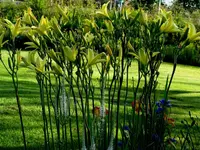
Mature plants form dense, medium-tall clumps with abundant scapes and multiple buds, so even though each bloom lasts only about 1 day, the clump shows color over an extended flowering period.

Botan icon

Did you know?

This cultivar is valued by daylily breeders as a reliable parent because its early bloom season and clear yellow color can be passed on to a significant portion of its offspring, helping create new early-flowering yellow hybrids.

FAQs about Daylily

Poor flowering usually comes from low light, overcrowded clumps, or nutrient imbalance. Divide congested plants every 3–5 years, avoid heavy nitrogen lawn fertilizer nearby, and remove seed pods so energy returns to the roots for next year’s display.

Grow Healthy Plants with Botan Care

Keep your plants happy and healthy with plant identification, disease detection, and easy care guidance.

Botan plant care app — identify plants on mobile

Explore More Plants