Two-colored Cymbidium Care (Cymbidium bicolor)

Two-colored Cymbidium

About Two-colored Cymbidium

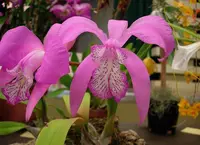
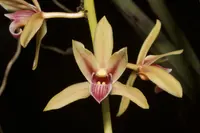
Two-colored cymbidium (Cymbidium bicolor) is an evergreen, epiphytic orchid that forms arching clumps of narrow leaves and tall flower spikes. It is valued for its striking blooms, which usually show a contrast between pale petals and a darker lip. Each spike carries several waxy flowers that last well, making it attractive as both a potted plant and a cut flower source.

In nature, C. bicolor grows in warm to cool tropical regions of South and Southeast Asia, often on trees or rocks in bright, filtered light. Its epiphytic habit means it prefers a very free-draining orchid mix and steady moisture around the roots without waterlogging, which guides how to care for Two-colored Cymbidium at home.

Main Plant Requirements

Care Difficulty

Moderate Care

Light Preference

Partial Shade

Water Requirements

Regular Water

Temperature Preference

Cool Climate

Hardiness Zone

10–11

Soil Texture

Loamy, Organic-rich

Soil pH

Acidic (5.5–6.5)

Soil Drainage

Moist but well-drained

Fertilization

Moderate (every 2–4 weeks)

Get Personalized Care Plan

Scan your plant to receive care tips personalized for your specific plant

Available on iOS and Android

How to Care for the Two-colored Cymbidium

Cymbidium bicolor prefers bright, indirect light with some direct morning sun for strong growth and flowering.

  • Provide 3–5 hours of gentle morning sun, then bright filtered light for the rest of the day; light shade is useful in hot climates.
  • Allow dappled or 30–50% shade during harsh midday and afternoon sun to prevent leaf scorch and yellow, leathery foliage.
  • In summer, increase shade cloth or move to brighter shade; in winter, give more direct morning sun to support flowering of Two-colored Cymbidium.

This orchid prefers evenly moist but never waterlogged growing conditions, with short drying at the surface between waterings.

  • Water when the top 2–3 cm of the mix feels just dry, using thorough watering that fully wets the medium and then drains freely.
  • Reduce watering in cooler months but do not allow Cymbidium bicolor pseudobulbs to shrivel; slight wrinkling signals underwatering.
  • Watch for limp, yellowing leaves or blackened roots as signs of overwatering, and use a coarse, fast-draining orchid mix to prevent stagnation.

This species grows best with cool to intermediate temperatures and a clear drop between day and night.

  • Aim for 65–75°F (18–24°C) by day and 50–60°F (10–16°C) at night to support steady growth and reliable flower spike initiation.
  • Protect from frost; plants tolerate short dips to about 35–40°F (2–4°C) if kept dry, but repeated freezing damages leaves and roots.
  • In hot weather above 85°F (29°C), increase shade and airflow; avoid hot, enclosed spaces and intense afternoon sun to prevent heat stress.

This orchid prefers moderate, fairly stable humidity to support healthy foliage and flowers.

  • Aim for 50–70% humidity; it tolerates brief dips lower but prolonged very dry air weakens new growth.
  • Dry, crisp leaf tips and wrinkled pseudobulbs signal low humidity stress in Two-colored Cymbidium.
  • Increase humidity with nearby trays of water and pebbles, grouped plants, or a fine mist in the morning, keeping leaves dry by night.

This epiphytic orchid needs a loose, airy growing medium rather than dense mineral soil.

  • Use a coarse mix such as medium orchid bark with some perlite and a little sphagnum moss to retain light moisture.
  • Ensure very fast drainage; water must flow through freely and never leave the roots sitting in soggy conditions.
  • Keep pH slightly acidic to neutral (about 5.5–7.0), which supports nutrient availability and root health for Cymbidium bicolor.
  • Avoid fine garden soil, heavy peat-only mixes, or compacted substrates, and refresh chunky components if they start to break down.

This species is well suited to container growing when its tall, arching growth and heavy roots are supported properly.

  • Choose a deep, heavy pot to counterbalance tall flower spikes and prevent tipping in strong wind.
  • Select a container material that breathes slightly, such as clay, to help excess moisture leave the root zone faster.
  • Fill the bottom with coarse bark or large drainage medium to keep the lower root zone from staying saturated after watering.

Cymbidium bicolor benefits from steady, moderate feeding to support foliage growth and flowering.

  • Use a balanced orchid fertilizer (around 20-20-20) at 1/2 strength every 2 weeks during the active growing season.
  • Switch to a low-nitrogen bloom formula in late summer to encourage strong flower spikes.
  • In winter or dormancy, feed lightly only once every 4–6 weeks or pause if growth stops.
  • Flush the pot with plain water monthly to prevent salt buildup from repeated fertilization.

Pruning Cymbidium bicolor focuses on hygiene and maintaining a tidy, flowering plant.

  • After blooms fade, cut spent flower spikes at the base with sterilized scissors or pruners.
  • Remove dead, yellowing, or damaged leaves at their base to reduce disease risk.
  • Thin out old, shriveled pseudobulbs during repotting to open the clump and encourage new growth.
  • Avoid cutting healthy green pseudobulbs, as they store energy needed for future flowering.

Cymbidium bicolor in containers needs periodic repotting to maintain healthy roots and flowering.

  • Plan to repot every 2–3 years, or when roots circle tightly, medium breaks down, or growth slows.
  • Repot in late winter to early spring, just after flowering and before strong new root growth starts.
  • Gently tease apart the root mass, trim dead roots, and keep healthy pseudobulbs intact to limit stress.
  • Replant in a snug pot with fresh, coarse orchid mix, then keep shaded and slightly drier for 1–2 weeks.

Propagation of Cymbidium bicolor is usually done by division rather than by seed for home growers.

  • Divide mature clumps during repotting in late winter or early spring when new shoots appear.
  • Use a clean, sharp knife to separate sections with at least 3–4 healthy pseudobulbs each.
  • Plant divisions in fresh orchid mix, keeping the base of pseudobulbs just above the medium surface.
  • Provide bright, indirect light, 60–75°F, and slightly higher humidity to support new root formation.

Cymbidium bicolor needs cool but not freezing winter conditions to set buds and stay healthy.

  • Keep plants at 40–50°F nights and 55–65°F days, avoiding hard frost and subfreezing temperatures.
  • For outdoor containers, move under shelter or indoors before nights drop near freezing.
  • Use a light mulch layer around outdoor-grown roots in mild climates to buffer temperature swings.
  • Maintain good air movement and reduce watering, allowing the mix to dry slightly more between waterings.

Care Tips

Pseudobulb monitoring

Check pseudobulbs every month and adjust care if they wrinkle or shrivel, since this usually signals either chronic underwatering or a damaged root system that needs inspection and possible repotting.

Targeted stake support

As new flowering spikes emerge, insert a slim, smooth stake beside each spike and secure it loosely with soft ties to keep stems upright, prevent breakage, and present blooms cleanly.

Cool-night initiation

About 8–10 weeks before the expected flowering season, provide reliably cooler nights (around 50–55°F) while keeping days brighter to help trigger spike formation and improve flower count when caring for Two-colored Cymbidium.

Post-bloom grooming

After flowers fade, cut spent spikes close to the base and remove only dead or yellow leaves so the plant can redirect energy into building strong pseudobulbs for the next flowering cycle.

Quarantine and pest checks

Quarantine new orchids for 2–3 weeks and inspect leaf sheaths, undersides of leaves, and pseudobulb crevices for scale or mites so any infestation can be treated before it spreads to established plants.

Common Pests and Diseases

Cymbidium mosaic virus

This disease causes dark streaks, mottling, or irregular patterns on leaves and flowers, often reducing flower size and vigor over time. Symptoms include distorted spikes and poor blooming, especially in mature plants.

Solution

Remove and discard any plants strongly suspected of viral infection, as there is no cure. Disinfect cutting tools with 70% isopropyl alcohol or a 10% bleach solution between plants, avoid sap transfer when dividing or repotting, and only acquire new plants from reputable, virus-tested stock according to standard Cymbidium bicolor care instructions.

Cymbidium leaf necrosis

This disease produces elongated brown to black lesions along the leaf blades, often starting at the tips or margins. Symptoms include progressive drying and death of affected leaf sections, especially under cool, damp conditions.

Solution

Cut off affected leaf portions with a sterile blade, disposing of all infected material. Improve air circulation, avoid overhead watering late in the day, keep foliage dry as much as possible, and apply a labeled ornamental fungicide if the problem continues or spreads to multiple leaves or plants.

Spider mites

This pest causes fine yellow stippling on leaves, a dull appearance, and in severe cases fine webbing between leaves and pseudobulbs. Symptoms include leaves that feel rough and may dry or fall prematurely in hot, dry conditions.

Solution

Rinse foliage thoroughly with lukewarm water, including leaf undersides, and repeat several times over 1–2 weeks to disrupt the life cycle. Increase humidity around plants, isolate heavily infested specimens, and use a horticultural oil or insecticidal soap labeled for mites if washing alone does not control the population.

Scale insects

These insects appear as small, immobile bumps on leaves, pseudobulbs, and flower spikes, often along veins or crevices. Symptoms include sticky honeydew, sooty mold growth, and gradual decline in plant vigor.

Solution

Gently scrape or wipe visible scale with a cotton pad soaked in isopropyl alcohol, treating all plant surfaces and pot rims. Repeat every 7–10 days until no new insects appear, isolate affected plants, and if infestations are heavy, use a systemic insecticide labeled for ornamental orchids following the product directions carefully.

Slugs and snails

These pests feed on tender roots, new shoots, and flower buds, leaving irregular holes, ragged edges, and silvery slime trails. Damage is often worse on plants grown outdoors or in shade houses, especially after rain or overhead watering.

Solution

Hand-pick slugs and snails at night or early morning, and remove hiding places such as old pots or wet debris near the plants. Use iron phosphate or other orchid-safe slug and snail baits placed outside the pots, and elevate benches or use copper barriers to reduce access to Cymbidium bicolor clumps.

Interesting Facts

Wide Asian distribution

This species occurs naturally from the Western Ghats of India across Sri Lanka and into Southeast Asia, often in humid, mid‑elevation forests rather than the cooler highland habitats preferred by many other cymbidiums.

Epiphytic and lithophytic habit

It commonly grows as an epiphyte on tree trunks or as a lithophyte on rocks, anchoring its thick roots into crevices where leaf litter and moisture accumulate.

Distinctive two-toned flowers

The flowers typically show a clear contrast between the darker brownish‑purple outer segments and a pale, often creamy or whitish lip, which is thought to help guide pollinators toward the reproductive structures.

Botan icon

Did you know?

In some parts of its native range, this orchid has been used in traditional garland-making and ceremonial decorations because its relatively firm, long-lasting flowers tolerate handling better than many finer-petaled orchid species.

FAQs about Two-colored Cymbidium

Lack of flowers usually comes from insufficient light, no distinct cool period, or overfeeding with high-nitrogen fertilizer. Provide bright, indirect light, a cooler, drier rest after growth, and use balanced orchid fertilizer to encourage spikes.

Grow Healthy Plants with Botan Care

Keep your plants happy and healthy with plant identification, disease detection, and easy care guidance.

Botan plant care app — identify plants on mobile

Explore More Plants