


Mounting strategy
Use a cork slab or tree fern mount with a thin layer of long-fiber sphagnum only around the roots, and position the plant so new growths face open space, allowing room for future pseudobulbs to extend along the mount.

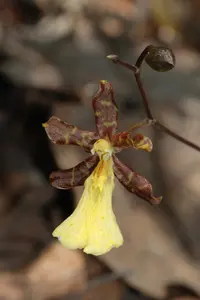
Oncidium brachyandrum is a small to medium-sized epiphytic orchid that typically grows on trees in warm, humid forests. It forms clumps of slender pseudobulbs with narrow leaves and airy, branching flower spikes.
The flowers are usually small but numerous, creating a delicate, cloud-like display above the foliage. It comes from tropical regions of South America, where it experiences bright filtered light, regular moisture, and good air movement.
This species is moderately challenging for beginners because it dislikes long periods of dryness or constant wet roots. Understanding how to care for Oncidium brachyandrum mainly involves balancing moisture with excellent drainage and ventilation.

Care Difficulty
Moderate Care

Light Preference
Bright Indirect Light

Water Requirements
Moderate Water

Temperature Preference
Tropical / Frost Sensitive

Hardiness Zone
11–13

Soil Texture
Sandy, Rocky, Organic-rich

Soil pH
Acidic (5.5–6.5)

Soil Drainage
Well-drained

Fertilization
Light (every 4–6 weeks)
Scan your plant to receive care tips personalized for your specific plant
Available on iOS and Android
This orchid needs bright, filtered light that mimics dappled forest sunlight.
This species prefers evenly moist conditions with brief drying periods around the roots.
This orchid grows best in intermediate to warm temperatures with mild night drops.
This orchid prefers moderately humid air but copes briefly with drier indoor conditions.
Use a loose, airy orchid medium that dries slightly between waterings.
This species is well suited to container growing when its roots stay airy and not waterlogged.
Nutrient input supports flowering and steady growth in Oncidium brachyandrum grown in containers or mounted culture.
Pruning focuses on hygiene and flower-spike management rather than reshaping Oncidium brachyandrum.
Container-grown plants benefit from periodic repotting to refresh the medium and maintain healthy roots.
Division is the practical method for multiplying this sympodial orchid in home conditions.
This orchid is frost-sensitive and needs controlled indoor conditions in winter.

Plant Health Check
Not sure what's wrong with your plant? Check your plant's health inside the app.
This species is a true miniature within the genus, often forming tight clumps of small pseudobulbs and leaves that allow it to occupy very limited canopy space in its native habitats.
It is reported from cool to intermediate cloud forest zones in parts of Central and northern South America, where it experiences frequent mist, bright filtered light, and strong air movement high in the canopy.
The species name brachyandrum refers to its short floral column, a distinctive structural feature of the flower that helps taxonomists separate it from closely related Oncidium species.
Lack of blooms usually comes from insufficient light, inadequate seasonal temperature drop at night, or nutrient imbalance from constant high-nitrogen fertilizer. Mature pseudobulbs, slight night-time cooling, and a balanced orchid fertilizer improve spike initiation and flowering performance.
Keep your plants happy and healthy with plant identification, disease detection, and easy care guidance.


Elephant Ear
Colocasia esculenta 'Pink China'
Begonia taiwaniana
Begonia taiwaniana
stemless evening primrose
Oenothera triloba
Purple Velvet Plant
Gynura aurantiaca 'Purple Passion'
%20-%20Copy-200x143.webp)
Parrot Flower
Papilionanthe teres
Watermelon Dischidia
Dischidia ovata
Stelis superbiens
Stelis superbiens
alpine rose
Rosa pendulina