Prop Root Management
Rotate containers every 2–3 weeks so prop roots develop evenly around the stem, and trim only dead or obviously damaged roots to reduce infection risk.

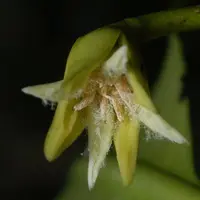
Red mangrove, Rhizophora mangle, is a woody, salt-tolerant shrub or small tree that naturally forms dense forests along tropical and subtropical shorelines. It is best known for its tall, arching prop roots that lift the trunk above the water and help stabilize muddy, tidal soils.
This species grows in warm, sunny, coastal habitats and is commonly seen along sheltered bays, lagoons, and estuaries. It produces leathery, evergreen leaves and elongated, pencil-like propagules that root when they reach suitable substrate.
In cultivation it can be slow-growing and demands stable warmth, high humidity, and constant access to brackish or marine water, so care for red mangrove is more advanced than for typical houseplants.

Care Difficulty
Hard Care

Light Preference
Full Sun

Water Requirements
Aquatic

Temperature Preference
Tropical / Frost Sensitive

Hardiness Zone
10–12

Soil Texture
Sandy, Silty, Organic-rich

Soil pH
Strongly acidic (4.5–5.5), Acidic (5.5–6.5)

Soil Drainage
Waterlogged tolerant

Fertilization
Minimal (feed rarely)
Scan your plant to receive care tips personalized for your specific plant
Available on iOS and Android
This coastal species needs long, bright exposure to support dense foliage and root development.
This species is adapted to tidal fluctuations and needs consistently wet, aerated conditions rather than alternating wet and dry soil.
This tropical shoreline tree needs warm, frost-free conditions to maintain active growth.
This coastal species needs consistently high humidity to maintain healthy foliage and root function.
This species prefers a saturated, sandy to silty substrate that still allows some oxygen to reach the roots.
This species can be grown in containers when the pot is adapted to its tall, top-heavy and aquatic growth habit.
This coastal species needs only light supplemental feeding in containers, as wild red mangrove typically thrives in nutrient-poor, brackish water.
Rhizophora mangle benefits from light, strategic pruning in managed plantings or aquaria to control size and encourage stable structure.
This mangrove is usually grown in situ or in long-term display tubs, so transplanting is infrequent and should be handled gently.
This species is commonly propagated from its distinctive floating propagules rather than from cuttings or conventional seeds.
This tropical mangrove is highly frost-sensitive and needs warm, frost-free conditions in winter, especially in containers or artificial systems.

Plant Health Check
Not sure what's wrong with your plant? Check your plant's health inside the app.
The arching stilt roots of this species trap sediment and organic matter, gradually building new shoreline and stabilizing tropical coastlines against erosion.
Red mangrove thickets create calm, shaded underwater habitat where many juvenile reef fishes, shrimp, and crabs shelter before moving to open seagrass beds and coral reefs.
Instead of excreting much salt through its leaves, this mangrove mostly avoids salt uptake at the root level and stores remaining salt in older tissues that are later shed.

Seeds of this species germinate while still attached to the parent tree and form long, pencil-shaped propagules that can float for weeks to months, allowing them to disperse across ocean currents and colonize distant shorelines.
Growth is moderate in typical home or aquarium setups. Seedlings often add 10–30 cm per year, depending on light, water salinity, nutrients, and root space. In ideal coastal conditions, established trees can extend prop roots more quickly.
Keep your plants happy and healthy with plant identification, disease detection, and easy care guidance.