Adenocaulon chilense Care

Adenocaulon chilense

About Adenocaulon chilense

Adenocaulon chilense is a perennial herb from the daisy family, usually forming low clumps of foliage with simple, often somewhat coarse leaves. It sends up slender stems with small, less showy flower heads, giving it a modest, woodland look.

This species is native to southern South America, where it grows in cool, shaded forest habitats with consistent soil moisture. Its preference for shade, cool conditions, and humus-rich, well-drained soil means it can be more challenging outside similar climates.

Gardeners who want to care for Adenocaulon chilense should focus on recreating a sheltered, lightly moist, woodland-style environment rather than hot, sunny, or very dry sites.

Main Plant Requirements

Care Difficulty

Moderate Care

Light Preference

Partial Shade

Water Requirements

Moderate Water

Temperature Preference

Cool Climate

Hardiness Zone

7–9

Soil Texture

Loamy, Silty, Organic-rich

Soil pH

Acidic (5.5–6.5), Slightly acidic (6.5–7.0)

Soil Drainage

Moist but well-drained

Fertilization

Minimal (feed rarely)

Get Personalized Care Plan

Scan your plant to receive care tips personalized for your specific plant

Available on iOS and Android

How to Care for the Adenocaulon chilense

This woodland perennial prefers cool, filtered light that mimics a forest floor environment.

  • Provide bright dappled shade or high, filtered light under trees, with at most 2–3 hours of gentle morning sun and no harsh afternoon sun.
  • Site Adenocaulon chilense where it receives indirect light all day; deep shade slows growth and flowering, while direct midday sun can scorch foliage and dry soil quickly.
  • In hotter summers, shift exposure to heavier shade or use shade cloth; in cooler climates, slightly brighter positions help maintain compact, vigorous growth.

This species prefers consistently moist, cool soil without becoming waterlogged.

  • Aim for soil that stays evenly moist; allow only the top 2–3 cm to start drying before the next thorough soak, especially in active growth.
  • Plant in humus-rich, well-drained soil so excess water can escape; persistent sogginess, yellowing leaves, or mushy stems suggest overwatering and poor aeration.
  • Reduce watering frequency in cooler months when growth slows, but do not let the root zone dry out completely; wilting or crisp leaf edges indicate underwatering.

This plant is adapted to mild, woodland-type climates with cool to moderate temperatures.

  • Optimal growth occurs around 55–70°F (13–21°C), especially in spring and early summer, with steady moisture and protection from drying winds.
  • The plant tolerates light frosts down to about 25–28°F (-4 to -2°C) once established, but repeated hard freezes can damage crowns and young shoots.
  • In hot spells above 80°F (27°C), provide extra shade and soil moisture; persistent heat over 90°F (32°C) can cause stress, leaf scorch, and slower recovery.

This woodland perennial prefers moderate, stable humidity similar to shaded outdoor conditions.

  • Aim for 50–70% humidity, avoiding hot, dry spots such as near heaters or exposed patios.
  • Mild dry air is tolerated, but curled, crisping leaf edges or slow growth suggest humidity stress.
  • Increase humidity outdoors by mulching the root zone; indoors use a pebble tray or group plants to raise local moisture.

This species prefers consistently moist, humus-rich, well-structured soil that mimics a forest floor.

  • Use a loose loam rich in organic matter, combining roughly 50% compost, 30% garden loam, and 20% coarse material such as perlite or grit.
  • Ensure rapid drainage while retaining moisture; water should drain within a few seconds but the surface should not crack hard when dry.
  • Aim for slightly acidic to neutral pH, around 6.0–7.0, avoiding strongly alkaline or salty substrates that can limit nutrient uptake.
  • For Adenocaulon chilense in beds or large containers, incorporate leaf mold or fine bark to improve aeration while keeping the root zone evenly moist.

This plant can be grown in containers if the pot is prepared to stay evenly moist without waterlogging.

  • Choose a deep, wide container that allows its spreading root system to develop laterally without circling tightly.
  • Use a heavier, non-tip-prone pot material or add weight at the base to stabilize the plant in windy, shaded sites.
  • Line the bottom with a coarse drainage layer only if side drainage holes are limited, to prevent water collecting at the very base.

This woodland perennial from Chile grows acceptably in lean soil but responds to light feeding in cultivation.

  • Use a balanced, dilute liquid fertilizer (for example 10-10-10 at 1/4–1/2 strength) during active growth in spring–summer.
  • Apply every 4–6 weeks if growth is weak or soil is poor; skip feeding in rich garden beds.
  • Incorporate a thin layer of compost around the root zone once a year instead of heavy NPK dosing.
  • Stop fertilizing in late summer and do not feed during winter dormancy to avoid soft, weak growth.

Adenocaulon chilense needs only light pruning to keep clumps tidy and healthy.

  • Best timing is late winter to early spring, before new shoots elongate.
  • Remove dead, diseased, or winter-damaged stems at the base with clean, sharp hand pruners.
  • Thin congested shoots lightly to improve air movement and maintain a low, open habit.
  • After flowering, shear spent flower stalks to direct energy back to roots and foliage.

This shade-loving perennial is usually grown in the ground and prefers infrequent disturbance once established.

  • Transplant in early spring or early fall, when temperatures are mild and soil is evenly moist.
  • Move clumps only when growth declines, the center dies out, or plants are clearly overcrowded.
  • Lift with a broad root ball, keep roots shaded, and replant at the same depth into loose, humus-rich soil.
  • Water thoroughly after transplanting, then keep evenly moist for several weeks to limit transplant shock.

Propagation of Adenocaulon chilense is possible but not widely practiced outside specialist collections.

  • Divide established clumps in early spring, keeping several buds and healthy roots on each division.
  • Replant divisions promptly into moist, humus-rich soil and keep shaded until new growth is firm.
  • Sow fresh seed in fall or early spring in a cool frame; germination can be slow and uneven.
  • Maintain consistently moist, not waterlogged, conditions and avoid strong sun during establishment.

This perennial is moderately cold hardy and usually survives typical temperate winters with minimal input.

  • In colder regions, add a 5–7 cm layer of leaf mold or bark mulch over the root zone after the ground cools.
  • Allow top growth to die back naturally; it insulates crowns and can be removed in late winter.
  • Container plants benefit from moving into a sheltered, frost-free but cool spot with bright shade.

Care Tips

Edge containment

Install a shallow root barrier or edging strip 10–15 cm deep around clumps to stop slow lateral spread into neighboring shade plantings and keep the colony easy to manage.

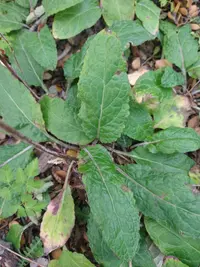
Leaf litter mulching

Maintain a 3–5 cm layer of shredded leaves or fine bark around plants to mimic woodland duff, stabilizing moisture and temperature while reducing weed pressure without smothering new shoots.

Division timing

Divide mature clumps in early spring just as new growth appears, replanting divisions immediately at the same depth and watering them in well to refresh overcrowded patches and maintain vigor.

Shaded companion planting

Underplant with low, non-aggressive shade species (such as small ferns or woodland grasses) to protect surface roots, cool the soil, and visually mark the colony so it is not damaged during maintenance.

Slug and snail control

In damp, shaded sites place iron phosphate bait stations or rough copper bands around beds early in the season, since young foliage is tender and benefits from proactive, non-chemical slug management when caring for Adenocaulon chilense.

Common Pests and Diseases

Slugs and snails

This pest is strongly attracted to the tender foliage and can quickly skeletonize leaves, especially in shaded, moist sites where the plant is usually grown.

Solution

Hand-pick individuals at dusk or dawn, use beer traps or iron phosphate bait around clumps, and reduce hiding places such as dense mulch right at the crown while still keeping the soil evenly moist for overall Adenocaulon chilense care.

Leaf spot fungi

This disease causes small to medium brown or tan spots on leaves that may merge under prolonged wet conditions, leading to early foliage decline in dense woodland plantings.

Solution

Remove and discard affected leaves, avoid overhead watering, and increase spacing or airflow; in repeatedly wet climates, a copper-based fungicide can be used preventively at the start of the humid season if spotting is persistent.

Powdery mildew

This disease appears as a white to gray powdery coating on upper leaf surfaces, often in late summer when air is humid but leaf surfaces are dry.

Solution

Improve air circulation, avoid excess nitrogen fertilization that causes soft, mildew-prone growth, and treat early infections with a potassium bicarbonate or sulfur-based product, coating both leaf surfaces thoroughly.

Aphids

These insects feed on young stems and leaf undersides, causing curling, distortion, and sticky honeydew that can lead to sooty mold in shaded woodland gardens.

Solution

Rinse colonies off with a firm stream of water, encourage natural predators such as lady beetles, and if needed apply insecticidal soap or a light horticultural oil, repeating weekly until populations collapse.

Interesting Facts

Sticky seed dispersal

The plant produces small, burr-like fruits covered in hooked hairs that cling to animal fur or clothing, allowing seeds to be transported away from the parent plant by passing mammals or humans.

Shaded forest specialist

It typically grows on the dim floor of temperate rainforests in southern Chile and nearby regions, favoring moist, humus-rich soils under dense tree canopies rather than open, sunny sites.

Aster family outlier

Although a member of the Asteraceae family, which includes daisies and sunflowers, its flower heads are small and visually inconspicuous, adapted more for efficient seed production and dispersal than for showy pollinator attraction.

Botan icon

Did you know?

The species has a notably disjunct distribution, occurring naturally in southern South America and with closely related taxa in parts of North America, a pattern that has been used in biogeographic studies to discuss ancient connections between the floras of these regions and past continental or climatic shifts.

FAQs about Adenocaulon chilense

This woodland species is a herbaceous perennial. Top growth dies back in winter, then new shoots emerge from the root system in spring. In suitable conditions, a clump can persist and slowly expand for many years.

Grow Healthy Plants with Botan Care

Keep your plants happy and healthy with plant identification, disease detection, and easy care guidance.

Botan plant care app — identify plants on mobile

Explore More Plants