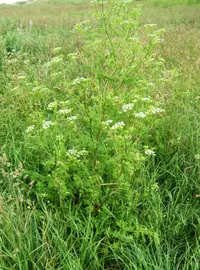
spinyfruit buttercup Care (Ranunculus muricatus)

Also known as: Rough-fruited buttercup, spring buttercup, sharp buttercup, Spiny-Fruited Buttercup
spinyfruit buttercup

About spinyfruit buttercup

Spinyfruit buttercup (Ranunculus muricatus) is a low, often spreading annual buttercup with glossy yellow flowers and sharply spined seed heads. It typically appears in wet or disturbed ground, such as ditches, paddocks, and irrigated fields.

The plant forms clumps of divided leaves and sends up slender stems that can root at the nodes, allowing it to spread quickly in suitable conditions. It is considered a weed in many regions because it reseeds freely and competes well with other plants.

This species prefers full sun to light shade, moist to wet soils, and mild climates, which makes it easy to establish where conditions are right. Those who want to know how to care for spinyfruit buttercup should also consider its potential to spread aggressively and become invasive outdoors.

Main Plant Requirements

Care Difficulty

Moderate Care

Light Preference

Full Sun

Water Requirements

Keep Soil Moist

Temperature Preference

Cool Climate

Hardiness Zone

7–10

Soil Texture

Loamy, Clay, Silty

Soil pH

Slightly acidic (6.5–7.0), Neutral (7.0)

Soil Drainage

Moist but well-drained

Fertilization

Minimal (feed rarely)

Get Personalized Care Plan

Scan your plant to receive care tips personalized for your specific plant

Available on iOS and Android

How to Care for the spinyfruit buttercup

Ranunculus muricatus prefers bright, cool conditions that mimic open, moist meadows.

  • Provide 4–6 hours of sun daily, with morning sun and light afternoon shade ideal to prevent leaf scorch in warm regions.
  • Tolerates light partial shade, especially in hotter climates, but flowering of spinyfruit buttercup declines in deep shade or under dense canopy.
  • In late winter and early spring, allow more direct sun; as temperatures rise above 80°F (27°C), shift toward filtered or dappled light to reduce stress.

This species favors consistently moist soil but is sensitive to prolonged waterlogging.

  • Water when the top 2–3 cm of soil feels just starting to dry, aiming for evenly moist conditions during active growth and flowering.
  • Use soil with good drainage near the surface and slightly heavier moisture-retentive layers below, so roots stay moist without standing water.
  • Reduce watering once foliage starts yellowing or dieback begins, and watch for limp, dull leaves from underwatering or soft, collapsing stems from overwatering.

This cool-season plant grows best in mild, frost-free conditions.

  • Aim for 50–68°F (10–20°C) during active growth, which supports strong foliage and flowering without heat stress.
  • Plants tolerate brief drops to around 28–30°F (-2 to -1°C), but hard or repeated freezes below this range can damage crowns and young growth.
  • Growth slows sharply above 77–82°F (25–28°C); in hotter periods, provide more shade and moisture, and expect a natural decline as summer heat builds.

This species handles a wide humidity range but grows best in moderate air moisture.

  • Aim for 40–60% humidity, which suits both outdoor beds and sheltered patio containers.
  • Dry air is usually tolerated, but extended hot, windy conditions can cause leaf edge browning and faster wilting.
  • To relieve humidity stress, group pots together and use a shallow gravel tray with water beneath, keeping pot bases above the waterline.

Ranunculus muricatus prefers moist, well‑aerated soil that never stays waterlogged.

  • Use a loamy mix with 40–60% organic matter, such as compost, blended with garden soil and sharp sand for structure.
  • Ensure fast drainage by adding coarse sand or grit at 20–30% of the volume, especially in heavy or clay‑leaning sites.
  • Target a slightly acidic to neutral pH around 6.0–7.0, avoiding very alkaline or saline soils that restrict nutrient uptake.
  • Improve aeration by breaking up compaction, then incorporating organic matter and coarse particles while avoiding spots where water regularly pools.

This species is suitable for container growing in cool to mild outdoor conditions.

  • Choose a container at least 20–25 cm deep so the tuberous roots can spread without crowding.
  • Use a sturdy, heavier pot material if exposed to wind, as the plant’s top growth and wet soil can make light pots tip.
  • Raise the container on pot feet or bricks so drainage holes remain clear and excess water escapes quickly after rain or irrigation.

Ranunculus muricatus benefits from light feeding on moderately fertile, well-drained soil.

  • Apply a balanced liquid fertilizer (such as 10-10-10) at 1/2 strength every 3–4 weeks during active spring growth.
  • Alternatively, use a thin layer of compost around plants to support flowering without excessive leaf growth.
  • Stop feeding once foliage begins to yellow and enter dormancy, usually in late summer.
  • Avoid high-nitrogen or frequent heavy applications, which reduce flowering and stress spinyfruit buttercup.

Pruning Ranunculus muricatus is mainly aimed at tidiness and prolonging flowering.

  • In spring and early summer, remove spent flower stalks down to the base to encourage additional blooms.
  • Cut away dead, diseased, or damaged leaves with clean, sharp scissors or hand pruners to limit disease spread.
  • Thin out crowded, weak stems to improve airflow and reduce fungal problems in damp conditions.
  • At the end of the season, allow remaining healthy foliage to die back naturally before clearing it.

This species is usually grown in-ground, so care focuses on thoughtful transplanting rather than frequent repotting.

  • Transplant seedlings or young plants in early spring when soil is workable and before strong heat develops.
  • Choose a sunny to lightly shaded site with moist, well-drained soil; water the planting hole before setting plants in.
  • Move plants only when root balls hold together; minimize disturbance by lifting with a trowel and keeping soil around roots.
  • After transplanting, water thoroughly, shade lightly for a few days if sun is strong, and keep soil evenly moist to limit transplant shock.

Ranunculus muricatus is most commonly propagated from seed, which suits its annual or short-lived perennial habit.

  • Sow fresh seed in fall or very early spring outdoors where plants are to flower, or in trays kept cool and bright.
  • Use a fine, moist, well-drained seed mix and cover seed very lightly, as small seeds need some light to germinate.
  • Maintain 55–65°F and consistent moisture; germination is often uneven and may take several weeks.
  • Harden off seedlings before planting out, spacing them to allow airflow and easier future self-seeding.

In mild-winter climates this species often behaves as a self-seeding annual and needs little targeted winter care.

  • Plants are only moderately frost tolerant; brief light frosts are tolerated, but hard freezes can kill foliage and crowns.
  • In cooler regions, apply a light mulch layer over the root zone in late fall to buffer soil temperature swings.
  • Container-grown plants in frost-prone areas can be overwintered in a bright, cool, frost-free space with slightly reduced watering.

Care Tips

Control Self-Seeding

Deadhead spent flowers before seed burrs harden if you want to limit spread, as the spiny fruits can cling to clothing, animals, and tools and quickly colonize nearby beds.


Shallow Cultivation Only

Use only very shallow hoeing (1–2 cm) around plants to control weeds, since deeper cultivation can damage the fibrous roots and dislodge shallowly anchored seedlings.

Managed Patch Rotation

Rotate planting areas annually or every 2–3 years, especially in heavier soils, to reduce soil-borne disease pressure and prevent dense, self-sown mats from depleting nutrients in one spot.

Targeted Edge Barriers

Install low physical barriers such as edging boards or sunken lawn edging around beds to intercept migrating spiny seed heads and keep plants from spreading into paths or lawns.

Clean-Up After Harvest

After flowering, remove old plant material and rake up remaining fruits so caring for spinyfruit buttercup does not lead to accidental spread into neighboring garden areas or natural habitats.

Common Pests and Diseases

Downy mildew

This disease causes yellow to brown angular spots on leaves and a grayish to white downy growth on the undersides, often in cool, moist conditions. Symptoms include leaf distortion and premature leaf drop, which weaken flowering plants and seedlings.

Solution

Remove and destroy affected leaves to reduce spore spread, avoid overhead watering, and space plants so foliage dries quickly. In areas where downy mildew recurs, use crop rotation, keep irrigation early in the day, and apply a labeled copper or phosphonate fungicide preventively when cool, humid weather is forecast as part of broader Ranunculus muricatus care instructions.

Leaf spot

This disease produces small, dark, water-soaked or purple-brown spots on leaves that may merge into larger blotches. Symptoms include yellowing and early loss of older foliage, especially in dense or poorly ventilated stands.

Solution

Collect and discard spotted leaves and plant debris, then thin or divide plants to improve airflow and reduce leaf wetness duration. If conditions stay wet, use a registered broad-spectrum fungicide for leaf spots and always water at soil level rather than over the foliage.

Powdery mildew

This disease appears as white, powdery patches on upper leaf surfaces, stems, and sometimes flower stalks, often under warm days and cool nights. Symptoms include curling, distorted leaves and reduced vigor in heavily infected plants.

Solution

Increase sun exposure where possible, avoid excess nitrogen fertilization, and prune crowded growth to enhance air movement. Remove heavily infected foliage, and, if needed, apply a sulfur or potassium bicarbonate product labeled for powdery mildew at the first sign of the white coating.

Aphids

These insects cluster on tender stems, buds, and the undersides of leaves, sucking sap and excreting sticky honeydew that can attract sooty mold. This pest can cause curling or stunted new growth and may transmit plant viruses between nearby buttercup species.

Solution

Dislodge colonies with a strong stream of water, then encourage natural predators such as lady beetles by avoiding broad-spectrum insecticides. For persistent infestations, use insecticidal soap or a light horticultural oil, coating stems and leaf undersides and repeating as needed according to label directions.

Leaf miners

These insects create winding, pale tunnels inside the leaves as larvae feed between the upper and lower surfaces. Symptoms include serpentine trails that reduce the photosynthetic area and can make dense stands of spinyfruit buttercup look blanched and thin.

Solution

Promptly remove and discard mined leaves to break the life cycle before larvae mature, especially on small or ornamental plantings. In larger plantings with repeated damage, use row covers to prevent egg-laying adults from reaching foliage or apply a systemic insecticide labeled for leaf miners early in the infestation, targeting young larvae inside leaves.

Interesting Facts

Hooked fruit dispersal

The plant produces small, spiny, hooked achenes that readily cling to fur, feathers, and clothing, allowing its seeds to hitchhike long distances on animals and humans.

Mediterranean origin, wide spread

Although native to the Mediterranean region and western Asia, this species has become naturalized in parts of North America, Australia, and other temperate regions, especially in wet disturbed sites and irrigated fields.

Preference for wet habitats

It typically grows in saturated soils such as rice paddies, ditches, and seasonally flooded areas, where its annual life cycle is synchronized with winter–spring moisture patterns.

FAQs about spinyfruit buttercup

This species grows relatively quickly in moist, cool conditions, often completing its life cycle within a single growing season. Growth slows in heat or drought, and heavy competition from taller vegetation can also reduce its apparent vigor and spread.

Grow Healthy Plants with Botan Care

Keep your plants happy and healthy with plant identification, disease detection, and easy care guidance.


Botan plant care app — identify plants on mobile

Explore More Plants