western vervain Care (Verbena lasiostachys)

western vervain

About western vervain

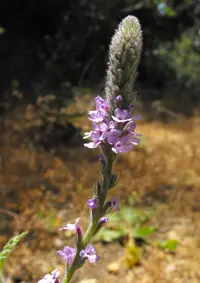
Western vervain (Verbena lasiostachys) is a perennial wildflower native to western North America, especially California’s grasslands, open woodlands, and disturbed sites. It typically forms clumps of upright, branching stems with narrow leaves and slender spikes of small lavender to purple flowers. The plant attracts bees, butterflies, and other pollinators, which makes it useful in habitat and restoration plantings. It is generally considered easy to grow in gardens that offer full sun, moderate moisture, and well-drained soil. Once established, it tolerates some drought and lean soils, so care for western vervain is usually low-maintenance in suitable climates.

Main Plant Requirements

Care Difficulty

Easy Care

Light Preference

Full Sun

Water Requirements

Moderate Water

Temperature Preference

Warm Climate

Hardiness Zone

7–10

Soil Texture

Sandy, Loamy, Rocky

Soil pH

Acidic (5.5–6.5), Slightly acidic (6.5–7.0)

Soil Drainage

Well-drained

Fertilization

Minimal (feed rarely)

Get Personalized Care Plan

Scan your plant to receive care tips personalized for your specific plant

Available on iOS and Android

How to Care for the western vervain

This species thrives in open, bright conditions typical of dry grasslands and roadsides.

  • Provide 6–8 hours of direct sun daily; morning and early afternoon sun promote compact, floriferous growth in western vervain.
  • Tolerates light partial shade (3–4 hours direct sun) but flowering declines and stems may elongate if shade persists.
  • In hot inland summers, protect from intense late-afternoon sun with light shade; in cooler or coastal areas, full sun all day is usually safe.

This drought-tolerant perennial prefers deep, infrequent watering in fast-draining soil.

  • Before watering, let the top 3–5 cm of soil dry; use a finger test rather than a fixed schedule, especially in native or meadow plantings.
  • During hot, dry periods, water thoroughly so moisture reaches 15–20 cm deep, then allow soil to dry; in cool or rainy seasons, reduce or skip irrigation.
  • Watch for yellowing, mushy stems as a sign of overwatering; persistent wilting with dry, crumbly soil indicates the need for a deep soak for Verbena lasiostachys.

This plant is adapted to mild, dry-summer climates and handles a range of outdoor temperatures.

  • Optimal growth occurs around 65–80°F (18–27°C), with best flowering during warm, sunny periods with low to moderate humidity.
  • Mature plants usually survive light frosts down to about 25°F (−4°C), but foliage may burn; extended freezes below 20°F (−7°C) can kill crowns.
  • Heat tolerance is good up to about 95°F (35°C) if soil drains well; prolonged extreme heat above this can stress plants, especially without occasional deep watering.

This species tolerates a wide humidity range and usually does not need special humidity management outdoors.

  • Target ambient humidity around 30–60%, similar to typical outdoor and indoor air in many US regions.
  • Western vervain handles dry air but may show humidity stress as crisp leaf edges and faster wilting in hot, windy conditions.
  • In very arid sites, group plants, use surrounding mulch, or place near other vegetation to slightly raise local humidity around foliage.

Verbena lasiostachys prefers lean, well-drained mineral soils that do not stay wet after watering or rain.

  • Use a sandy or sandy-loam mix with about 60–70% mineral material (coarse sand or fine grit) and 30–40% compost to balance drainage and nutrient supply.
  • Aim for slightly acidic to neutral pH, around 6.0–7.0, which supports nutrient uptake without encouraging excessive, weak leafy growth.
  • Improve aeration by blending in perlite or fine gravel, especially in heavier garden soils or container mixes prone to compaction.
  • Avoid dense clay, peat-heavy mixes that stay soggy, and any site where water pools for more than a few hours after rain, since this promotes root rot.

This species can be grown in containers if the pot and substrate are managed for fast drainage and root aeration.

  • Choose a relatively wide, medium-depth pot to allow its spreading root system and top growth to balance without tipping in wind.
  • Select a breathable material like unglazed terracotta if conditions are cool or humid, to allow faster evaporation and prevent chronic dampness.
  • Elevate the container slightly on feet or bricks so drainage holes stay clear and excess water escapes quickly after heavy rain or irrigation.

This native perennial usually needs modest feeding, especially in lean soils, when caring for western vervain.

  • Use a light application of balanced NPK granular fertilizer or compost in early spring as growth begins.
  • Feed every 6–8 weeks during the growing season if soil is poor; skip or halve this schedule in richer soil.
  • Apply fertilizer at 1/2 strength for liquids, and always water afterward to prevent root burn.
  • Stop feeding in late summer to early fall so new growth can harden before winter dormancy.

Pruning Verbena lasiostachys supports dense growth and extended flowering.

  • Cut back spent flower spikes through the growing season to encourage repeat blooming and a tidier form.
  • In late winter or very early spring, remove dead, damaged, or weak stems with clean, sharp hand pruners.
  • Thin crowded shoots from the base to improve air flow and reduce foliar disease risk.
  • Shear lightly after the main bloom flush if a more compact, bushy shape is desired.

This species is more often transplanted in the ground than kept long term in containers.

  • Transplant in early spring or fall when temperatures are mild and soil is workable.
  • Move plants if growth declines, roots circle the pot, or the clump becomes congested and woody at the base.
  • Lift with a wide root ball, keep roots shaded and moist, and replant at the same depth in well-drained soil.
  • Water thoroughly after transplanting, then keep soil lightly moist for 1–2 weeks to reduce transplant shock.

Verbena lasiostachys is commonly propagated by seed and softwood cuttings.

  • Collect ripe seeds in late summer to fall and sow in trays with a well-drained, sandy mix.
  • Provide cool to moderate temperatures around 60–70°F and consistent moisture until germination.
  • Take soft, non-flowering stem cuttings in late spring to early summer for faster clonal increase.
  • Insert cuttings into a sterile, moist medium, use rooting hormone if available, and maintain high humidity.

This western US native is generally cold hardy and needs minimal winter care in most mild climates.

  • Tolerates light to moderate frost once established, especially in well-drained soil.
  • Apply a 3–5 cm mulch layer around the root zone in late fall in colder areas, keeping mulch off stems.
  • In containers, move pots to a sheltered, unheated but frost-light location or against a south-facing wall.

Care Tips

Encourage bushy growth

Pinch back soft shoot tips in late spring to encourage branching and a denser, more floriferous stand, rather than a few tall, floppy stems.

Support in windy sites

In exposed or windy areas, install low, unobtrusive twine or wire between short stakes around the clump to keep stems upright without casting shade.

Manage self-seeding

If you want to control spread, shear off spent flower spikes before seed set, but leave a few healthy plants to bloom fully if natural reseeding is desired for long-term stands.

Time-cut for wildlife

Delay cutting back old stems until late winter so hollow and dry stems can provide shelter for beneficial insects and small invertebrates that help with pest control when growing western vervain.

Monitor for mildew

Inspect the lower foliage regularly in late summer for early signs of powdery mildew and remove the most affected leaves promptly to slow disease spread and maintain airflow through the planting.

Common Pests and Diseases

Powdery mildew

This disease causes a white, powdery coating on leaves, stems, and flower stalks, often leading to distorted growth and reduced vigor. Symptoms include increased severity in dry air with poor air circulation, especially on dense stands of plants.

Solution

Remove and discard heavily infected foliage, then thin or trim plants to improve airflow and avoid overhead watering. Use a sulfur or potassium bicarbonate fungicide labeled for ornamentals if conditions stay favorable for disease, and water at soil level in the morning to help foliage dry quickly as part of general Verbena lasiostachys care.

Botrytis blight

This disease produces gray, fuzzy mold on flowers, buds, and sometimes leaves, especially during cool, damp weather. Symptoms include browning petals, water-soaked spots, and collapse of flower stalks.

Solution

Cut off and discard all affected flowers and stems, clean up fallen plant debris, and space plants to improve airflow. Reduce overhead irrigation, water early in the day, and in persistent wet conditions consider a labeled biofungicide such as Bacillus-based products to protect new growth.

Aphids

These insects cluster on tender shoot tips and flower stalks, sucking sap and causing curling or distortion of young leaves. This pest also excretes sticky honeydew that can lead to sooty mold on foliage.

Solution

Spray colonies off with a strong stream of water and pinch back heavily infested shoot tips. For ongoing infestations, use insecticidal soap or a light horticultural oil, applied thoroughly to leaf undersides and stems, repeating at 5–7 day intervals until populations drop, while encouraging natural predators like lady beetles by avoiding broad-spectrum insecticides.

Spider mites

These pests are tiny sap-sucking arachnids that cause fine stippling, bronzing, and eventual drying of leaves, often with delicate webbing between stems. Symptoms include increased damage during hot, dry conditions with dust on foliage.

Solution

Rinse plants thoroughly with water, focusing on leaf undersides, and repeat regularly to lower mite numbers. In persistent cases, apply insecticidal soap or horticultural oil labeled for mites, avoid water stress by maintaining even soil moisture, and reduce dust by occasionally hosing nearby hard surfaces and surrounding vegetation.

Verbena rust

This disease produces small orange, brown, or black pustules on leaf undersides, often with yellowing and premature leaf drop. Symptoms include patchy thinning of foliage and reduced flowering in affected clumps.

Solution

Remove and destroy infected leaves and plant debris, and avoid overhead watering to keep foliage dry. Improve spacing for better airflow and, when rust pressure is high, use a systemic or protectant fungicide labeled for rust on ornamentals, rotating active ingredients if repeated treatments are needed to prevent resistance.

Interesting Facts

California-endemic wildflower

This species is native and largely restricted to California, where it occurs in a wide range of natural communities including grasslands, chaparral edges, and open woodland clearings.

Pollinator-supporting nectar source

Its slender, hairy flower spikes produce small purple to bluish flowers that provide accessible nectar for native bees, butterflies, and other pollinating insects through a long spring–summer bloom season.

Adapted to dry summers

As a plant from Mediterranean-climate regions of California, it is adapted to wet winters and dry summers, often slowing growth or going semi-dormant when soils become very dry rather than dying outright.

FAQs about western vervain

This species is highly attractive to many native bees, butterflies, and other pollinating insects. Its small tubular flowers provide nectar over an extended season, making it especially valuable in wildlife gardens and pollinator-friendly plantings.

Grow Healthy Plants with Botan Care

Keep your plants happy and healthy with plant identification, disease detection, and easy care guidance.

Botan plant care app — identify plants on mobile

Explore More Plants