Pinch Early Growth
Lightly pinch the soft tips of young stems once in late spring to encourage a bushier plant with more flowering shoots and better support for monarch larvae.

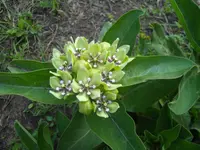
Green antelopehorn (Asclepias viridis) is a perennial wildflower in the milkweed family, valued for its role in supporting butterflies, especially monarchs. It forms upright clumps of sturdy stems with broad, slightly wavy leaves and distinctive greenish flowers with purple centers.
This species is native to prairies, open fields, and roadsides across the central and southern United States. It is generally considered low-maintenance once established, but seedlings can be slow, and the deep roots dislike disturbance.
Those who care for green antelopehorn notice it prefers full sun, drier conditions, and well-drained soils, which reflects its prairie origin.

Care Difficulty
Easy Care

Light Preference
Full Sun

Water Requirements
Low Water

Temperature Preference
Cold Hardy

Hardiness Zone
4–9

Soil Texture
Sandy, Loamy, Rocky

Soil pH
Slightly acidic (6.5–7.0), Neutral (7.0)

Soil Drainage
Well-drained

Fertilization
Minimal (feed rarely)
Scan your plant to receive care tips personalized for your specific plant
Available on iOS and Android
This sun-loving prairie perennial performs best in open, bright sites with minimal obstruction.
This species is drought-tolerant and prefers slightly dry, well-drained conditions once established.
This milkweed is adapted to warm temperate climates with distinct seasons and moderate to hot summers.
Asclepias viridis is adapted to dry, open habitats, so indoor humidity is rarely a concern.
Asclepias viridis prefers lean, well-aerated mineral soils that drain quickly and never stay soggy.
This species can be grown in containers, but long taproots and drought adaptation require specific pot choices.
Asclepias viridis is a low-nutrient native that generally needs minimal feeding in typical garden soil.
Pruning Asclepias viridis is simple and mainly focused on cleanup and encouraging healthy structure.
Asclepias viridis develops a deep taproot, so transplanting or repotting should be done sparingly and with care.
Propagation of Asclepias viridis is most reliable from seed, as the taproot makes division difficult.
Asclepias viridis is cold hardy in much of its native range and generally needs little winter care in the ground.

Plant Health Check
Not sure what's wrong with your plant? Check your plant's health inside the app.
This species is a key larval host for monarch butterflies in the south-central United States, especially in drier prairie and roadside habitats where other milkweeds are scarce. Its spring emergence often aligns with early northward-migrating monarchs, providing critical early-season food.
The flowers have pale green petals and prominent greenish hoods and horns, giving the umbels a green-dominant look rather than the pink or orange tones seen in many other milkweeds. This floral structure guides visiting insects toward the pollinia, the paired pollen packets typical of milkweeds.
In hot, dry regions this plant often goes semi-dormant or fully dormant in midsummer, surviving as a deep root system until conditions improve. This adaptation allows it to persist in pastures and prairies that experience frequent drought and grazing.

Field studies have shown that this species can contribute measurably to overall monarch reproductive success in regions where common milkweed and showy milkweed are uncommon, making it a regionally important conservation target in tallgrass and mixed-grass prairie restoration projects.
This species is highly attractive to many native bees and is a key larval host for monarch butterfly caterpillars. Planting it in sunny, open sites supports pollinators and helps monarch conservation efforts in suitable regions.
Keep your plants happy and healthy with plant identification, disease detection, and easy care guidance.