Mimic natural disturbance
Lightly rake or scuff the soil surface around clumps in late summer to expose some mineral soil, which encourages self-seeding and maintains a mixed-age population without dense crowding.

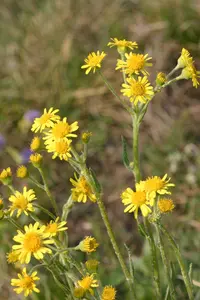
Field fleawort (Tephroseris integrifolia) is a small, short-lived perennial from the daisy family, forming low rosettes with upright stems topped by bright yellow flower heads. It usually stays compact and sparse, so it suits rock gardens, gravel plantings, and other open, well-drained sites.
In the wild it grows in dry, often calcareous grasslands across parts of Europe, where soils are lean and competition from taller plants is low. It prefers full sun, relatively dry conditions, and poor, well-drained soil, which makes care for field fleawort easier in gardens that mimic these habitats.
Plants dislike heavy, wet ground and can be short-lived if crowded or shaded, so they are best treated as a specialist choice rather than a general bedding plant.

Care Difficulty
Moderate Care

Light Preference
Full Sun

Water Requirements
Moderate Water

Temperature Preference
Cold Hardy

Hardiness Zone
4–7

Soil Texture
Sandy, Loamy, Rocky

Soil pH
Slightly acidic (6.5–7.0), Neutral (7.0)

Soil Drainage
Well-drained

Fertilization
Minimal (feed rarely)
Scan your plant to receive care tips personalized for your specific plant
Available on iOS and Android
This species prefers open, sunny habitats but tolerates light shade in summer.
This plant prefers evenly moist but free-draining soil and is sensitive to waterlogging.
This temperate perennial is cold hardy yet prefers moderate growing-season temperatures.
This species is adapted to relatively dry, open habitats, so humidity control is rarely critical.
This species prefers lean, well-drained, often calcareous soil that mimics its natural habitat.
This species can be grown in containers if drainage and low-moisture conditions are strictly maintained.
This nutrient-thrifty wildflower needs only light feeding in poor soils; avoid rich, frequent fertilization for field fleawort.
Tephroseris integrifolia needs only light pruning to keep plants tidy and support flowering.
This species is usually grown in open ground, so management focuses on careful transplanting rather than frequent repotting.
Tephroseris integrifolia is most reliably propagated from seed, with some scope for careful division.
This hardy perennial tolerates typical temperate winters with minimal intervention once established in well-drained soil.

Plant Health Check
Not sure what's wrong with your plant? Check your plant's health inside the app.
This species is naturally restricted to dry, open calcareous grasslands and steppe-like habitats across parts of central and western Europe, where it grows in thin, nutrient-poor soils over limestone or chalk.
It typically forms a low rosette of spoon-shaped leaves close to the ground, which allows it to exploit early-season light before taller grasses and forbs fully develop.
Flowering usually occurs relatively early in the season, with bright yellow daisy-like heads that provide an early nectar and pollen source for bees and other pollinators in sparse grassland communities.
This species is attractive to many pollinators, especially solitary bees and small butterflies, which visit the bright yellow flower heads for nectar and pollen. It works well in wildlife-friendly meadows and naturalistic plantings.
Keep your plants happy and healthy with plant identification, disease detection, and easy care guidance.