Use mineral-free trays
Stand pots in a shallow tray with 0.5–1 cm of rain, RO, or distilled water and flush the tray fully once a week to prevent mineral buildup that can burn the sensitive roots and leaf margins.

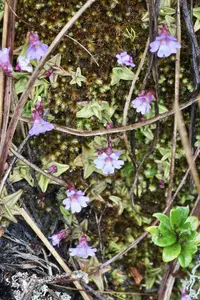
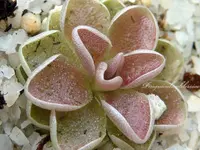
Pinguicula calyptrata is a small carnivorous plant that forms flat rosettes of sticky leaves. These leaves trap tiny insects, which supplement the plant’s nutrient intake. The foliage is usually bright green and can develop a slightly glossy or greasy look.
This species occurs naturally in parts of South America, often in cool, humid, and nutrient-poor habitats such as wet cliffs or mossy rocks. Its compact size makes it suitable for terrariums or bright windowsills.
Stable moisture, gentle air movement, and soft to moderate light are important for healthy growth. Once its needs are understood, it is moderately easy to care for Pinguicula calyptrata.

Care Difficulty
Hard Care

Light Preference
Partial Shade

Water Requirements
Keep Soil Moist

Temperature Preference
Tropical / Frost Sensitive

Hardiness Zone
Unknown

Soil Texture
Peaty, Sandy, Organic-rich

Soil pH
Strongly acidic (4.5–5.5)

Soil Drainage
Waterlogged tolerant

Fertilization
Minimal (feed rarely)
Scan your plant to receive care tips personalized for your specific plant
Available on iOS and Android
This carnivorous rosette prefers bright, gentle light with protection from harsh midday sun.
This species prefers evenly moist, low-mineral conditions rather than constant saturation.
This highland species favors cool to mild temperatures with limited heat and no frost.
This species benefits from moderate to high humidity and reacts quickly to very dry air.
This species needs an open, low-nutrient, consistently moist medium rather than conventional potting soil.
This species adapts well to container culture when moisture and aeration are balanced carefully.
This carnivorous species gains most nutrients from prey, so Pinguicula calyptrata needs only very light supplemental feeding.
Pruning needs for Pinguicula calyptrata are minimal and focus on hygiene rather than shaping.
Repotting helps maintain the low-nutrient, airy conditions this butterwort prefers and prevents medium breakdown.
Propagation of Pinguicula calyptrata is commonly done from leaf pullings and divisions under stable, humid conditions.
This species is not frost hardy, so Pinguicula calyptrata requires protective winter care in most climates.

Plant Health Check
Not sure what's wrong with your plant? Check your plant's health inside the app.
This butterwort occurs naturally in moist, mossy habitats of Andean cloud forests, often on shaded rock faces or steep banks where constant mist keeps the leaves active for trapping prey.
It shows pronounced seasonal dimorphism, forming broad, sticky carnivorous leaves in the wet season and switching to tighter, more compact non-carnivorous leaves when conditions become drier or cooler.
The species name calyptrata refers to its flower spur, which has a hooded or cap-like form that helps distinguish it from closely related Pinguicula species in its range.
This species usually performs better in controlled indoor or greenhouse conditions, where humidity, water purity, and light levels stay stable. Outdoor culture is possible only in very mild, frost-free, consistently humid climates with protection from heavy rain.
Keep your plants happy and healthy with plant identification, disease detection, and easy care guidance.