Encourage Self‑Seeding
Leave a portion of spent flowers and seed pods on the plant until fully dry, then gently shake them over the desired area to promote a naturalistic colony for future seasons.

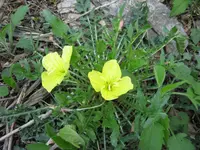
Stemless evening primrose, Oenothera triloba, is a small, low-growing perennial wildflower native to central and southern parts of the United States. It typically forms basal rosettes of leaves close to the ground, sending up bright yellow, short-lived flowers that open in the evening. The plant often grows in prairies, open fields, and disturbed sites with well-drained, often sandy or rocky soils. It tends to be drought-tolerant and favors full sun, which makes it relatively undemanding once established. Gardeners who learn how to care for stemless evening primrose usually find it a resilient choice for naturalistic plantings and pollinator-friendly gardens.

Care Difficulty
Easy Care

Light Preference
Full Sun

Water Requirements
Low Water

Temperature Preference
Cold Hardy

Hardiness Zone
4–8

Soil Texture
Sandy, Loamy, Rocky

Soil pH
Slightly acidic (6.5–7.0), Neutral (7.0)

Soil Drainage
Well-drained

Fertilization
Minimal (feed rarely)
Scan your plant to receive care tips personalized for your specific plant
Available on iOS and Android
This species thrives in open, bright conditions typical of prairie or meadow habitats.
This drought-tolerant perennial prefers dry to moderately dry soil once established.
This species handles a wide range of outdoor temperatures typical of temperate climates.
Humidity is rarely a concern for this drought-adapted species in typical home or outdoor conditions.
This species prefers lean, fast-draining soil that mimics dry, open habitats.
This species can be grown in containers if the setup prioritizes fast drainage and a dry-leaning root zone.
This native wildflower, commonly called stemless evening primrose, needs only modest feeding in reasonably fertile soil.
Pruning Oenothera triloba is mainly aimed at tidiness and encouraging continued flowering rather than structural shaping.
This species is usually grown in the ground, so care focuses on gentle transplanting rather than frequent repotting.
New Oenothera triloba plants are most reliably produced from seed under simple, outdoor conditions.
This species is generally cold hardy in much of its range and needs minimal winter attention in the ground.

Plant Health Check
Not sure what's wrong with your plant? Check your plant's health inside the app.
The stemless evening primrose opens its yellow flowers in late afternoon or near sunset, then they typically fade by the next morning, matching the activity of its main pollinators such as crepuscular moths.
This species often behaves as a winter annual in the central United States, germinating in fall, overwintering as a low rosette, then flowering and setting seed in spring before heat and drought intensify.
Native populations commonly occur on disturbed, open sites with sandy or clayey soils in prairies, roadsides, and fields, showing a notable tolerance for compacted and relatively nutrient-poor substrates.

Genetic and morphological studies of evening primroses have included this species as part of the classic Oenothera research system, which played a historic role in early 20th‑century genetics and discussions about mutation and inheritance.
This species self-seeds readily and forms low clumps, but it is not usually aggressive. In well-drained, open sites it can naturalize over time. Deadhead spent flowers if you want to limit self-sowing and keep patches contained.
Keep your plants happy and healthy with plant identification, disease detection, and easy care guidance.