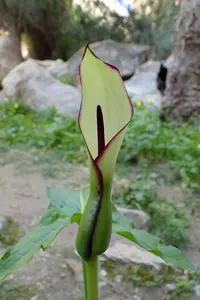
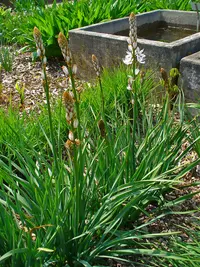
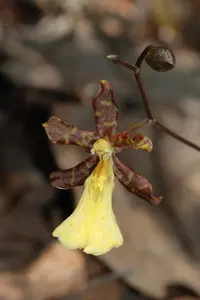
propeller flower Care (Alophia drummondii)

Also known as: Purple Pleatleaf, Pinewoods Lily
propeller flower

About propeller flower

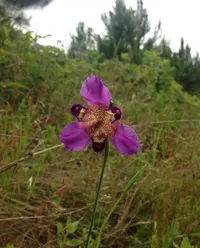
Alophia drummondii, commonly called propeller flower, is a small perennial wildflower in the iris family. It forms narrow, grass-like leaves and slender stems topped with distinctive three-petaled blooms that twist slightly like a propeller. Flowers are usually purple to brownish with patterned markings and appear briefly but repeatedly during warm weather. This species is native to dry prairies and open sandy habitats in the southern United States and northern Mexico. It tends to be drought tolerant and prefers well-drained, low-fertility soils, which can make it undemanding in suitable conditions. Gardeners who care for propeller flower should focus on providing sun, good drainage, and avoiding consistently wet soil.

Main Plant Requirements

Care Difficulty

Easy Care

Light Preference

Full Sun

Water Requirements

Low Water

Temperature Preference

Warm Climate

Hardiness Zone

7–10

Soil Texture

Sandy, Loamy

Soil pH

Acidic (5.5–6.5), Slightly acidic (6.5–7.0)

Soil Drainage

Well-drained

Fertilization

Minimal (feed rarely)

Get Personalized Care Plan

Scan your plant to receive care tips personalized for your specific plant

Available on iOS and Android

How to Care for the propeller flower

This sun-loving prairie perennial thrives in bright, open exposures with seasonal adjustment to intensity.

  • Provide 6–8 hours of direct sun, ideally strong morning to early afternoon light, as the propeller flower flowers best in full sun sites.
  • In hotter regions, give light afternoon shade or filtered light after 2–3 p.m. to reduce leaf scorch and shortened bloom life.
  • In too much shade (under 4 hours), expect weak, floppy growth and poor flowering; choose an unshaded south or west-facing bed outdoors.

This bulbous species prefers brief moisture pulses followed by drying, similar to its native prairies.

  • Water when the top 3–5 cm of soil are dry, using a deep soak, then allow the soil to dry again before the next watering.
  • Grow Alophia drummondii in fast-draining sandy or loamy soil; standing water, sour smell, or soft corms indicate overwatering and root rot risk.
  • In active growth and bloom, respond to wilting at midday that does not recover by evening; reduce watering sharply once foliage yellows and enters dormancy.

This warm-season perennial performs best in hot summers and mild, frost-free or low-frost winters.

  • Aim for 70–90°F (21–32°C) during active growth; it tolerates short spikes to 95°F (35°C) if soil is not waterlogged.
  • Protect plants from hard frost; foliage is damaged below about 28°F (-2°C) and corms can be injured with repeated freezes in wet, heavy soil.
  • In cooler regions, plant in the warmest, best-drained microclimate and mulch lightly over winter to buffer swings between 25–35°F (-4–2°C).

This species tolerates a wide humidity range and rarely needs special humidity management indoors or outdoors.

  • Aim for 30–60% humidity, similar to most heated or air-conditioned homes, when caring for propeller flower.
  • Expect foliage to remain healthy in relatively dry air; only prolonged very dry, hot conditions may cause leaf tips to crisp.
  • If air is extremely dry, group pots together or place a shallow pebble tray with water nearby to slightly raise local humidity.

Alophia drummondii prefers fast-draining, sandy to loamy soil that mimics its native prairie and open scrub habitats.

  • Use a mix of roughly 50–60% sandy or loamy garden soil, 20–30% coarse sand, and 10–20% perlite to keep structure open and well aerated.
  • Aim for slightly acidic to neutral pH around 6.0–7.2, avoiding strongly acidic or alkaline sites that can reduce nutrient availability.
  • Ensure excess water runs out rapidly; raised beds or mounded planting rows help prevent waterlogging and root suffocation.
  • Avoid heavy clay, compacted ground, or peat-heavy mixes that stay wet for long periods and increase risk of rot in the corms.

This species can be grown in containers if the potting setup prevents waterlogging around the corms.

  • Choose a tall, relatively deep pot so the corms sit in the upper half while roots can extend downward without curling tightly.
  • Select a rigid, heavier container material like ceramic or thick plastic to keep narrow, upright foliage from tipping the pot in wind.
  • Line the bottom with a thin layer of coarse gravel or large bark over the drainage holes to stop mix loss while preserving fast outflow of water.

Alophia drummondii is adapted to low-nutrient soils and usually needs only light feeding in cultivation.

  • Use a balanced, low-strength liquid fertilizer (around 10-10-10) diluted to 1/4–1/2 strength for container-grown plants.
  • Feed every 4–6 weeks during the active growing season if growth appears weak or foliage pale.
  • Avoid rich compost or heavy slow-release products, which can cause soft, floppy growth and fewer flowers.
  • Stop feeding in late summer and do not fertilize during dormancy or winter rest.

Alophia drummondii requires minimal pruning, mainly to keep plants tidy and flowering well.

  • Schedule pruning after flowering finishes in late spring or early summer.
  • Use clean, sharp scissors or hand pruners to remove spent flower stalks, dead foliage, and any damaged leaves.
  • Thin crowded clumps lightly, which maintains an open shape and encourages better air flow and bloom display.
  • Avoid cutting green, healthy leaves too hard, as they are needed to replenish the underground storage tissues.

This species is more often grown in the ground, so focus on careful transplanting of its corm-like roots rather than frequent repotting.

  • Transplant in late summer to early fall after foliage has died back and the plant is naturally dormant.
  • Look for tight clumps, crowding, or reduced flowering as signs that clumps need lifting and dividing every 3–4 years.
  • Lift clumps gently with a fork, separate the corms, and replant them at the same depth in well-drained soil.
  • Handle roots and corms minimally, keep them shaded and slightly moist during work, and water lightly after replanting to reduce stress.

Alophia drummondii is most commonly multiplied by seed and by division of its underground corms.

  • Sow fresh seed in late fall or early spring in a well-drained, sandy mix, barely covering the seeds.
  • Maintain even moisture and bright, indirect light; germination may be slow and uneven over several weeks.
  • For division, lift dormant clumps, gently separate corms, and discard any soft or diseased pieces.
  • Replant divisions at original depth, spacing them 10–15 cm apart to allow for future clump expansion.

This native perennial is reasonably cold hardy in much of its range and usually needs only simple winter care outdoors.

  • In regions with mild winters, plants can remain in the ground without special protection.
  • Where temperatures drop below the plant’s comfort range, add a 5–8 cm mulch layer over the root zone after dormancy.
  • Ensure soil drains well over winter, since prolonged saturation around dormant corms increases rot risk.
  • Container-grown plants in colder climates can be moved to a cool, frost-free, bright spot until spring.

Care Tips

Bulb Marking Stakes

When foliage dies back after flowering, place small labeled stakes exactly where each clump grows so you avoid disturbing dormant corms during weeding, mulching, or replanting nearby.

Shallow Cultivation Only

Use only very shallow hand cultivation or a narrow hoe around plants, since deep digging or turning soil can slice the underground corms and reduce future flowering.

Seed Collection Timing

Watch seed pods closely and collect them as they turn brown and just begin to split, placing them in paper envelopes to finish drying so seed is viable without being lost to wind or birds.

Patch Renewal Division

Every 3–4 years, lift and gently separate congested clumps in late summer dormancy, replanting the firm corms at the original depth to keep flowering strong and evenly spaced.

Targeted Wildflower Integration

Combine this species only with other low, open-structured natives that do not cast heavy shade, which helps when growing propeller flower in mixed meadow-style plantings without it being crowded out.

Common Pests and Diseases

Leaf spot fungi

This disease causes small brown to tan spots on the narrow leaves, sometimes with a darker margin, and can appear after humid or wet weather. Symptoms include premature yellowing and thinning of the foliage clump.

Solution

Remove and discard affected leaves to reduce spore spread, and avoid overhead watering so foliage dries quickly. Improve air circulation around plants and, if spotting progresses, apply a labeled broad-spectrum fungicide suitable for ornamental irises, following all label directions.

Rust

This disease appears as tiny orange to brown pustules on leaf surfaces, often on plants growing in warm, humid conditions or in crowded clumps. Symptoms include gradual leaf yellowing and reduced vigor.

Solution

Cut and discard heavily infected leaves and any dense thatch around the clump to lower humidity near foliage. Water at soil level in the morning and, if needed, use a rust-labeled fungicide for ornamental bulbs, repeating applications as directed.

Iris borers

These insects are larvae of moths that tunnel into leaves and down into the corms, leaving ragged, water-soaked streaks and frass inside the foliage. Symptoms include wilting flower stalks and weakening or collapse of individual fans.

Solution

Inspect leaves in spring for chewed, streaked tissue and remove and destroy any infested foliage or corms before larvae complete development. Keep the planting area free of old leaf debris and use pheromone traps or, where permitted, a targeted borer insecticide timed to early larval activity based on local recommendations for Alophia drummondii care.

Aphids

These insects cluster on young leaves and flower stalks, sucking sap and causing distortion or curling, and may leave a shiny honeydew residue. This pest can also transmit viruses between nearby iris relatives.

Solution

Dislodge colonies with a firm stream of water and remove heavily infested stems if populations stay high. Encourage beneficial insects, and where necessary apply insecticidal soap or a light horticultural oil, coating the insects thoroughly but avoiding applications during high heat.

Spider mites

This pest appears in hot, dry conditions and causes fine stippling and dulling of the grasslike leaves, sometimes with delicate webbing between blades. Symptoms include overall loss of color and a dry, tired look to the clump.

Solution

Raise humidity slightly around plants and rinse foliage thoroughly, focusing on the undersides of leaves, to knock back mite numbers. If infestation persists, use insecticidal soap or a horticultural oil labeled for mites, repeating at intervals to cover new hatchlings and monitoring regularly during peak heat.

Interesting Facts

Twisted iris relative

This species belongs to the iris family (Iridaceae) and produces narrow, twisted tepals that give the flower a propeller-like appearance, unlike the more upright petals of many ornamental irises.

Short-lived daily blooms

Each individual flower typically opens for only a single day, but the plant produces multiple buds so flowering can continue over several weeks in late spring to early summer.

Adapted to sandy prairies

It naturally occurs in sandy or well-drained soils of prairies, open woodlands, and roadsides in the south-central United States, showing good tolerance to heat and periodic drought once established.

Botan icon

Did you know?

Genetic and morphological studies support that this species is closely allied to other North American irids once placed in the genus Herbertia, illustrating how detailed flower and seed characters help botanists clarify relationships within the iris family.

FAQs about propeller flower

This species often fails to bloom if bulbs are planted too deep, are overcrowded, or have not stored enough energy. Poor drainage and insufficient winter chill also reduce flowering, even when foliage looks healthy.

Grow Healthy Plants with Botan Care

Keep your plants happy and healthy with plant identification, disease detection, and easy care guidance.

Botan plant care app — identify plants on mobile

Explore More Plants