Dicliptera peduncularis Care

About Dicliptera peduncularis

Dicliptera peduncularis is a small, soft-stemmed flowering perennial from tropical regions, often grown as an ornamental in warm gardens or protected containers. It belongs to the Acanthaceae family, which includes many shrubby and herbaceous ornamentals.

The plant typically forms a low, branching clump with green foliage and clusters of tubular flowers that attract pollinators. Its compact habit makes it suitable for mixed borders or as a filler plant.

In cultivation it is valued for a fairly steady blooming habit and generally forgiving growth, provided it receives warmth, good light, and evenly moist but well-drained soil. These traits make it relatively straightforward to care for Dicliptera peduncularis in suitable climates or in sheltered spots.

Main Plant Requirements

Care Difficulty

Moderate Care

Light Preference

Partial Sun

Water Requirements

Moderate Water

Temperature Preference

Warm Climate

Hardiness Zone

Unknown

Soil Texture

Loamy, Sandy, Organic-rich

Soil pH

Acidic (5.5–6.5), Slightly acidic (6.5–7.0)

Soil Drainage

Moist but well-drained

Fertilization

Light (every 4–6 weeks)

Get Personalized Care Plan

Scan your plant to receive care tips personalized for your specific plant

Available on iOS and Android

How to Care for the Dicliptera peduncularis

This shrub thrives with bright, gentle light and protection from harsh midday sun.

  • Provide 4–6 hours of direct morning sun with light afternoon shade, or bright filtered light under high, open tree canopies.
  • It tolerates partial shade, but flowering declines if it receives less than about 3–4 hours of sun, and stems may stretch and weaken.
  • Monitor leaves for stress: pale, scorched, or crispy edges indicate too much intense sun, while sparse blooming suggests insufficient light for Dicliptera peduncularis.

This plant prefers evenly moist, well-drained soil that never stays soggy for long periods.

  • Water when the top 3–5 cm of soil feels dry, applying enough to moisten the root zone, then allow excess to drain away fully.
  • In hot, dry weather, monitor more often, while in cooler or rainy seasons, extend the interval between waterings to prevent waterlogged conditions.
  • Signs of overwatering include yellowing, soft leaves and blackened stems; curling, limp foliage and dry soil pulling from the ground indicate underwatering in Dicliptera peduncularis.

This species grows best in warm, frost-free conditions with only moderate temperature swings.

  • Aim for daytime temperatures of 70–85°F (21–29°C) and nights above 60°F (16°C) for steady growth and good flowering.
  • Treat it as frost-tender; growth stops near 40°F (4°C) and foliage is often damaged or killed at 32°F (0°C) or below, so protect from cold snaps.
  • It tolerates short hot spells up to about 95°F (35°C) if soil moisture is maintained, but prolonged heat with dry soil can cause leaf drop and reduced flowering.

This species prefers moderate humidity but adapts to typical indoor levels if not extremely dry.

  • Aim for 40–60% humidity to reduce leaf-edge browning and tip dieback.
  • Tolerates short dry-air periods, but persistent humidity below 30% may cause curled, dull leaves and slower growth.
  • Increase humidity with a nearby pebble tray, grouped plants, or a small humidifier rather than frequent misting.

This plant grows best in light, well-drained, slightly organic-rich soil that never stays waterlogged.

  • Use a loamy mix with 50–60% all-purpose potting soil, 20–30% compost, and 20–30% perlite or coarse sand for structure and drainage.
  • Aim for slightly acidic to neutral pH, roughly 6.0–7.0, which supports nutrient uptake and root activity.
  • Improve aeration by avoiding fine, heavy mixes; include coarse particles like pine bark or grit to keep pores open.
  • Avoid compacted clay, peat-only mixes, or sites where water pools after rain, as this encourages root rot in Dicliptera peduncularis.

This species is well suited to container growing outdoors on patios or balconies.

  • Choose a wide, moderately deep pot to accommodate its spreading root system and prevent the plant from becoming unstable in wind.
  • Select a heavier material like ceramic or clay if the top growth becomes bushy, to reduce tipping risk.
  • Ensure drainage holes are unobstructed and place the pot slightly raised on feet or blocks so excess water escapes quickly.

Light, balanced feeding supports steady growth and flowering in Dicliptera peduncularis.

  • Use a balanced liquid fertilizer (such as 10-10-10) at 1/2 strength every 4–6 weeks during spring and summer.
  • Alternatively, apply a thin layer of compost or a slow-release granular feed once at the start of the growing season.
  • Always water before and after applying fertilizer to avoid root burn and improve nutrient uptake.
  • Stop feeding in fall and winter so the plant can rest without producing weak, soft growth.

Thoughtful pruning keeps Dicliptera peduncularis compact, healthy, and floriferous.

  • Carry out main pruning in late winter or early spring before strong new growth begins.
  • Remove dead, diseased, or crossing stems with clean, sharp hand pruners to reduce infection risk.
  • Lightly shorten long, straggling shoots to maintain a bushy, rounded shape and encourage more flowering tips.
  • After the first flush of blooms, trim back spent flower stems to stimulate additional branching and flowers.

Container-grown plants benefit from occasional repotting to maintain healthy roots and growth.

  • Check for roots circling the pot base, pushing through drainage holes, or a plant drying out very fast as signs it needs a larger container.
  • Plan to repot every 2–3 years in spring, stepping up only 1 pot size with a free-draining peat-free mix.
  • Gently loosen the outer root layer, remove some old soil, and keep the root ball slightly moist to limit stress.
  • Water thoroughly after repotting, then keep in bright, indirect light for 3–5 days before returning to full sun.

New plants are most commonly produced from softwood cuttings of Dicliptera peduncularis.

  • Take 7–10 cm soft, non-flowering stem cuttings in late spring or early summer from healthy shoots.
  • Remove lower leaves, optionally dip the base in rooting hormone, and insert into a moist, free-draining mix.
  • Maintain 70–75°F, high humidity, and bright, indirect light to support quick rooting.
  • For seed propagation, surface-sow fresh seed in warm conditions and keep the medium just evenly moist until germination.

This species is frost-tender and needs protection in regions with cold winters.

  • Move container plants indoors or into a heated greenhouse before temperatures fall near 40°F.
  • In mild climates, apply a 5–8 cm layer of mulch around the root zone to insulate the soil.
  • Reduce watering in winter, keeping the mix just lightly moist to prevent root rot.
  • Provide the brightest possible indoor light and good air circulation to avoid weak, elongated growth.

Care Tips

Encourage Bushy Form

Pinch back soft shoot tips every 3–4 weeks through the active season to encourage branching, denser foliage, and more flowering stems rather than tall, open growth.

Seasonal Hard Cutback

In late winter or very early spring, cut back old, woody stems to 10–15 cm above the soil line to refresh the plant, stimulate vigorous new shoots, and maintain a compact, floriferous habit.

Targeted Flower Deadheading

Regularly remove spent flower clusters by snipping just above a leaf node so the plant redirects energy into new shoots and extended blooming rather than seed production.

Support In Windy Sites

In exposed beds or containers, insert discreet low hoops or short stakes and loosely tie taller stems, which helps prevent lodging and stem breakage when plants are in full leaf and bloom.

Monitor For Spider Mites

Check the undersides of leaves weekly in warm, dry weather for stippling or fine webbing, and at the first sign of spider mites, rinse foliage thoroughly with a strong but gentle water spray and repeat every few days to break the life cycle while caring for Dicliptera peduncularis.

Common Pests and Diseases

Aphids

This pest feeds on young stems and the undersides of leaves, sucking sap and causing distortion, yellowing, and sticky honeydew that can lead to sooty mold. Infestations are often seen on tender new growth and flower buds of Dicliptera peduncularis.

Solution

Prune and discard heavily infested shoot tips, then hose down plants with a firm stream of water to dislodge remaining insects. For persistent problems, use insecticidal soap or a ready-to-use neem oil spray, applied thoroughly to leaf undersides every 5–7 days until new growth appears clean.

Spider mites

These insects are tiny arachnids that thrive in hot, dry conditions, causing fine stippling on leaves, a dull or bronzed appearance, and thin webbing between stems and foliage. Symptoms include gradual leaf drop and a generally stressed, dusty look to the plant.

Solution

Increase humidity around the plant and rinse foliage thoroughly with water, focusing on leaf undersides to wash off mites and webbing. If populations remain, apply insecticidal soap or a horticultural oil labeled for mites, repeating at 5–7 day intervals while monitoring for fresh damage.

Whiteflies

This pest consists of small white flying insects that rest on the undersides of leaves, causing yellowing, leaf drop, and honeydew that can encourage sooty mold. When the plant is disturbed, clouds of tiny white insects often rise from the foliage.

Solution

Vacuum or tap plants over a white surface to remove adults, then target the undersides of leaves with insecticidal soap or neem oil, repeating weekly as eggs hatch. Yellow sticky traps can help monitor and reduce adult numbers while the main treatment focuses on nymphs on the foliage.

Leaf spot

This disease causes small brown, tan, or purplish spots on leaves that may merge into larger blotches, sometimes with a yellow halo. In humid, crowded plantings of Dicliptera peduncularis, affected leaves may yellow and drop prematurely.

Solution

Remove and dispose of spotted leaves and avoid overhead watering to keep foliage as dry as possible. Improve air circulation, space plants so leaves do not touch, and if spotting continues, consider using a copper-based or chlorothalonil fungicide labeled for ornamental leaf spots, following label directions carefully.

Powdery mildew

This disease appears as a white, powdery coating on upper leaf surfaces and young stems, which can cause curling, distortion, and reduced flowering. Symptoms include slowed growth and leaves that yellow and age early under crowded or shaded conditions with poor airflow.

Solution

Thin or prune plants to improve air movement and avoid dense shade, then remove the worst-affected leaves. In persistent cases, apply a sulfur, potassium bicarbonate, or neem oil product labeled for powdery mildew, coating all leaf surfaces and repeating as directed until new growth remains clean; this is a core part of effective Dicliptera peduncularis care instructions.

Interesting Facts

Pink tubular blooms

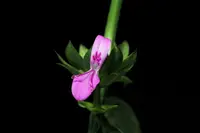
This species produces slender tubular flowers in pink to rose tones that are adapted to pollination by long-tongued insects such as butterflies, which can reach the nectar deep inside the floral tube.

Shrubby subshrub habit

Dicliptera peduncularis naturally forms a low, branching subshrub, with semi-woody lower stems and softer, herbaceous new growth that allows it to recover well after pruning or weather damage.

Acanthaceae family traits

As a member of the Acanthaceae, it shows the family’s typical paired leaves and zygomorphic flowers, meaning the blooms have a single plane of symmetry rather than being radially symmetrical.

FAQs about Dicliptera peduncularis

Poor flowering usually comes from insufficient light, lack of nutrients, or old, woody stems. Provide bright conditions, feed lightly during the growing season, and prune after flowering to stimulate fresh shoots that form new buds.

Grow Healthy Plants with Botan Care

Keep your plants happy and healthy with plant identification, disease detection, and easy care guidance.


Botan plant care app — identify plants on mobile

Explore More Plants