


Staking flowering stems
Install discrete, slender stakes early in the season and loosely tie tall flowering stems with soft ties to prevent wind damage and stem snapping as the bells become heavy.

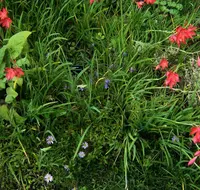
Adenophora morrisonensis is a clump-forming perennial from the bellflower family, valued for its upright stems and delicate, nodding bell-shaped flowers. It typically shows narrow leaves and slender flowering spikes that create a light, airy look in mixed borders or naturalistic plantings.
This species is native to higher elevations in Taiwan, where it grows in cool, well-drained mountain habitats. It is generally considered moderately easy to grow if given cool conditions, consistent moisture, and soil that does not stay waterlogged.
Gardeners who want to care for Adenophora morrisonensis should provide bright light, protection from extreme heat, and stable moisture to support strong flowering and long-term vigor.

Care Difficulty
Moderate Care

Light Preference
Partial Sun

Water Requirements
Moderate Water

Temperature Preference
Cool Climate

Hardiness Zone
6–8

Soil Texture
Loamy, Silty, Organic-rich

Soil pH
Acidic (5.5–6.5), Slightly acidic (6.5–7.0)

Soil Drainage
Moist but well-drained

Fertilization
Minimal (feed rarely)
Scan your plant to receive care tips personalized for your specific plant
Available on iOS and Android
This mountain bellflower prefers cool, bright sites with protection from harsh midday sun.
This perennial prefers consistently moist but not saturated soil, especially during active growth.
This hardy perennial tolerates cool conditions but grows best in moderate temperatures.
This species tolerates average outdoor humidity and usually does not need special humidity management.
Adenophora morrisonensis prefers loose, well-drained, moderately fertile soil that stays evenly moist without becoming waterlogged.
This species can grow reliably in containers if the pot supports its deep, fibrous root system.
This mountain bellflower grows best with modest, well-timed feeding rather than heavy fertilization.
Pruning is light and mainly aimed at keeping Adenophora morrisonensis tidy and flowering well.
This species is usually grown in the ground, so transplanting is more common than container repotting.
New plants are most reliably obtained by division, with seed raising as a slower but useful option for Adenophora morrisonensis care.
This hardy perennial usually needs only basic winter preparation in temperate climates.

Plant Health Check
Not sure what's wrong with your plant? Check your plant's health inside the app.
This species is native to high-elevation habitats of Taiwan’s Central Mountain Range, where it grows in cool, open slopes and forest edges above roughly 2,000 m, tolerating strong wind and intense UV exposure typical of alpine zones.
Its pale violet, nodding bell-shaped flowers hang downward, a form that helps protect pollen from rain and mist in its cloud-prone montane environment while still allowing access to bees and other insect pollinators.
The plant forms a perennial rootstock with relatively deep, fleshy roots that store reserves, allowing it to survive winter snow cover and resume growth quickly during the short growing season typical of its native high mountains.
This bellflower species is highly attractive to bees, hoverflies, and small pollinating insects, which visit its tubular blue flowers for nectar. Planting it among other summer perennials helps support local pollinator diversity and garden ecological balance.
Keep your plants happy and healthy with plant identification, disease detection, and easy care guidance.



-1-200x133.webp)