Staggered Rejuvenation
Every 3–4 years, lift and divide only a portion of the clump in early spring, leaving some older plants in place so flowering and seedpod display are not completely interrupted in any one season.

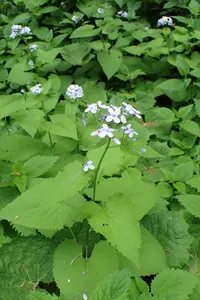
Perennial honesty, Lunaria rediviva, is a hardy, long-lived herbaceous plant grown mainly for its fragrant flowers and decorative seed pods. It forms clumps with upright stems and broad, heart-shaped leaves. In late spring to early summer it carries clusters of pale lilac to white blooms, followed by flat, translucent seed pods that resemble coins. This species is native to shaded woodland edges and riverbanks in parts of Europe and western Asia, so it prefers cool conditions and moist, humus-rich soil. Gardeners who learn how to care for Perennial Honesty often find it reliable in partial shade and naturalistic borders.

Care Difficulty
Moderate Care

Light Preference
Partial Shade

Water Requirements
Moderate Water

Temperature Preference
Cold Hardy

Hardiness Zone
4–8

Soil Texture
Loamy, Silty, Organic-rich

Soil pH
Acidic (5.5–6.5), Slightly acidic (6.5–7.0)

Soil Drainage
Moist but well-drained

Fertilization
Minimal (feed rarely)
Scan your plant to receive care tips personalized for your specific plant
Available on iOS and Android
This woodland perennial prefers gentle, indirect light rather than intense sun exposure.
This species prefers consistently moist, well-drained soil that never stays waterlogged.
This hardy perennial is adapted to cool, temperate climates with distinct seasons.
This woodland perennial manages well in typical home and outdoor humidity if soil moisture is kept steady.
This species favors moist, well-aerated, humus-rich soil that stays evenly damp but not waterlogged.
This species can be grown in containers, though it performs best in deep, cool, stable conditions.
This woodland perennial benefits from light feeding but grows acceptably in fertile garden soil without it.
Lunaria rediviva needs only modest pruning to stay healthy and support flowering.
This perennial is usually grown in the ground, so transplanting is more common than container repotting.
This species is most often propagated from seeds and will self-sow under suitable conditions.
This cold-hardy perennial needs minimal winter care in most temperate climates.

Plant Health Check
Not sure what's wrong with your plant? Check your plant's health inside the app.
This species opens its pale lilac flowers mainly in the evening and at night, releasing a strong, sweet scent that attracts nocturnal moths for pollination.
Unlike the more commonly known annual honesty species, this plant is a true perennial that forms long-lived clumps in cool, moist deciduous woodlands across central and eastern Europe.
After flowering, the plant develops flat, oval seed pods that dry to a papery, silvery membrane, which remains on the stems and often persists through winter, giving it ornamental value in dried arrangements.

This species is considered a relict of ancient temperate broadleaf forests in parts of central Europe, and in several regions its natural populations are declining enough to be listed as regionally threatened or protected, making careful habitat conservation important for its long-term survival.
This species spreads moderately by self-seeding and short rhizomes, forming loose clumps rather than dense colonies. Deadhead seedpods before they shatter if you want to limit spread, or thin out unwanted seedlings each spring.
Keep your plants happy and healthy with plant identification, disease detection, and easy care guidance.