


Refresh Crowded Offsets
Thin out older plantlets by gently cutting some of the piggy-back babies at the petiole base and replanting the healthiest ones, which maintains airflow in the mother plant and produces fuller new pots.

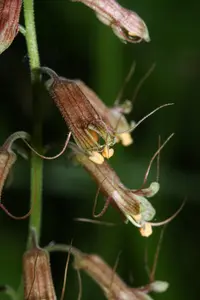
The piggy-back plant, Tolmiea menziesii, is a small, herbaceous perennial grown mainly as a foliage houseplant or shaded patio plant. It is known for its soft, lobed leaves and its unusual habit of forming new plantlets where the leaf blade meets the petiole, creating a layered, “piggy-back” look.
In nature it occurs in cool, moist forests of the Pacific Northwest, often as a groundcover in shaded, damp locations. It tends to be forgiving if kept evenly moist, protected from strong sun, and grown in a light, well-drained potting mix.
These traits make it a relatively easy plant for beginners who want to learn how to care for piggy-back plant without dealing with strict or complex requirements.

Care Difficulty
Moderate Care

Light Preference
Partial Shade

Water Requirements
Keep Soil Moist

Temperature Preference
Cool Climate

Hardiness Zone
6–9

Soil Texture
Loamy, Silty, Organic-rich

Soil pH
Acidic (5.5–6.5), Slightly acidic (6.5–7.0)

Soil Drainage
Moist but well-drained

Fertilization
Light (every 4–6 weeks)
Scan your plant to receive care tips personalized for your specific plant
Available on iOS and Android
This woodland perennial prefers soft, indirect light that mimics its native forest understory.
This plant prefers consistently moist but not waterlogged soil that never dries out completely.
This plant thrives in cool to mild conditions and dislikes temperature extremes.
This species prefers moderately moist air and reacts if kept too dry for long periods.
Tolmiea menziesii grows best in loose, consistently moist but well-drained potting soil.
This species is well suited to container culture, especially for hanging baskets or wide, shallow pots.
Tolmiea menziesii responds well to light feeding but does not need heavy fertilization.
Pruning Tolmiea menziesii focuses on tidying the plant and encouraging fresh foliage.
Tolmiea menziesii benefits from occasional repotting or division to maintain vigor in containers.
Tolmiea menziesii is commonly propagated from its unique plantlets and by division.
Tolmiea menziesii is moderately cold hardy and usually needs only light winter care in the ground.

Plant Health Check
Not sure what's wrong with your plant? Check your plant's health inside the app.
This species forms new plantlets directly on top of mature leaves, where buds emerge near the petiole and eventually develop roots and leaves before detaching. This unusual vegetative reproduction strategy gives rise to the common name piggy-back plant.
It is native to moist, shaded forests of the Pacific Northwest of North America, especially along stream banks and in coastal woodlands. The plant thrives in cool, mild climates with consistent moisture and dappled light.
The leaves are covered with fine hairs, giving them a soft, slightly fuzzy texture and a matte appearance. These hairs help reduce water loss and protect the leaf surface in its naturally humid but variable understory habitat.

This species is one of the few common houseplants that can complete its life cycle and reproduce vegetatively indoors purely through leaf-borne plantlets, which makes grow Tolmiea menziesii particularly interesting for teaching basic plant propagation and clonal growth.
Brown, crispy edges usually come from low humidity, underwatering, or fertilizer buildup. Check soil moisture, flush the pot to remove excess salts, and increase humidity slightly around the plant to prevent further tissue damage.
Keep your plants happy and healthy with plant identification, disease detection, and easy care guidance.

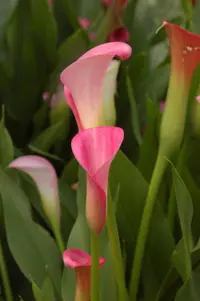
pink calla lily
Zantedeschia rehmannii
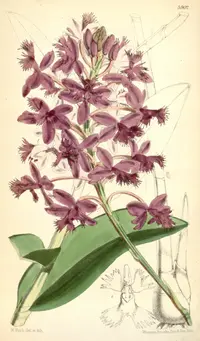
Jamieson's Epidendrum
Epidendrum jamiesonis
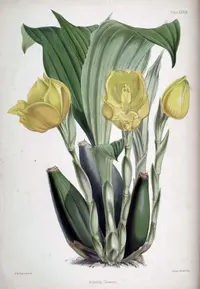
Anguloa clowesii
Anguloa clowesii
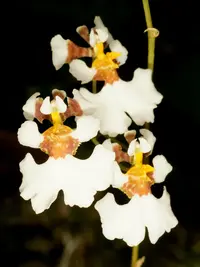
Harlequin dancing-lady orchid
Tolumnia variegata
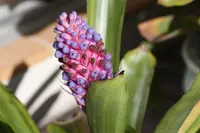
matchstick airplant
Aechmea cylindrata
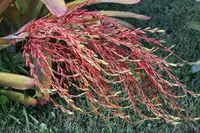
Bromeliad
Aechmea blanchetiana
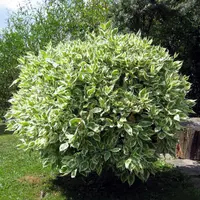
Weeping Fig
Ficus benjamina 'Variegata'
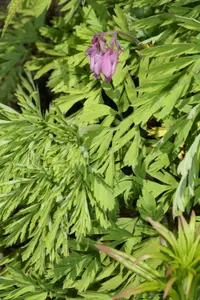
Pacific bleeding heart
Dicentra formosa