Jamieson's Epidendrum Care (Epidendrum jamiesonis)

Jamieson's Epidendrum

About Jamieson's Epidendrum

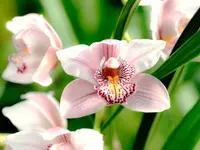
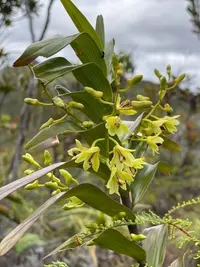
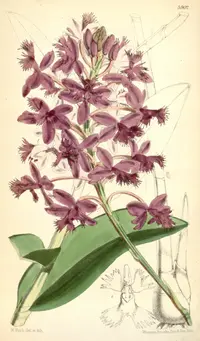
Jamieson's Epidendrum (Epidendrum jamiesonis) is a small to medium epiphytic orchid that typically grows on trees in cool, moist cloud forests. It forms clumps of slender canes with narrow leaves and produces clusters of bright, long-lasting flowers.

This species is native to high-elevation regions of the Andes, where light is filtered and humidity stays consistently high. In cultivation it is considered moderately challenging, mainly due to its need for cool temperatures, steady moisture, and good air movement.

Those conditions guide how to care for Jamieson's Epidendrum, which generally prefers bright but indirect light, evenly moist but free-draining media, and stable, gentle growing conditions without extremes.

Main Plant Requirements

Care Difficulty

Hard Care

Light Preference

Partial Shade

Water Requirements

Regular Water

Temperature Preference

Tropical / Frost Sensitive

Hardiness Zone

11–12

Soil Texture

Rocky, Organic-rich

Soil pH

Acidic (5.5–6.5)

Soil Drainage

Well-drained

Fertilization

Light (every 4–6 weeks)

Get Personalized Care Plan

Scan your plant to receive care tips personalized for your specific plant

Available on iOS and Android

How to Care for the Jamieson's Epidendrum

This orchid prefers bright, filtered light that mimics high-elevation forest edges.

  • Provide 4–6 hours of bright, indirect light daily, with gentle morning sun and protection from harsh midday rays under 50–70% shade cloth or dappled canopy.
  • Tolerates light partial shade, but very low light causes leggy growth, weak roots, and poor flowering in Jamieson's Epidendrum.
  • In summer, move plants slightly shadier to avoid leaf scorch; in winter, increase exposure by using an east or bright south-facing position to compensate for shorter days.

Watering should keep roots moist but never stagnant around this epiphytic orchid.

  • Irrigate when the top 2–3 cm of medium feel just barely dry, using thorough watering that drains freely from the pot or mount area.
  • Reduce watering in cooler months, allowing the medium to dry slightly more between waterings while avoiding complete, prolonged dryness that causes wrinkled pseudobulbs.
  • Suspect overwatering if roots turn brown and mushy or the medium smells sour; underwatering shows as shriveled roots and limp, leathery leaves in Epidendrum jamiesonis.

This species prefers cool to intermediate temperatures typical of cloud forests.

  • Aim for 60–75°F (16–24°C) for best growth, with slightly cooler nights than days to support flowering and healthy root activity.
  • Short dips to 50°F (10°C) are usually tolerated, but growth slows; prolonged exposure below 45°F (7°C) and any frost can damage foliage and roots.
  • Tolerates brief warm spells up to 80–85°F (27–29°C) if shaded and well ventilated; in hotter periods, avoid stagnant air and allow slight nighttime cooling to prevent stress.

This orchid prefers moderate to moderately high humidity to maintain healthy growth.

  • Aim for 50–70% humidity, using a hygrometer to avoid prolonged levels below 40%.
  • Leaves shriveling, accordion-like new growth, or stalled buds indicate humidity stress rather than underwatering.
  • Increase humidity with a pebble tray under the pot, grouped plants, or a small humidifier placed near Jamieson's Epidendrum, while keeping air gently moving.

Epidendrum jamiesonis grows best in a very airy, fast-draining orchid substrate rather than standard potting soil.

  • Use a mix of medium orchid bark, perlite, and a small amount of sphagnum moss to balance drainage and moisture retention.
  • Structure the mix so water runs through in a few seconds yet roots stay surrounded by large air spaces, preventing suffocation.
  • Aim for slightly acidic to neutral conditions, around pH 5.5–6.8, avoiding mixes rich in fine peat that compact quickly.
  • Avoid dense, heavy, or garden soil that stays wet for many hours, as this promotes root rot and loss of root hairs.

This species is suitable for container growing when the pot supports its epiphytic root system.

  • Choose a relatively narrow but deep pot or slotted orchid container to allow roots to anchor while staying well aerated.
  • Select a slightly heavier pot material or add top dressing to stabilize tall, cane-like growth against tipping.
  • Elevate the pot on feet or a stand so drainage holes stay clear and runoff leaves the container area quickly.

Moderate feeding supports steady growth and flowering in Jamieson's Epidendrum grown in containers or mounted culture.

  • Use a balanced orchid fertilizer (for example 20-20-20) diluted to 1/4–1/2 strength in low-mineral water.
  • Feed every 2–3 weeks during active growth in spring and summer, applying to already-moist medium.
  • Reduce feeding to once a month in fall and winter, or pause if growth slows markedly.
  • Flush the pot or mount with plain water monthly to prevent fertilizer salt buildup around the roots.

Thoughtful pruning keeps Epidendrum jamiesonis tidy and supports healthy flowering.

  • Prune after a flowering cycle, once spent blooms have faded and canes are easier to assess.
  • Remove dead, yellowing, or damaged leaves and stems with clean, sharp scissors or pruners.
  • Cut old, non-flowering canes back near the base only after they have produced keikis or new growths.
  • Thin crowded stems slightly to improve air flow while keeping the plant’s natural upright habit.

Repotting helps maintain a healthy root system and fresh medium for Epidendrum jamiesonis in cultivation.

  • Check for roots circling the pot, pushing the plant upward, or declining growth as signs repotting is needed.
  • Plan to repot every 2–3 years in late winter or early spring, just before strong new root growth begins.
  • Gently remove old, decomposed orchid mix, trimming dead or mushy roots while keeping firm, white roots intact.
  • Use a slightly larger pot with fresh, free-draining orchid bark, then keep conditions warm and evenly humid to limit transplant shock.

Propagation of Epidendrum jamiesonis is most practical through vegetative methods rather than seed.

  • Divide mature clumps in spring, ensuring each division has several healthy canes and active roots.
  • Use keikis, which are small plantlets forming on canes, once they show multiple roots at least 3–4 cm long.
  • Pot divisions or keikis into fine to medium orchid bark, keeping humidity high and light bright but indirect.
  • Maintain temperatures around 65–75°F and avoid overwatering until new growth and firm root anchoring appear.

This orchid requires mild conditions and specific winter care where outdoor temperatures drop below its tolerance.

  • Treat Epidendrum jamiesonis as frost sensitive; avoid exposure to temperatures below about 50°F.
  • Move container plants indoors or into a heated greenhouse before nights approach lower 50s.
  • Provide bright, indirect light and good air circulation, keeping the medium slightly drier than in summer.
  • Maintain temperatures around 60–70°F and avoid cold drafts or contact with cold window panes.

Care Tips

Mounting technique

Mount plants on cork or hardwood slabs with a thin pad of long-fiber sphagnum around the roots to improve air flow and reduce the risk of root rot in humid setups.

Cool-night emphasis

Provide a clear night temperature drop of about 10–15°F by slightly opening a window or placing the plant in a cooler room at night to support flowering and overall vigor.

Air movement management

Use a small oscillating fan on a low setting pointed past, not directly at, the plant to keep leaves and roots dry enough to prevent fungal issues while still maintaining humidity.

Water quality control

Use rainwater, distilled, or reverse-osmosis water and flush the mount or pot thoroughly once a month to prevent mineral buildup that can burn the fine roots.

Bloom spike support

Stake developing flower spikes loosely with soft ties to a thin bamboo stick or mesh support so the stems do not kink or snap under the weight of blooms when growing Jamieson's Epidendrum.

Common Pests and Diseases

Scale insects

This pest attaches to canes and leaf bases, sucking sap and causing yellowing, stunting, and sticky honeydew that can lead to sooty mold. Symptoms include small brown, tan, or white shell-like bumps that are hard to remove with a fingernail.

Solution

Isolate the plant, then physically remove visible scale with a cotton swab dipped in isopropyl alcohol, focusing on canes and leaf sheaths. Improve air movement around the orchid and repeat alcohol swabbing weekly; for heavier infestations, use a horticultural oil or insecticidal soap labeled for orchids, applied thoroughly to all plant surfaces while protecting the roots from direct contact if possible.

Spider mites

These insects thrive on thin-leaved epiphytic orchids in warm, dry air, causing stippled, dull foliage and fine webbing on leaf undersides and between leaves and canes. Symptoms include bronzing or silvery patches that start on older leaves and gradually spread.

Solution

Increase humidity and rinse foliage under a gentle stream of lukewarm water, paying attention to leaf undersides. For persistent mites, apply insecticidal soap or a miticide labeled for ornamental use, repeating at 5–7 day intervals and improving air circulation to reduce future outbreaks when growing Jamieson's Epidendrum in drier indoor conditions.

Mealybugs

This pest hides in tight crevices around pseudobulbs, leaf bases, and roots, feeding on sap and weakening the plant. Symptoms include white cottony clusters, distorted new growth, and sticky honeydew on leaves and nearby surfaces.

Solution

Remove visible mealybugs manually with a cotton swab dipped in isopropyl alcohol and flush leaf axils and sheaths with a firm stream of water. Inspect regularly over several weeks and, if needed, apply insecticidal soap or systemic insect granules registered for ornamental use, ensuring the plant is not stressed by extreme heat or drought during treatment.

Bacterial brown spot

This disease starts as water-soaked, translucent lesions on leaves, which turn brown to black and may spread rapidly in warm, humid, stagnant air. Symptoms include soft, sunken patches that can emit a foul odor if advanced.

Solution

Immediately remove affected leaf sections with a sterile blade, cutting well into healthy tissue, and discard all infected material. Keep water off the foliage, improve air movement around the plant, reduce overhead misting, and if the disease is spreading, apply a copper-based bactericide labeled for orchids, following label directions and avoiding repeated overuse on tender new growth.

Leaf spot fungus

This disease produces small yellow, brown, or black spots on leaves that may coalesce into larger irregular patches under cool, humid conditions. Symptoms include cosmetic damage at first, but severe infections can reduce photosynthesis and weaken the plant over time.

Solution

Trim off heavily spotted leaves or sections using sterilized tools, and dispose of the debris away from other orchids. Improve spacing and airflow, avoid leaving water on leaves overnight, and consider a preventive application of a broad-spectrum fungicide suitable for orchids, rotating products if long-term protection is needed to maintain Epidendrum jamiesonis plant care standards.

Interesting Facts

Cloud forest specialist

This orchid is native to high-elevation Andean cloud forests in Ecuador, where it grows in cool, humid, and very bright but filtered conditions on trees and shrubs as an epiphyte.

Clustered orange blooms

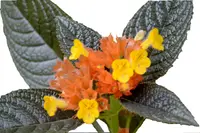
It typically produces upright clusters of many small orange to orange-red flowers, which are adapted to attract hummingbirds as primary pollinators in its native range.

Adapted to cool nights

In its natural habitat, this species experiences pronounced day–night temperature drops, and it is physiologically adapted to cool nights typical of mid- to high-elevation tropical mountains.

Botan icon

Did you know?

Taxonomically, this species has shifted between Epidendrum and the closely related genus Reedstem epidendrums in different treatments, reflecting its intermediate traits such as reed-like canes combined with more cloud-forest growth preferences.

FAQs about Jamieson's Epidendrum

Lack of blooms usually comes from insufficient light, too much nitrogen fertilizer, or lack of a slight temperature drop at night. Crowded roots, recent repotting, or plant immaturity can also delay flowering for several seasons.

Grow Healthy Plants with Botan Care

Keep your plants happy and healthy with plant identification, disease detection, and easy care guidance.

Botan plant care app — identify plants on mobile

Explore More Plants