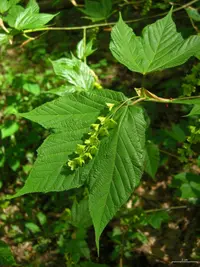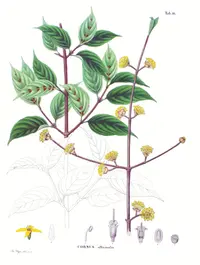

small Philippine acacia Care (Acacia confusa)

Also known as: Formosa koa, Taiwan Acacia, Acacia Petit Feuille
small Philippine acacia

About small Philippine acacia

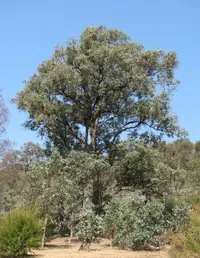
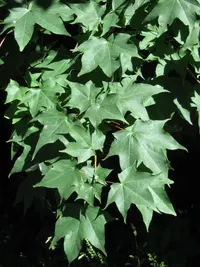
The small Philippine acacia, Acacia confusa, is a woody legume tree often grown as a compact ornamental when young. It has fine, fernlike leaf structures and a naturally branching, bushy habit in containers. In nature it occurs in Taiwan and the Philippines, where it forms thickets and stabilizes slopes with its strong root system. Its hardiness, fast growth, and tolerance of pruning make it adaptable but sometimes vigorous and demanding of space over time. For those who want to care for small Philippine acacia, it generally prefers bright light, well-drained soil, and moderate moisture without long periods of waterlogging.

Main Plant Requirements

Care Difficulty

Moderate Care

Light Preference

Full Sun

Water Requirements

Low Water

Temperature Preference

Warm Climate

Hardiness Zone

9–11

Soil Texture

Sandy, Loamy, Rocky

Soil pH

Acidic (5.5–6.5), Slightly acidic (6.5–7.0)

Soil Drainage

Well-drained

Fertilization

Minimal (feed rarely)

Get Personalized Care Plan

Scan your plant to receive care tips personalized for your specific plant

Available on iOS and Android

How to Care for the small Philippine acacia

Acacia confusa thrives in bright, direct sun but adapts to some light variation once established.

  • Provide 6–8 hours of direct sun daily; full sun from morning to mid-afternoon supports dense growth and flowering in small Philippine acacia.
  • In hotter regions, give full morning sun and light afternoon shade to reduce leaf scorch, especially for young or newly transplanted trees.
  • In partial shade (3–4 hours sun), growth becomes more open; watch for elongated, pale shoots as a sign the site is too shaded and consider relocating.

This species prefers dry to slightly moist soil and is highly sensitive to waterlogged conditions.

  • Allow the top 5–8 cm of soil to dry before watering young trees; mature ground-planted Acacia confusa often rely mainly on rainfall once roots are deep.
  • Use sharply drained, sandy or gravelly soil so water runs through within a few seconds; standing water around the root zone suggests inadequate drainage.
  • Signs of overwatering include yellowing phyllodes, soft stems, and sour-smelling soil; crisp, curling phyllodes and slow recovery after heat signal underwatering.

This warm-temperate to subtropical tree prefers mild, frost-free conditions for reliable growth.

  • Ideal growing temperatures are 65–85°F (18–29°C); growth slows noticeably below 60°F (16°C) and during very hot, dry spells without irrigation support.
  • Mature trees tolerate brief drops to about 28–30°F (-2 to -1°C), but repeated frosts damage young shoots and seedlings.
  • In hot climates, sustained 95–100°F (35–38°C) with dry winds can scorch foliage; mulch the root zone and avoid planting in heat-reflective sites.

This species tolerates a wide humidity range but grows best with moderately dry air.

  • Aim for 30–50% humidity; typical indoor or outdoor air in many homes suits small Philippine acacia well.
  • Dry indoor air rarely harms it, but combined with heat can cause curled leaf tips and slower new growth.
  • If air is extremely dry and hot, increase humidity locally by grouping plants together rather than misting foliage.

This species prefers lean, well-drained, slightly acidic to neutral soil with plenty of air around the roots.

  • Use a sandy or sandy-loam mix made from roughly 50–60% coarse sand, 20–30% regular potting mix, and 10–20% fine bark or compost.
  • Ensure very rapid drainage; water should exit the container within seconds, leaving the mix lightly moist but never soggy.
  • Target pH 6.0–7.0; avoid strongly alkaline substrates or heavy liming products that can cause nutrient lockout and chlorosis.
  • Improve aeration and structure by adding perlite or pumice instead of extra peat, and avoid dense clay or compacted garden soil entirely.

This species can be grown in containers, especially during its early years.

  • Choose a deep, heavy pot to balance the developing woody canopy and prevent the container from tipping in wind.
  • Select a container material that breathes slightly, such as unglazed clay, to reduce the risk of prolonged root-zone saturation.
  • Use a pot only 2–4 in wider than the root mass so the mix dries predictably and does not stay wet around unused soil volume.

Acacia confusa grows in poor soils but responds to modest, well-timed feeding in containers or nutrient-poor sites, especially when caring for small Philippine acacia.

  • Use a balanced slow-release fertilizer (around 10-10-10) or a light top-dressing of compost at the start of spring.
  • Feed container plants every 6–8 weeks during the active growing season, following label rates at 1/2 strength.
  • Avoid high-nitrogen products that cause weak, lanky growth; aim for steady, moderate vigor.
  • Stop feeding in late summer to early fall so growth hardens before cooler weather and winter dormancy.

Pruning Acacia confusa focuses on safety, structure, and light management rather than heavy shaping.

  • Carry out structural pruning in late winter to early spring before vigorous new growth starts.
  • Remove dead, diseased, crossing, or storm-damaged branches first, cutting back to healthy wood.
  • Thin crowded interior shoots to improve airflow and light, maintaining a balanced, open crown.
  • Use clean, sharp hand pruners or loppers, making smooth cuts just outside the branch collar.

Young Acacia confusa grown in containers or nursery bags benefit from timely transplanting to avoid root binding.

  • Check for roots circling the pot, slow growth, or quick drying soil as signs the plant has outgrown its container.
  • Plan transplanting for late winter to early spring, before strong new growth and during mild, stable weather.
  • Shift to a container or ground hole only 1–2 sizes larger, using free-draining, sandy or loamy soil.
  • Gently loosen circling roots, water thoroughly after planting, and shade from harsh sun for 3–7 days to limit stress.

Propagation of Acacia confusa is most reliable from seed, with some use of semi-hardwood cuttings in controlled conditions.

  • Collect ripe seed pods in late summer to fall, then dry and extract seeds for storage or immediate use.
  • Scarify seeds by lightly nicking the coat or pouring hot (not boiling) water over them, then soak 12–24 hours.
  • Sow pretreated seeds in a free-draining, sandy mix and keep at 70–80°F with bright light for germination.
  • Take semi-hardwood cuttings in late spring to summer, use rooting hormone, and place in warm, humid, bottom-heated trays.

Acacia confusa is suited to mild, frost-free or light-frost climates and needs winter protection in colder regions.

  • In-ground trees in mild zones tolerate brief drops near freezing but may suffer damage below about 25°F.
  • Apply a 5–8 cm mulch layer around the root zone in fall, keeping it slightly away from the trunk base.
  • Move container plants indoors or into a bright, frost-free greenhouse before the first hard frost.

Care Tips

Wind-hardening seedlings

From the 4–6 leaf stage, expose young plants to increasing outdoor wind for 1–2 weeks (starting at 30–60 minutes per day) so the stems lignify and develop stronger anchoring roots before permanent planting.

Deep root training

Use tall, narrow pots or root trainers and prune circling roots lightly at repotting to encourage a straight, deep taproot, which improves long-term drought tolerance and stability.

Early leader selection

In the first 1–3 years, choose one strong central stem as the leader and remove competing uprights or narrow V-shaped forks to reduce future branch splitting and create a stable crown.

Mulch spacing strategy

Apply a 5–8 cm ring of coarse organic mulch, but keep a 5–10 cm mulch-free gap around the trunk to protect fine surface roots while preventing bark rot and rodent damage at the base.

Low-input pest scouting

Inspect new foliage and tender shoots every 1–2 weeks during active growth for psyllids, scale, or caterpillars, and spot-treat only affected areas with horticultural soap or oil, which is usually sufficient when caring for small Philippine acacia in home gardens.

Common Pests and Diseases

Psyllids

This pest feeds on young shoots and leaves, causing yellowing, curling, and distorted new growth, sometimes with sticky honeydew on foliage. Symptoms include reduced vigor and sooty mold developing on the sugary deposits.

Solution

Prune and dispose of heavily infested branch tips, then hose down the canopy to dislodge remaining insects. For ongoing issues, use a horticultural oil or insecticidal soap directed at the undersides of leaves during active growth, and avoid high-nitrogen fertilization that promotes very soft, psyllid-attracting shoots.

Gall rust

This disease produces swollen, woody galls on stems and branches, which can girdle twigs and lead to dieback above the affected area. Symptoms include misshapen stems and reduced canopy density over time.

Solution

Prune out galled branches at least 10–15 cm below visible swelling and dispose of them away from the planting site. Improve air circulation around the tree, avoid overhead watering onto the canopy, and keep the plant well spaced from other acacias to limit spore spread.

Scale insects

These insects attach firmly to stems and leaves, appearing as small bumps that excrete honeydew, which may lead to sooty mold on foliage and branches. Symptoms include sticky surfaces, slow growth, and patches of yellowed leaves.

Solution

Wipe or gently scrub accessible stems with a cloth or soft brush dipped in diluted soapy water, then rinse. For larger plants, apply horticultural oil during mild weather to smother scale, and encourage natural predators by avoiding broad-spectrum insecticides when possible, especially when planning how to take care of small Philippine acacia.

Leaf spot

This disease causes small brown to dark spots on foliage, sometimes with yellow halos, leading to premature leaf drop under humid or crowded conditions. Symptoms include thinning foliage and a generally stressed appearance in the canopy.

Solution

Remove and discard fallen and heavily spotted leaves, and prune to open the canopy for better airflow. Water at soil level rather than over the foliage, and if the problem recurs in wet seasons, consider an appropriate copper-based fungicide applied according to label directions.

Interesting Facts

Taiwanese pioneer tree

This species is native to Taiwan and the northern Philippines and behaves as a pioneer tree, quickly colonizing disturbed or open sites and stabilizing poor, eroded soils.

Nitrogen-fixing root partner

Its roots form nodules with symbiotic bacteria that fix atmospheric nitrogen, improving soil fertility and often benefiting nearby plants in degraded or nutrient-poor areas.

Extremely long-lived seeds

The hard-coated seeds can remain dormant in the soil seed bank for many years and germinate in large numbers after soil disturbance or exposure to high heat.
Botan icon

Did you know?

Acacia confusa was widely planted in early 20th-century Taiwan for hillside reforestation and railway slope stabilization, and those plantings are now a major source of naturalized stands in many subtropical regions.

FAQs about small Philippine acacia

Yellowing leaves often result from water stress, poor drainage, or nutrient imbalance, especially nitrogen deficiency. Check soil moisture, improve drainage, and apply a balanced, slow‑release fertilizer. Also inspect roots for rot and ensure the pot is not cramped.

Grow Healthy Plants with Botan Care

Keep your plants happy and healthy with plant identification, disease detection, and easy care guidance.

Botan plant care app — identify plants on mobile

Explore More Plants