Protect Tender Bark
Install a breathable tree guard or wrap around the lower trunk from late fall to early spring to prevent sunscald and mechanical damage to the thin, striped bark.

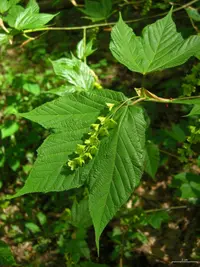
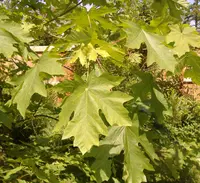
Striped maple, Acer pensylvanicum, is a small understory tree native to cool, moist forests of northeastern North America. It is often found beneath taller canopy trees. The plant has large, soft green leaves and smooth green bark marked with vertical white stripes, giving it a distinctive appearance year-round.
This maple grows with a shrubby, multi-stemmed habit and prefers shaded, sheltered sites with consistently moist, well-drained soil. It is generally slow-growing and sensitive to heat and drought, which can make it less forgiving in hot, exposed gardens. Gardeners who understand how to care for Striped Maple in a cool, shaded setting usually find it manageable.

Care Difficulty
Moderate Care

Light Preference
Partial Shade

Water Requirements
Regular Water

Temperature Preference
Cold Hardy

Hardiness Zone
3–7

Soil Texture
Loamy, Silty, Organic-rich

Soil pH
Acidic (5.5–6.5), Slightly acidic (6.5–7.0)

Soil Drainage
Moist but well-drained

Fertilization
Minimal (feed rarely)
Scan your plant to receive care tips personalized for your specific plant
Available on iOS and Android
This understory maple prefers cool, dappled conditions rather than intense, open sun.
This species prefers consistently moist, cool soil without becoming waterlogged.
This cool-temperate tree is adapted to cold winters and mild summers.
This understory maple benefits from moderate, fairly stable humidity but tolerates typical outdoor ranges in most temperate gardens.
Acer pensylvanicum favors cool, moist, well-structured woodland-type soil that remains aerated yet never waterlogged.
This species is only moderately suitable for container growing and performs best when used as a temporary or juvenile specimen in a large, stable pot.
Acer pensylvanicum is a woodland tree that usually needs only modest feeding in garden settings.
Pruning Acer pensylvanicum is mainly corrective, aimed at keeping the tree healthy and structurally sound.
Striped maple is usually grown in the ground, so care focuses on correct transplanting of young trees.
Propagation of Acer pensylvanicum is possible but somewhat specialized, mostly done from seed by nurseries.
Mature Acer pensylvanicum is cold hardy in much of its native range and usually needs minimal winter care.

Plant Health Check
Not sure what's wrong with your plant? Check your plant's health inside the app.
The bark of Acer pensylvanicum stays green with pale vertical stripes for many years, which helps it continue photosynthesis through thin bark even when leaves are sparse or shaded.
This species is adapted to cool, moist forest understories in eastern North America, thriving in deep shade where many other maples fail to regenerate.
Unlike long‑lived canopy maples, this tree typically lives only several decades and often functions as a temporary understory component that fills gaps after disturbance.

Wildlife biologists consider Acer pensylvanicum an important browse species for white‑tailed deer and moose, which can strongly influence its abundance and growth patterns in northeastern forests.
Growth is generally slow to moderate. Young trees often add about 15–30 cm per year, sometimes up to 45 cm in ideal woodland conditions. Shaded, moist, cool sites promote steadier growth than hot, exposed, or compacted locations.
Keep your plants happy and healthy with plant identification, disease detection, and easy care guidance.