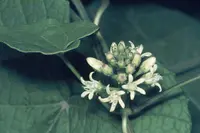
tree tobacco Care (Nicotiana glauca)

Also known as: Wild Tobacco, Coneton, Mexican Tobacco, Mustard Tree, San Juan Tree, Tabaka-Bume, Tobacco Plant, Tobacco Tree
tree tobacco

About tree tobacco

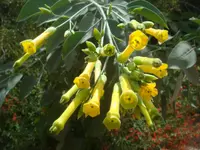
Tree tobacco (Nicotiana glauca) is a fast-growing woody shrub or small tree from the nightshade family. It has bluish-green leaves and tubular yellow flowers. Native to South America, it has naturalized in many warm, dry regions and often grows along roadsides, riverbanks, and disturbed sites. In suitable climates it can become vigorous and even weedy. This species tolerates drought, poor soils, and high heat, which makes it relatively easy to establish outdoors. It prefers full sun, well-drained soil, and low to moderate moisture. Understanding how to care for tree tobacco starts with controlling its spread and placing it where its size and seeding habit are manageable.

Main Plant Requirements

Care Difficulty

Easy Care

Light Preference

Full Sun

Water Requirements

Low Water

Temperature Preference

Warm Climate

Hardiness Zone

8–11

Soil Texture

Sandy, Loamy, Rocky

Soil pH

Slightly acidic (6.5–7.0), Slightly alkaline (7.0–7.5)

Soil Drainage

Well-drained

Fertilization

Minimal (feed rarely)

Get Personalized Care Plan

Scan your plant to receive care tips personalized for your specific plant

Available on iOS and Android

How to Care for the tree tobacco

This fast-growing shrub prefers bright, direct light similar to open, dry habitats.

  • Provide 6–8 hours of full sun daily; morning and early afternoon sun encourage dense growth and flowering for tree tobacco.
  • Tolerates light partial shade (3–4 hours sun), but stems may stretch and flowering can decrease if light drops below this.
  • In very hot inland summers, give slight afternoon shade or filtered light to reduce leaf scorch, especially on young or recently transplanted plants.

This drought-tolerant species prefers deep, infrequent watering once established.

  • Outdoors in the ground, water when the top 5–8 cm of soil are dry; soak the root zone thoroughly, then allow soil to dry again.
  • During hot, dry periods, monitor Nicotiana glauca for limp, dull leaves as a signal to water; crisping edges usually indicate prolonged drought stress.
  • Avoid soggy soil; choose sharply draining ground or amended beds, and watch for yellowing, soft leaves as a sign of overwatering or poor drainage.

This shrub is adapted to warm, dry climates with mild winters.

  • Target 65–85°F (18–29°C) for strongest growth, with rapid elongation and flowering in the warmer part of this range.
  • Tolerates brief dips to about 25–28°F (-4 to -2°C), but repeated hard frosts can kill young shoots and thin-stemmed plants.
  • Handles dry heat up to 95–100°F (35–38°C) if soil is not bone dry, but prolonged heat plus drought can cause leaf drop and slower growth.

This species handles a wide humidity range and rarely needs special humidity management.

  • Target 30–60% humidity, similar to most outdoor and household conditions, without extra devices.
  • Tree tobacco copes well with dry air, though prolonged hot, very dry wind can scorch leaf edges.
  • If tips brown and curl while soil moisture is adequate, move the plant out of harsh drying winds rather than adding misting.

This shrub prefers lean, well-aerated, rapidly draining soil and dislikes waterlogged conditions.

  • Use a sandy or gravelly loam with low to moderate organic matter, mimicking dry, rocky ground.
  • Aim for slightly acidic to slightly alkaline pH, roughly 6.0–7.8, as Nicotiana glauca tolerates a broad range.
  • Blend roughly 50–70% mineral material (sand or grit) with 30–50% composted organic matter to improve structure.
  • Avoid compacted clay, peat-heavy mixes, or sites where water stands after rain, since roots are prone to rot.

This species can be grown in large containers, mainly for control in small gardens or invasive-risk areas.

  • Choose a deep, heavy pot that resists tipping, since the plant can become tall and top-heavy in wind.
  • Use a coarse, fast-draining mix and raise the pot on feet so water clears the drainage holes quickly.
  • Position the container where runoff can drain freely, as repeated puddling around the base can saturate lower roots.

Nicotiana glauca grows vigorously in average soil and only benefits from modest, targeted feeding in containers or very poor ground.

  • Use a balanced, slow-release fertilizer (for example 10-10-10) or thin compost layer for in-ground plants at spring growth start.
  • Feed container-grown tree tobacco every 4–6 weeks in spring–summer with a balanced liquid fertilizer diluted to 1/2 strength.
  • Avoid high-nitrogen products that push weak, lanky growth; aim for steady, moderate vigor instead.
  • Stop feeding in late summer and avoid fertilization in fall–winter to let growth harden and reduce cold damage risk.

Pruning helps keep Nicotiana glauca compact, safe, and flowering well, especially in small gardens.

  • Carry out main structural pruning in late winter or very early spring before vigorous new growth begins.
  • Remove dead, diseased, storm-damaged, or crossing branches with clean, sharp bypass pruners or loppers.
  • Shorten tall, leggy stems by up to 1/3 to control height and encourage denser side branching.
  • Lightly thin crowded interior shoots to improve air flow and flower display without over-opening the canopy.

This species is usually grown in the ground, so transplanting young Nicotiana glauca plants correctly is more important than frequent repotting.

  • Transplant in spring after frost risk has passed, when roots fill the starter pot but are not yet severely circling.
  • Choose a sunny, well-drained site and plant at the same depth as the container, spreading any circling roots gently by hand.
  • Water deeply after planting and keep soil evenly moist for 1–2 weeks to reduce transplant shock.
  • Container plants need shifting to a larger pot only when roots emerge from drainage holes or growth becomes noticeably stunted.

Nicotiana glauca is commonly propagated by both seed and semi-ripe stem cuttings.

  • Collect ripe seed in late summer–fall and sow on the surface of a light, well-draining mix; do not bury deeply.
  • Maintain 65–75°F, bright indirect light, and lightly moist media for seed germination over 1–3 weeks.
  • Take 8–12 cm semi-ripe cuttings in late spring–summer, removing lower leaves and dipping bases in rooting hormone.
  • Insert cuttings into a sterile, free-draining mix, then keep humid with bottom warmth and gentle light until roots form.

In mild climates Nicotiana glauca tolerates light frost but benefits from simple winter precautions in colder areas.

  • In regions below about 20°F, treat as a tender shrub and expect dieback or loss without protection.
  • Mulch the root zone with 5–8 cm of organic material in late fall, keeping mulch slightly away from the main stem.
  • For container plants, move pots to a bright, cool, frost-free space before hard freezes and water sparingly.

Care Tips

Root spread control

Install a vertical root barrier 30–40 cm deep when planting near structures or irrigation lines to limit lateral root spread and make long‑term management easier when growing tree tobacco outdoors.

Seedling handling safety

Wear gloves and avoid touching your face when handling seedlings or pruning waste, then bag and bin all green waste promptly, since all parts of this species are toxic if ingested.

Volunteer removal timing

Inspect surrounding beds and fence lines every 4–6 weeks during warm seasons and pull self‑sown seedlings when they are under 10 cm tall, as small volunteers are far easier to remove than established plants.

Wind and weight management

In windy or exposed sites, reduce sail effect and branch breakage by selectively thinning long, whippy branches each year rather than just shortening tips, keeping the canopy lighter and more stable.

Regrowth stump management

After hard cutting back, paint large cuts and coppiced stumps with a suitable pruning seal or exterior latex paint in very hot, dry regions to reduce desiccation and sunscald on exposed wood.

Common Pests and Diseases

Tobacco aphids

These insects feed on young shoots and leaf undersides, sucking sap and causing curling, distortion, and sticky honeydew that can lead to sooty mold. Symptoms include clusters of small soft-bodied green, yellow, or dark aphids, often attended by ants.

Solution

Prune and discard heavily infested shoot tips, then spray leaf surfaces (especially undersides) with a strong stream of water to dislodge aphids. For persistent infestations, use insecticidal soap or a light horticultural oil, applied in the early morning or evening, and reduce excess nitrogen fertilization that promotes soft, aphid-attracting growth.

Tobacco whiteflies

These insects congregate on the underside of leaves, sucking sap and weakening the plant while excreting honeydew that can support sooty mold. This pest is often noticed as small white adults that fly up in a cloud when branches are disturbed.

Solution

Remove and destroy heavily infested leaves and use a firm water spray to knock down adults and nymphs from foliage. For ongoing control, place yellow sticky cards near the plant to trap adults and apply insecticidal soap or horticultural oil thoroughly to leaf undersides on a 5–7 day schedule until populations decline.

Hornworms

These caterpillars, often tobacco or tomato hornworms, chew large irregular holes in leaves and can quickly strip foliage on young plants. This pest is usually bright green and well camouflaged, with a horn-like projection at the tail end.

Solution

Inspect plants regularly and hand-pick caterpillars, dropping them into soapy water for disposal, as this is the most effective control on individual plants. Encouraging natural predators such as birds and parasitic wasps by avoiding broad-spectrum insecticides helps limit future hornworm outbreaks when growing tree tobacco in mixed plantings.

Tobacco mosaic virus

This disease causes mottled light and dark green patterns, leaf distortion, and stunted growth, especially on younger foliage. Symptoms include mosaic-like variegation and sometimes narrow, twisted leaves that do not develop normally.

Solution

Remove and destroy symptomatic plants or severely affected branches to reduce virus sources, and disinfect tools with a 10% bleach solution after cutting. Avoid handling plants after using tobacco products, source clean seed or nursery stock, and control sap-sucking insects such as aphids that can help move virus particles between plants.

Fungal leaf spots

This disease group, often caused by Alternaria or related fungi on Nicotiana species, produces brown to black spots with possible yellow halos that can merge and cause partial leaf blight. Symptoms include premature yellowing and drop of older leaves in warm, humid conditions or on crowded plants.

Solution

Prune and discard affected leaves, improve spacing and airflow, and avoid overhead watering so foliage dries quickly. If conditions stay humid and spots continue to spread, apply a copper-based or other labeled ornamental fungicide to foliage, following label directions, and keep fallen leaves cleaned up around the base of the plant.

Interesting Facts

Highly toxic foliage

All parts of this species, especially the leaves, contain the alkaloid anabasine, which is more toxic than nicotine and can poison livestock and wildlife if browsed.

Aggressive invader

This species has escaped cultivation and become an invasive shrub or small tree in many arid and semi-arid regions worldwide, especially along roadsides, riverbanks, and disturbed soils where it outcompetes native vegetation.

Night-fragrant flowers

The tubular yellow flowers open widely in the evening and release a stronger scent at night, reflecting adaptation to pollination by nocturnal insects such as moths.

Botan icon

Did you know?

In several regions, land managers actively remove this species because its deep taproot and fast growth allow it to quickly colonize burned or disturbed habitats, altering post-fire plant succession and making ecological restoration more difficult.

FAQs about tree tobacco

All parts of this species are highly toxic if eaten by pets, livestock, or people due to nicotine and related alkaloids. Ingestion can cause vomiting, weakness, breathing problems, and potentially death. Avoid planting near grazing animals or children.

Grow Healthy Plants with Botan Care

Keep your plants happy and healthy with plant identification, disease detection, and easy care guidance.

Botan plant care app — identify plants on mobile

Explore More Plants