Encourage Strong Leader
In the first 3–4 years, select one straight central stem and remove competing upright shoots during the growing season so the young tree develops a strong, single leader that supports a stable mature canopy.

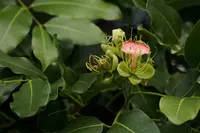
Chamfuta, Afzelia quanzensis, is a large, long-lived tree native to dry woodlands and savannas of eastern and southern Africa. It is valued mainly for its dense, decorative hardwood. The tree has a rounded crown, compound leaves, and often a tall, straight trunk, so it is usually seen as a landscape or timber tree rather than a container plant. Growth is moderately slow and young plants need protection from cold and prolonged waterlogging. Once established, it tolerates seasonal drought and poor, sandy or loamy soils, which can make care for Chamfuta easier in warm, frost-free climates. It prefers full sun and well-drained soil with only occasional deep watering once roots are developed.

Care Difficulty
Moderate Care

Light Preference
Full Sun

Water Requirements
Moderate Water

Temperature Preference
Tropical / Frost Sensitive

Hardiness Zone
10–12

Soil Texture
Sandy, Loamy, Organic-rich

Soil pH
Slightly acidic (6.5–7.0), Neutral (7.0)

Soil Drainage
Well-drained

Fertilization
Minimal (feed rarely)
Scan your plant to receive care tips personalized for your specific plant
Available on iOS and Android
Afzelia quanzensis grows best in bright outdoor conditions with strong but not extreme sun exposure.
Afzelia quanzensis prefers deep, infrequent watering once established, with soil allowed to dry between waterings.
This species prefers warm, frost-free climates with distinct warm and cooler seasons.
Afzelia quanzensis tolerates a wide humidity range and usually does not need special humidity control for healthy growth.
This species prefers deep, well-structured mineral soils that drain freely but retain some moisture.
This tree can be grown in containers only on a temporary basis or as a juvenile specimen, because it eventually becomes very large and deep-rooted.
Afzelia quanzensis grows slowly and usually needs only light, occasional feeding in cultivation.
Pruning Afzelia quanzensis is mainly structural and hygienic rather than heavy shaping.
This species is usually field-grown, so care focuses on careful transplanting of young trees rather than frequent repotting.
Propagation of Afzelia quanzensis is typically done from seed and requires patience and warm conditions.
This tropical to subtropical tree is frost-sensitive and needs protection in regions with cold winters.

Plant Health Check
Not sure what's wrong with your plant? Check your plant's health inside the app.
The wood of this species, traded as pod mahogany or chamfuta, is naturally dense, stable, and highly resistant to termites, which makes it prized for flooring, high‑end joinery, and boat building in southern Africa.
Mature pods dry and twist until they split open suddenly, flinging the hard, glossy seeds away from the parent tree as a mechanical seed‑dispersal strategy.
In its native range from Kenya to South Africa, the foliage, pods, and seeds are browsed and eaten by large mammals such as elephants and baboons, which also help move seeds across the landscape.

The reddish‑brown heartwood of this tree develops a fine natural polish and can show attractive ribbon or mottled figure, which has led to its long‑standing use in carved doors, luxury furniture, and traditional ceremonial objects in parts of Mozambique and neighboring countries.
Growth is moderate under warm, frost-free conditions. Young trees can add 30–60 cm in height per year, slowing as they mature. Poor soil, limited water, or cool temperatures reduce growth rate significantly compared with ideal savanna-like conditions.
Keep your plants happy and healthy with plant identification, disease detection, and easy care guidance.