Early structural training
In the first 2–3 years, select 1 strong central leader and remove competing upright shoots gradually to develop a stable trunk and balanced canopy for long-term health.

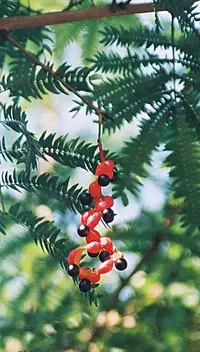
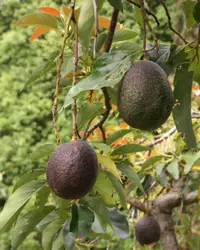
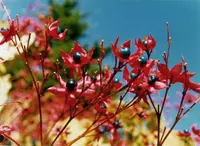
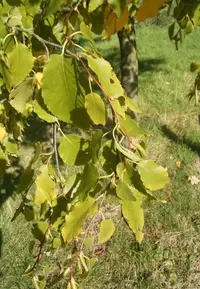
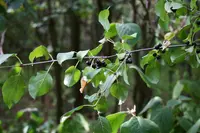
Wild tamarind (Cojoba arborea) is a fast-growing, evergreen tree from tropical and subtropical America, especially common in coastal forests and open woodlands. It forms a light, spreading canopy with fine, feathery leaflets that create soft, dappled shade.
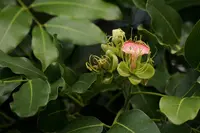
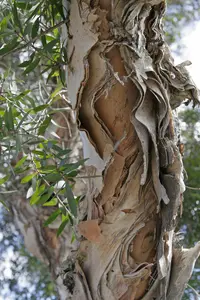
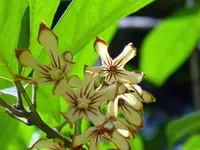
The tree typically has a slender trunk when young, becoming broader and more branched with age. Small, creamy flower clusters and pod-like fruits are common features.
Its tolerance of poor, sandy soils and wind makes it useful as a landscape or shade tree in warm climates. Understanding how to care for wild tamarind starts with providing bright light, warmth, and well-drained soil with moderate moisture.

Care Difficulty
Moderate Care

Light Preference
Full Sun

Water Requirements
Moderate Water

Temperature Preference
Tropical / Frost Sensitive

Hardiness Zone
10–12

Soil Texture
Sandy, Loamy, Organic-rich

Soil pH
Slightly acidic (6.5–7.0), Neutral (7.0)

Soil Drainage
Well-drained

Fertilization
Minimal (feed rarely)
Scan your plant to receive care tips personalized for your specific plant
Available on iOS and Android
Cojoba arborea grows best in bright, warm climates with ample direct sun exposure.
Cojoba arborea prefers evenly moist but not saturated soil once established in the landscape.
This species thrives in warm, frost-free climates typical of tropical and subtropical regions.
This species tolerates a wide humidity range but benefits from moderately moist air in cultivation.
This tree prefers well-aerated, free-draining soil that mimics its native, often limestone-influenced habitats.
This species can be grown in containers when young or as a patio specimen, though long-term growth is limited by root space.
Cojoba arborea typically needs only modest feeding when grown in managed landscapes or containers.
Pruning Cojoba arborea focuses on structural safety, clearance, and maintaining a balanced canopy.
This species is usually grown in the ground, so management focuses on transplanting young trees rather than frequent repotting.
Propagation of Cojoba arborea is usually done from seed and is moderate in difficulty for home growers.
Cojoba arborea is a tropical to subtropical tree that needs protection in climates with frost or freezing conditions.

Plant Health Check
Not sure what's wrong with your plant? Check your plant's health inside the app.
This species lives in symbiosis with soil bacteria in its root nodules, helping fix atmospheric nitrogen and enriching poor tropical soils where it naturally grows.
In its native range from Mexico to northern South America and the Caribbean, it often colonizes disturbed sites and forest gaps, stabilizing soil and creating shade that allows more sensitive rainforest species to establish.
Its small, cream-colored, puff-like flowers are rich in nectar and strongly attract nocturnal moths and various bees, which serve as key pollinators for the tree in moist and semi-deciduous forests.

The hard, durable wood of this species has been locally valued in parts of Central America and the Caribbean for fence posts and rural construction, because it is relatively resistant to decay and insect damage when used outdoors.
This tree is considered fast-growing, often adding 60–90 cm per year under warm, frost-free conditions with adequate moisture and space. Growth slows in poor soil, cool climates, or if roots are restricted by compacted ground or containers.
Keep your plants happy and healthy with plant identification, disease detection, and easy care guidance.