Wind-hardening young trees
Expose young plants to increasing levels of wind over several weeks by gradually reducing shelter, which encourages thicker trunks and stronger root anchorage before planting in permanently windy sites.

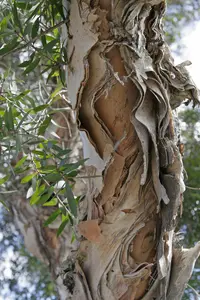
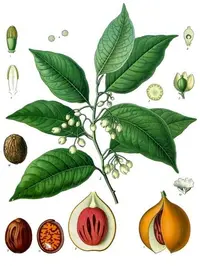
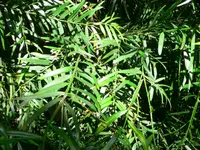
Punktree, Melaleuca quinquenervia, is an evergreen tree from the myrtle family, native to eastern Australia and parts of New Guinea. It is also naturalized in Florida, where it can become invasive outdoors. The tree develops a dense crown, flaky paper-like bark, and narrow leaves that release a strong scent when crushed. Creamy bottlebrush-style flower spikes appear in clusters, attracting many pollinators. In cultivation it is generally tough, tolerating wind, poor soils, and brief dry periods once established. These traits can make it relatively straightforward to care for punktree in suitable warm climates, though it needs space, sun, and well-drained soil to grow safely and stay manageable.

Care Difficulty
Moderate Care

Light Preference
Full Sun

Water Requirements
Keep Soil Moist

Temperature Preference
Tropical / Frost Sensitive

Hardiness Zone
9–11

Soil Texture
Sandy, Loamy, Organic-rich

Soil pH
Acidic (5.5–6.5), Slightly acidic (6.5–7.0)

Soil Drainage
Waterlogged tolerant

Fertilization
Minimal (feed rarely)
Scan your plant to receive care tips personalized for your specific plant
Available on iOS and Android
This species thrives in bright, open sites with strong, direct sun exposure.
This swamp-adapted tree prefers consistently moist conditions but still needs oxygenated, not stagnant, soil.
This species is a warm-climate tree that grows best in frost-free to very mild winter regions.
This species tolerates a wide humidity range but grows best with moderately moist air.
This species prefers light, aerated substrates that stay evenly moist yet never stagnant.
This species can be grown in containers for the first years if root space and stability are managed carefully.
This adaptable tree needs only modest feeding, especially when grown in the ground.
Thoughtful pruning keeps Melaleuca quinquenervia safe, manageable, and structurally sound.
This species is usually grown in the ground, so focus on careful transplanting rather than frequent repotting.
New plants are most often raised from seed, with semi-hardwood cuttings used where controlled conditions are available.
This is a frost-sensitive, warm-climate tree that needs protection in regions with cold winters.

Plant Health Check
Not sure what's wrong with your plant? Check your plant's health inside the app.
The trunk forms thick, spongy, peeling bark made of many papery layers that can insulate the living tissues from heat and fire. These layers also help the tree survive periodic flooding by trapping air around the stem.
It carries numerous hard, woody seed capsules tightly clustered along older stems, each capsule holding many tiny seeds. These capsules can remain closed for years and open in response to branch death, damage, or fire, releasing seeds onto freshly cleared ground.
After introduction to Florida in the early 1900s for swamp drainage and ornament, it became one of the state’s most aggressive invasive trees. Its dense stands alter hydrology, outcompete native wetland species, and are a major management target in the Everglades.

This species can rapidly colonize disturbed wetlands because a single mature tree may hold large seed banks in its canopy, allowing it to release hundreds of thousands of wind-dispersed seeds following events such as fire, cutting, or drought-induced dieback.
This species is highly invasive in many warm, wet regions, especially parts of Florida and Hawaii. It spreads aggressively by seed, displacing native wetland vegetation. Always check local regulations before planting and avoid growing it near natural wetlands.
Keep your plants happy and healthy with plant identification, disease detection, and easy care guidance.